Home
Home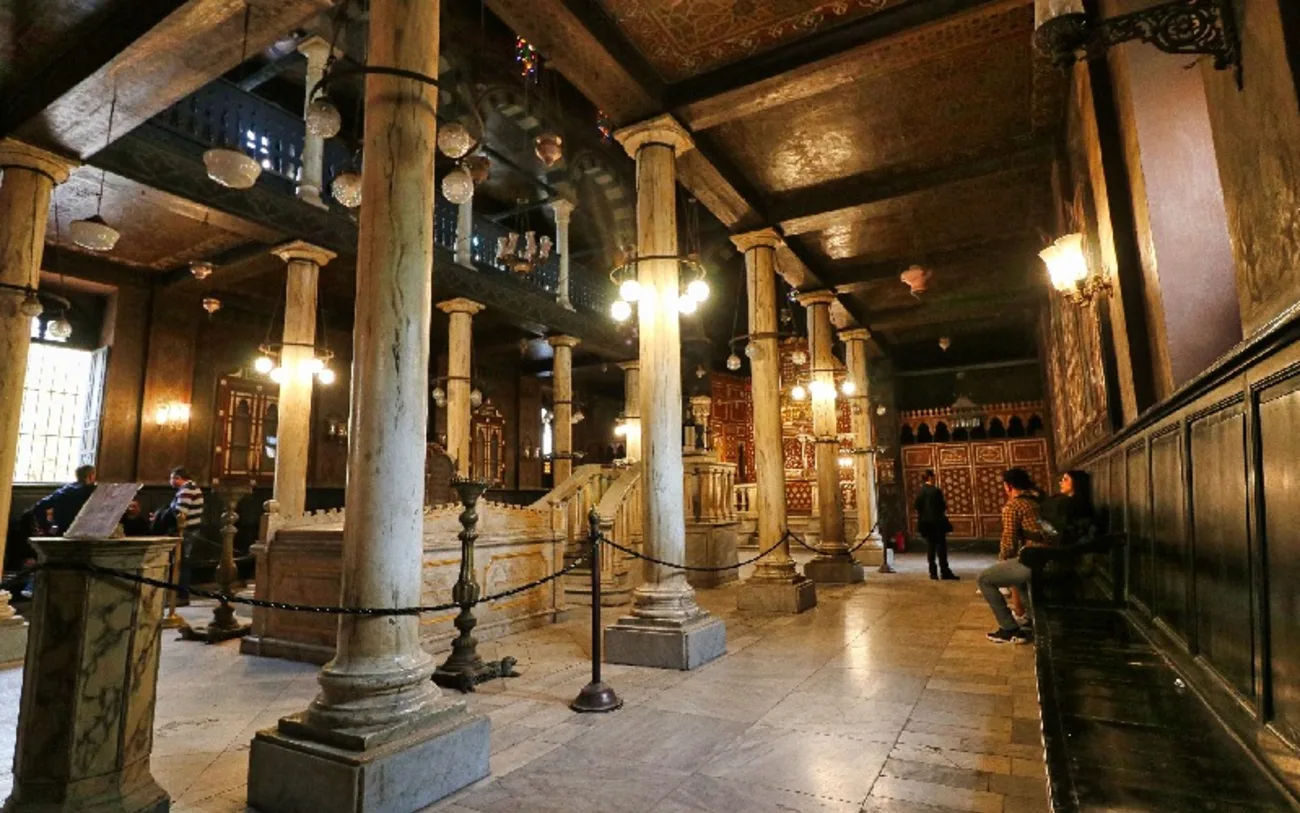
The Ben Ezra Synagogue stands as one of Egypt's most historically significant Jewish monuments, dating back to the 11th century when it was founded in 1006. Located in the Fustat part of Old Cairo, this ancient structure is believed by many to be the oldest synagogue in Egypt, with evidence suggesting it predates 882 CE and possibly even pre-Islamic times.
According to local folklore, the Ben Ezra Synagogue was built upon the exact spot where baby Moses was discovered floating on the Nile River. Throughout its existence, the synagogue has witnessed numerous historical events, including destruction and subsequent rebuilding.
Furthermore, it gained worldwide recognition in the 19th century when scholars discovered the Cairo Geniza—a remarkable collection of approximately 210,000 documents pertaining to Egyptian life from the 11th to 19th centuries.
The synagogue currently functions as a museum showcasing artifacts from its extensive history, including ancient scrolls, books, documents, and artwork. At present, it operates under the joint supervision of the local Jewish community and the Egyptian government, serving as a testament to the rich cultural heritage and religious significance of Jewish history in Cairo.
The origins and early history of Ben Ezra Synagogue
The historical roots of Ben Ezra Synagogue remain subject to scholarly debate, with evidence suggesting it predates its commonly cited 9th-century foundation. Historical documents from the Cairo Geniza indicate the synagogue existed before 882 CE and might even have originated in pre-Islamic times.
The 9th-century foundation and its debated origins
Originally, competing narratives describe the synagogue's beginnings. One account states that in 882 CE, the head of the Coptic Orthodox Church sold a church and its grounds to a Jewish group. This church, dedicated to St. Michael the Archangel, was allegedly purchased for 20,000 dinars. However, modern scholarship complicates this story - while a church sale did occur in 882, the buyers followed Babylonian Talmudic traditions, whereas Ben Ezra's congregation adhered to Syrian-Palestinian teachings. Consequently, historians now believe the 882 transaction involved a different synagogue altogether.
Historically known as "Kanisat al-Shamiyyin" (Synagogue of the Syrians or Levantines), the name reflected not immigrant origins but rather the Palestinian-Syrian liturgical traditions practiced by its members. The connection to Abraham ibn Ezra, the 12th-century Spanish-Jewish scholar, emerged later in traditions seeking to associate the site with intellectual prestige.
The 1012 destruction under Caliph al-Hakim
The synagogue's early history took a dramatic turn around 1012 CE, during the rule of Fatimid caliph Al-Hakim bi-Amr Allah. In a sweeping decree, Al-Hakim ordered the destruction of all Jewish and Christian places of worship throughout his territories. Subsequently, Ben Ezra Synagogue was demolished completely, with its "bricks and timber sold for scrap". This destruction occurred during a period of religious persecution that affected numerous minority faith communities throughout Cairo.
Reconstruction during the Fatimid period
After Al-Hakim's death, his successor al-Zahir li-i'zaz Din Allah reversed these policies and permitted the reconstruction of Jewish and Christian religious sites. Between 1025 and 1040, the Jewish community rebuilt the Ben Ezra Synagogue. This reconstructed building adopted a basilica layout with noticeable Coptic influences, reflecting the architectural styles prevalent in medieval Cairo.
The rebuilt synagogue soon became a spiritual center for one of the most prosperous Jewish communities in the medieval world. Despite another setback in 1168 when Vizier Shawar ordered the burning of Fustat to prevent Crusader occupation, the community once again restored their sacred space under Saladin's subsequent rule.
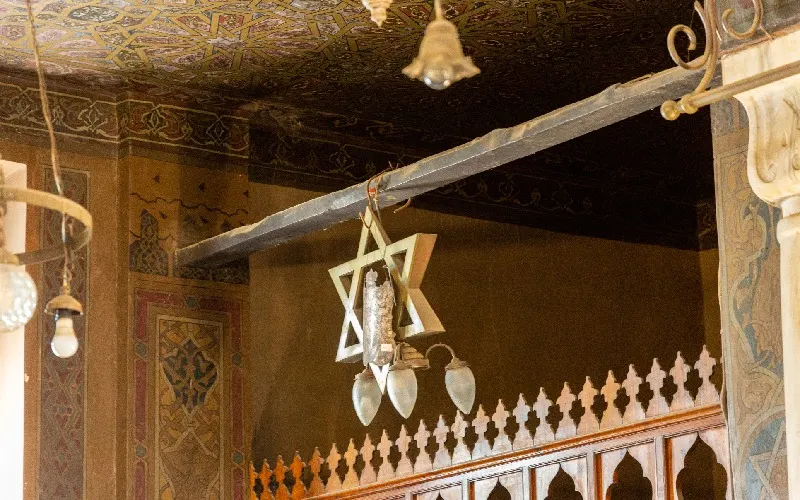
The Ben-Ezra Synagogue is one of Egypt's most important Jewish monuments, dating back to the 11th century. It's believed to be the oldest synagogue in Egypt and is famous for housing the Cairo Geniza, a vast collection of historical documents.
Maimonides was a renowned Jewish philosopher who lived near the Ben-Ezra Synagogue in the 12th century. He regularly worshiped there and served as the leader of Egyptian Jewry, contributing to the synagogue's importance as a center of Jewish intellectual life.
Architectural evolution through the centuries
Throughout its lengthy existence, the Ben Ezra Synagogue has undergone numerous architectural transformations, reflecting the cultural and artistic shifts in Egypt over nearly a millennium.
11th-century basilica layout and Coptic influences
Initially constructed during the 1025-1040 period after al-Hakim's destruction, the synagogue featured a distinctive two-story basilica layout with side aisles. This architectural arrangement closely mirrored local Coptic Christian buildings within the Roman fortress, particularly the nearby Church of St. Barbara. The prayer hall was divided by twelve marble columns supporting two balconies specifically designated for women—among the earliest examples of such gender-separated worship spaces discovered in synagogue architecture. These women's galleries were accessed through a separate exterior staircase, maintaining privacy in worship.
Mamluk and Ottoman design elements
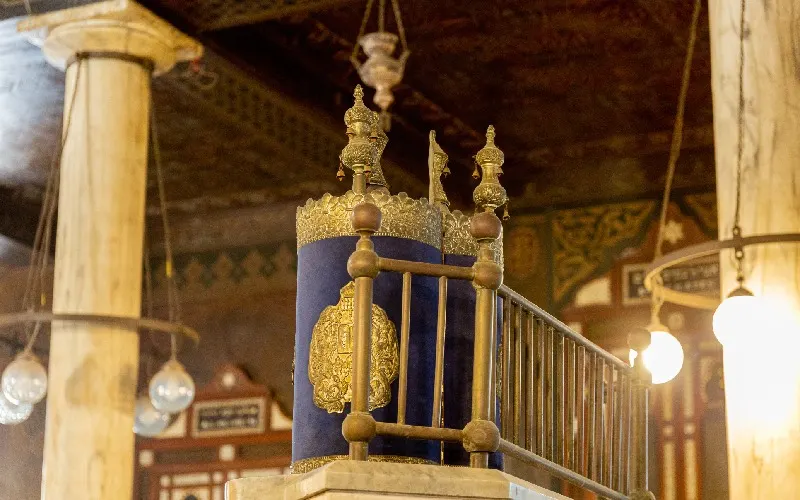
The synagogue underwent significant renovations in 1488, incorporating artistic elements from prevailing Egyptian styles. Most notably, the wooden Torah ark door—parts of which survive today in museum collections—displays decorative elements inconsistent with Fatimid-era designs (909-1171 CE). Instead, the door showcases medallion motifs and carvings characteristic of Mamluk Sultanate craftsmanship (1250-1571 CE), specifically from the 15th century. These decorative elements draw heavily from designs popular in Egyptian Mamluk and Ottoman woodcarving and bookbinding, featuring central medallions and corner ornaments against relatively unadorned backgrounds.
19th-century complete rebuild and modern restorations
The current Ben Ezra Synagogue structure primarily dates to the early 1890s following a complete rebuilding after the original structure's collapse. Although reconstructed almost entirely with new materials, this 19th-century version preserved and reused the original synagogue's wooden dedicatory furnishings and several small marble columns in the second story. The architectural plan remained largely faithful to the earlier medieval building based on analysis of documents from the Cairo Geniza.
Following the 1890s reconstruction, the synagogue underwent additional remodeling in the early 20th century. After decades without significant maintenance, extensive renovations began in April 2022. This recent restoration project, completed in 2023, focused on reinforcing the ceiling to prevent collapse, heavily restoring the library, and enhancing cleanliness and insulation throughout the building.
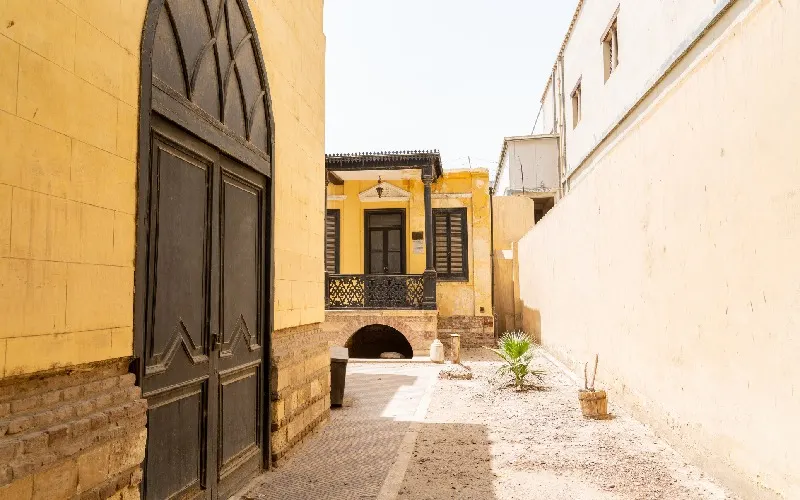
The synagogue has undergone several transformations, including a complete rebuild in the 1890s. It incorporates elements from various periods, including Coptic, Mamluk, and Ottoman influences, reflecting Cairo's diverse cultural history.
Customize Your Dream Vacation!
Get in touch with our local experts for an unforgettable journey.
Plan Your TripThe Cairo Geniza: a treasure trove of Jewish history
Hidden within the Ben Ezra Synagogue lies one of history's most remarkable discoveries—a repository that has completely transformed our understanding of medieval Jewish life.
What is a Geniza and why it matters
A geniza serves as a sacred storeroom where Jewish communities reverently place worn-out religious texts containing God's name, as rabbinic law prohibits their casual disposal. Unlike most genizot (plural of geniza) that primarily stored religious manuscripts, Ben Ezra's collection uniquely preserved both sacred writings and everyday documents across nearly a millennium. This extraordinary preservation occurred because the community broadly interpreted which texts deserved safekeeping, resulting in an unparalleled historical archive.
Solomon Schechter's discovery in 1896
In 1896, Scottish scholars Agnes Lewis and Margaret Gibson acquired several unusual Hebrew manuscripts from Cairo and showed them to Solomon Schechter, a Cambridge University lecturer. Recognizing their significance, Schechter traveled to Egypt in 1896-97 where, upon receiving permission from the Jewish community, he brought approximately 193,000 manuscript fragments to Cambridge University Library.
This collection, known today as the Taylor-Schechter Cairo Geniza Collection, constitutes the world's largest medieval Jewish manuscript repository.
Types of documents found and their historical value
Beyond expected religious works like Bibles and prayer books, the Geniza yielded an astonishing array of secular materials: business letters, marriage contracts, divorce deeds, shopping lists, medical prescriptions, magical amulets, and literary works. These documents, dating primarily from the 10th to 13th centuries, provide unmatched insights into everyday life throughout the Mediterranean and beyond.
Global impact on Jewish and Middle Eastern studies
The Cairo Geniza revolutionized academic Jewish studies by providing unprecedented historical sources for studying Jews in Islamic lands.
Prior to its discovery, scholarship relied heavily on European Jewish experiences, overlooking that approximately 90% of medieval Jews lived in Mediterranean and Islamic territories. Through these manuscripts, researchers have reconstructed detailed pictures of Jewish intellectual, economic, and social life across centuries, fundamentally reshaping our understanding of medieval Jewish-Muslim relations.
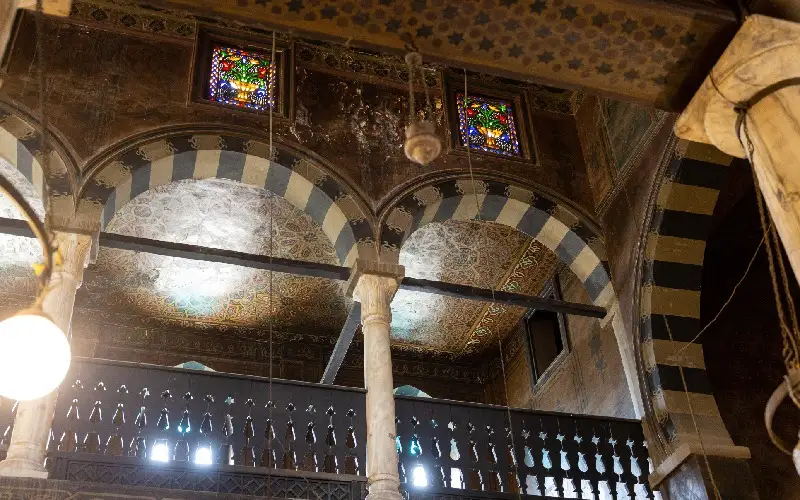
The Cairo Geniza is a collection of about 210,000 Jewish manuscript fragments discovered in the Ben-Ezra Synagogue. It provides invaluable insights into Jewish, Middle Eastern, and Mediterranean history from the 10th to 19th centuries, revolutionizing our understanding of medieval Jewish life.
Cultural and religious significance in Jewish life
Beyond its architectural significance, the Ben Ezra Synagogue in Cairo served as a vital hub for Jewish intellectual and spiritual life throughout the medieval period.
Maimonides and his connection to the synagogue
The renowned Jewish philosopher Moses Maimonides settled in Fustat, within walking distance of the Ben Ezra Synagogue, in 1168. Upon becoming Nagid (leader) of Egyptian Jewry in 1171, he regularly worshiped at Ben Ezra until his death in 1204. As physician to Sultan Saladin's family, Maimonides embodied the cultural integration of Cairo's Jewish community. Several Geniza documents, including some in his own handwriting, provide firsthand biographical sources about his life and work.
Role in medieval Jewish scholarship and community life
Throughout its history, the Ben Ezra Synagogue functioned as more than a prayer space. Indeed, it served as a center for Jewish legal proceedings, educational activities, and communal gatherings. The synagogue housed a library that became a repository of knowledge for Egyptian Jews. This institution facilitated networks linking Egypt to communities across North Africa, Europe, and the Levant, cementing Cairo's position as a center of Jewish scholarship.
Symbol of interfaith coexistence in Old Cairo
The synagogue stands as an important testament to centuries of cohabitation among faiths. Throughout history, Cairo's vibrant Jewish community thrived alongside Muslim and Christian neighbors. Ultimately, the synagogue's architecture harmoniously combines Jewish and Islamic design elements, physically embodying Egypt's multicultural heritage.
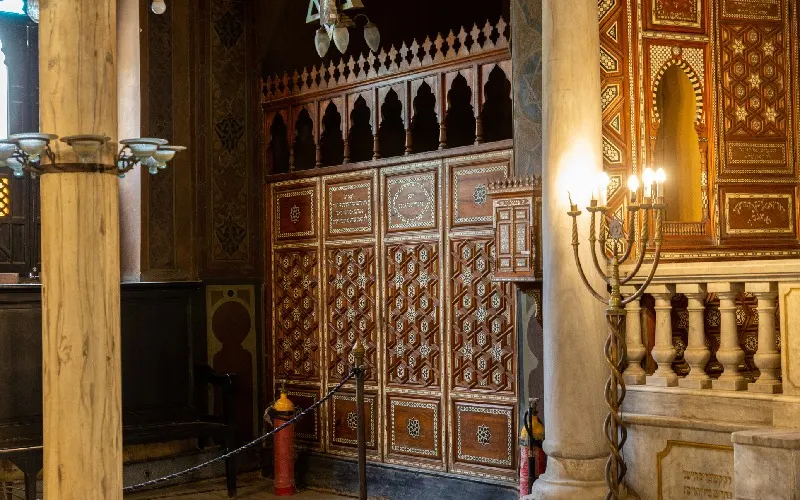
Today, the Ben-Ezra Synagogue functions as a museum showcasing Jewish history and artifacts. It is jointly managed by the local Jewish community and the Egyptian government, and recently underwent extensive renovations completed in 2023.
Throughout its thousand-year history, the Ben-Ezra Synagogue has endured destruction, rebuilding, and transformation while maintaining its status as a cornerstone of Jewish heritage in Egypt. Despite facing near-obliteration under Caliph al-Hakim in 1012, the resilient Jewish community reconstructed this sacred space, allowing it to flourish as a center of learning and worship. The synagogue subsequently evolved architecturally, adopting elements from Coptic, Mamluk, and Ottoman design traditions that reflect Cairo's rich multicultural environment.
Perhaps most significantly, the Ben-Ezra Synagogue gained worldwide scholarly attention through the Cairo Geniza discovery. This remarkable collection of documents has fundamentally altered academic understanding of medieval Jewish life, particularly within Islamic societies. The geniza's preservation of both sacred texts and everyday documents provides an unparalleled window into centuries of Mediterranean history otherwise lost to time.
Beyond its architectural and historical importance, the synagogue stands as evidence of Cairo's interfaith heritage. Famous figures like Moses Maimonides walked its halls, contributing to an intellectual tradition that connected Egypt's Jewish community to wider networks across North Africa, Europe, and the Levant. Though now primarily functioning as a museum rather than an active house of worship, the Ben-Ezra Synagogue remains a powerful reminder of the complex religious landscape that characterized medieval Cairo.
After centuries of changes in fortune, the synagogue still stands today — jointly supervised by Egypt's government and the local Jewish community. The recent 2022–2023 restoration efforts affirm its lasting historical significance as both a physical structure and a symbol of cultural resilience. This ancient building continues to embody the intertwined histories of Judaism in Egypt, serving as a tangible link to a past when Cairo stood as a vibrant center of Jewish intellectual and spiritual life.
The Ben-Ezra Synagogue sits within Coptic Cairo, making it a natural stop on a Cairo Tour that takes in the full sweep of the city's historic and religious landmarks. Travelers looking to explore Cairo and beyond on a budget can experience it as part of an Egypt Tour — an accessible way to discover the depth and diversity of Egyptian history without compromise.
According to tradition, the site of the Ben-Ezra Synagogue is believed to be where baby Moses was discovered in the Nile reeds. While not historically verified, this legend contributes greatly to the site's spiritual significance.
No. The synagogue no longer hosts regular worship due to the very small Jewish population in Egypt today. It functions mainly as a historical monument and museum open to visitors.
The synagogue features a blend of styles—including Coptic wooden screens, Mamluk decorative patterns, and Ottoman-era structural elements—making it a rare example of multi-period religious architecture.
The original Cairo Geniza manuscripts are preserved in libraries worldwide, mainly in Cambridge and New York. However, the synagogue displays replicas, interpretive panels, and historical explanations for visitors.
Yes. It lies within Coptic Cairo, a major heritage district that includes churches, the Coptic Museum, and the Babylon Fortress, making it part of one of Egypt’s richest historical zones.
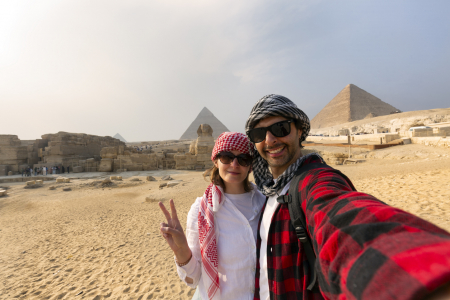
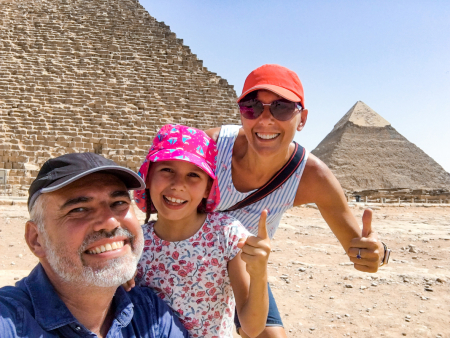

The Great Pyramids of Giza, Egypt’s iconic monuments, showcase ancient engineering brilliance and remain the last wonder of the ancient world, continuing to fascinate visitors and researchers alike.

The Egyptian Museum in Cairo houses over 170,000 ancient artifacts, including Tutankhamun's complete collection and golden death mask. Opened in 1902, it's the world's largest repository of Egyptian antiquities.

Khan el-Khalili is Cairo’s legendary medieval bazaar, where centuries-old Islamic architecture, vibrant trade, and timeless cafés create a living cultural landmark.

The Great Sphinx of Giza, with its lion body and pharaoh head, represents ancient Egyptian artistry, symbolic power, and enduring cultural fascination.

Tanoura is a traditional Egyptian Sufi dance known for its colorful spinning skirts, spiritual rhythm, and deep roots in ancient mystic traditions.

Saqqara, Egypt's ancient necropolis, features Djoser's Step Pyramid—the world's oldest. Spanning 3,000 years, it preserves royal tombs and sacred animal burials.

The Valley Temple at Giza, built 2570 BCE by Khafre, features 16 granite columns and hosted sacred afterlife rituals. Explore Fourth Dynasty architecture.

The Citadel of Cairo is a historic medieval fortress and royal complex, showcasing centuries of Egyptian power, Mamluk architecture, and Islamic heritage, now preserved as a UNESCO World Heritage Site.

Khufu's Solar Boat is a 142-foot cedar vessel discovered 1954 near the Great Pyramid. Built without nails 4,500 years ago, it's now at Grand Egyptian Museum.

St. George Church in Old Cairo, founded 684 AD, features unique circular design, sacred healing relics & underground chapel linked to the Holy Family's refuge.

Pyramids Sound and Light Show transforms Giza into open-air theater with 50 minutes of narration, music & lighting bringing ancient Egyptian history alive.

The Djoser Pyramid at Saqqara is Egypt's first pyramid, built 2600 BCE by architect Imhotep. Standing 62.5m tall, it reopened to visitors in 2020.

The Hanging Church in Old Cairo is a 1,300-year-old Coptic sanctuary built on Babylon Fortress. Free entry, open daily 9 AM-5 PM, dress modestly required.
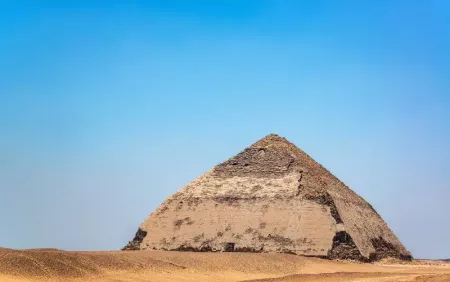
The Bent Pyramid at Dahshur features a rare bent profile created by ancient construction adjustments, offering insight into Egypt’s earliest attempts at smooth-sided pyramids.

Coptic Cairo features 4th-century churches and recent tomb discoveries revealing early Christian heritage. Explore the Hanging Church, Abu Serga & sacred sites.
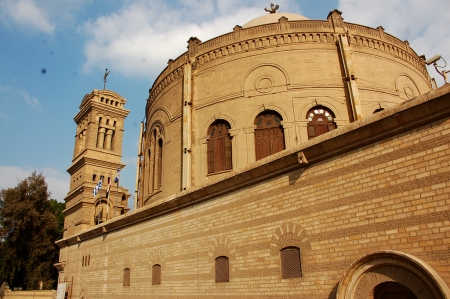
Saint Barbara’s Church in Coptic Cairo is one of Egypt’s oldest Christian monuments, dating back to the 5th–6th century. Known for housing the relics of Saint Barbara, the church reflects centuries of Coptic heritage, architectural evolution, and deep spiritual significance.

Explore the Fortress of Babylon, a major Roman fort in Old Cairo known for its strategic location, massive towers, and enduring historical significance.
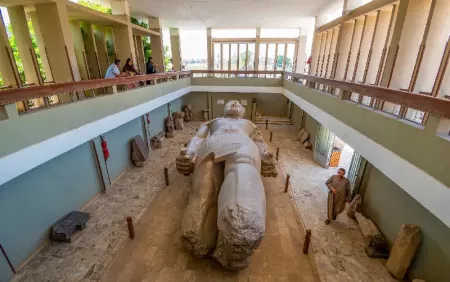
Memphis Necropolis is Egypt’s ancient royal burial site, home to pyramids, tombs, and monuments that reflect the early development of pharaonic civilization.
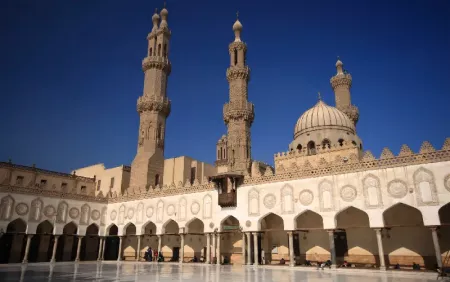
Al-Azhar Mosque is a landmark of Islamic scholarship and Fatimid architecture, home to the world’s second-oldest university and a symbol of Cairo’s spiritual heritage.
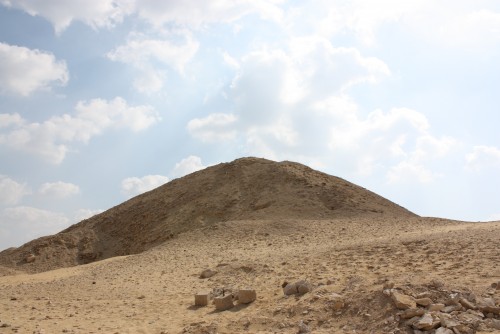
Teti’s Pyramid in Saqqara is an Old Kingdom monument built for the first king of the Sixth Dynasty. Known for its Pyramid Texts and unique mortuary chapel, it remains one of Egypt’s most historically important royal tombs.
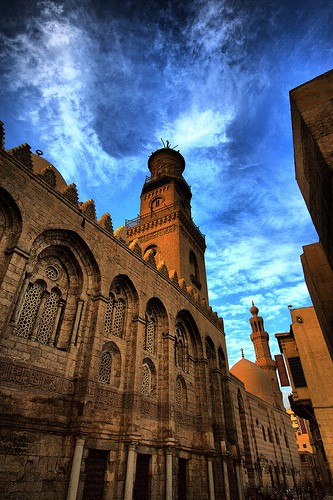
Al Muizz Street is one of Cairo’s oldest and most vibrant historic avenues, showcasing centuries of Islamic architecture. Lined with mosques, palaces, and bustling markets, it offers a captivating walk through Egypt’s medieval past.
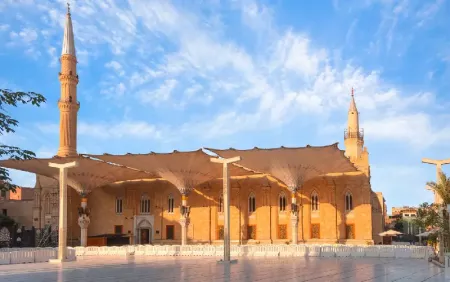
Al-Hussein Mosque is one of Cairo’s most sacred Islamic landmarks, built in 1154 and revered for housing the head of Imam Hussein. Located by Khan El-Khalili, it blends centuries of architectural heritage and remains a major pilgrimage site.
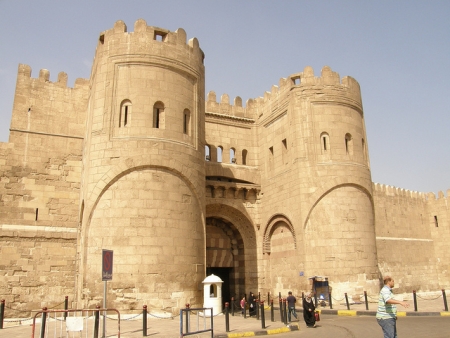
Bab al-Futuh is an 11th-century Fatimid gate in Old Cairo, famous for its massive round towers and strategic role in the city’s medieval fortifications.
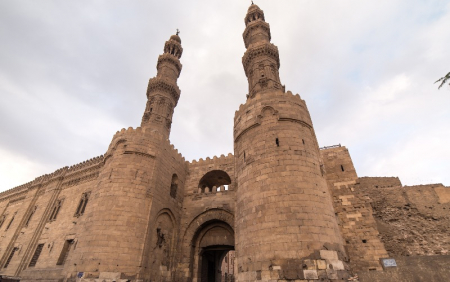
Bab Zuweila is one of Cairo’s last surviving medieval gates, built in 1092 CE by the Fatimid vizier Badr al-Jamali. Famous for its towering twin bastions, massive wooden doors, and later Mamluk minarets, it served as a defensive stronghold, execution site, and ceremonial gateway. Today, it stands as one of Cairo’s most iconic historic monuments.
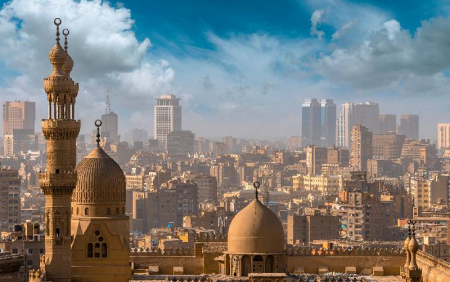
Al Rifai Mosque in Cairo blends Neo-Mamluk architecture with royal history. Completed in 1912, it serves as both a majestic mosque and mausoleum for Muhammad Ali’s family.
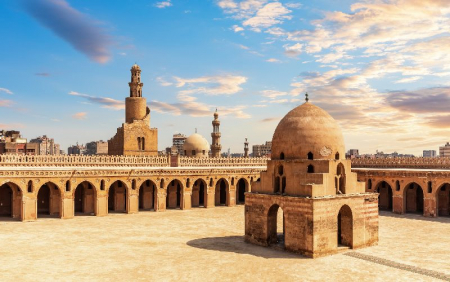
The Ibn Tulun Mosque, Cairo’s oldest well-preserved mosque, dates back to 879 CE. Famous for its vast square layout, intricate arches, and 128 ornate stucco windows, it remains a pinnacle of early Islamic architecture and a must-visit historical landmark.
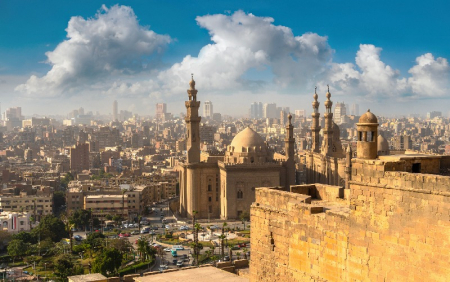
The Sultan Hassan Mosque, built in the 14th century, is a Bahri Mamluk architectural marvel in Cairo, renowned for its grand portal, extensive madrasas, and historic significance.

The Suez Canal, Egypt’s iconic waterway, connects Africa and Asia, handling thousands of ships yearly and shaping international trade.
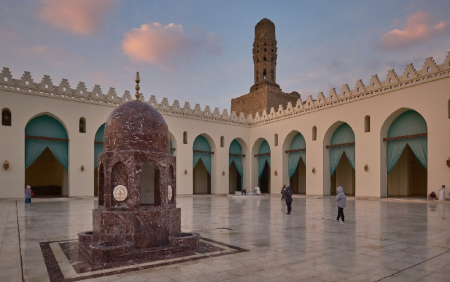
Al-Hakim Mosque, Cairo, is a stunning Fatimid-era mosque built between 990–1013 CE. Famous for its grand courtyard, distinctive minarets, and rich history, it remains a key cultural and religious landmark.
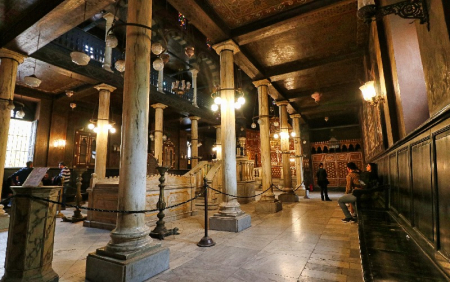
The Ben Ezra Synagogue, founded in the 11th century in Old Cairo, is Egypt’s oldest Jewish monument and the discovery site of the renowned Cairo Geniza.