Home
Home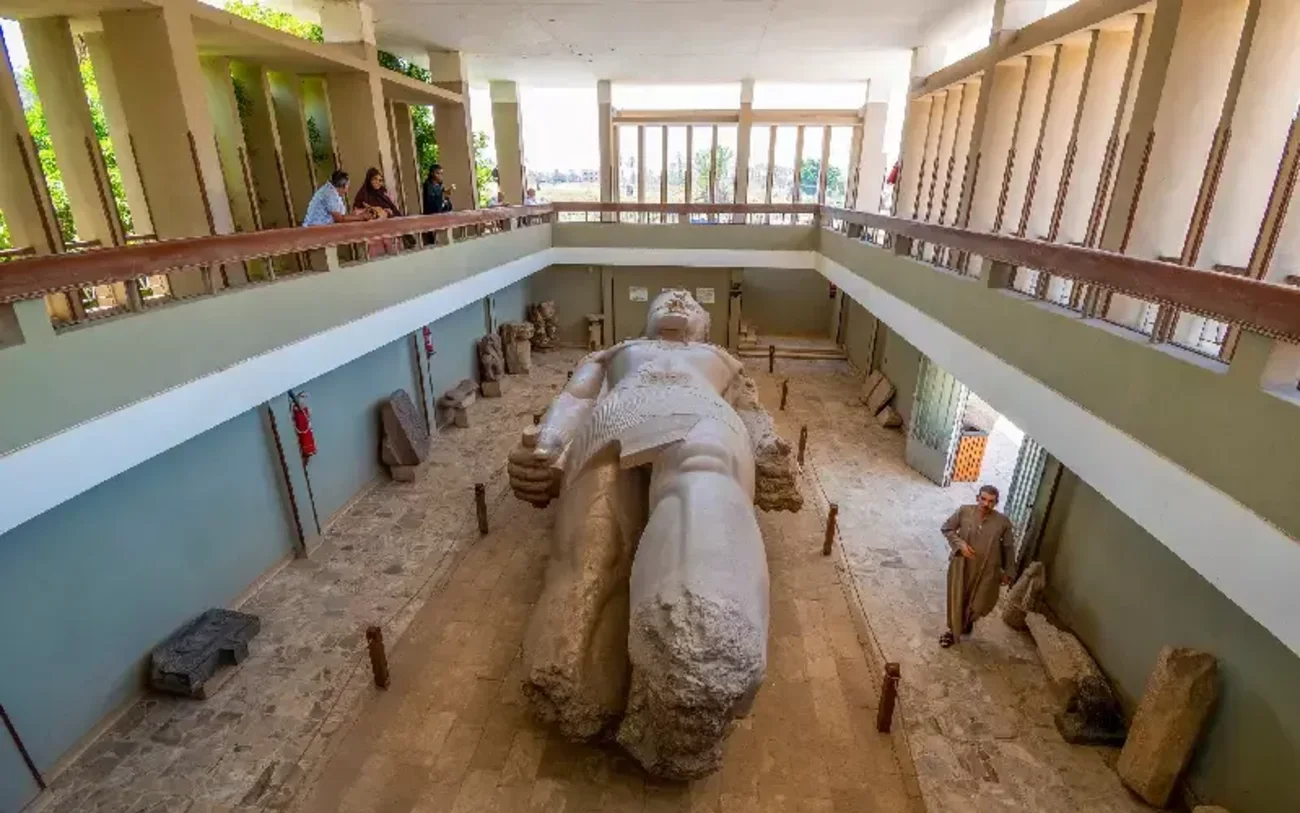
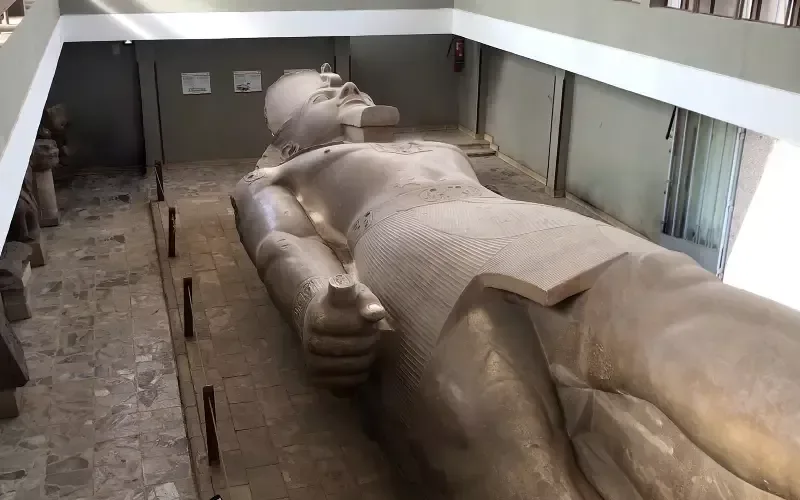
Memphis ancient Egypt earned UNESCO World Heritage status in 1979, reflecting its unparalleled archaeological richness. The site houses the world’s earliest stone monument—the Step Pyramid at Saqqara, built in 2650 BC—and the Great Pyramid of Giza, which remained the tallest structure on Earth for thousands of years. Beyond pyramids, the region preserves temples, mastabas, rock-cut tombs, and settlements such as Heit al-Ghurab, revealing how craftsmen and laborers lived while constructing these monumental structures.
The Memphis Necropolis stretches along the western desert plateau of the Nile, south of modern-day Cairo. It spans roughly 30 kilometers, covering major archaeological zones such as Giza, Saqqara, Dahshur, Abusir, and Abu Rawash.
The rise of Memphis ancient Egypt
Memphis rose to exceptional prominence during the Early Dynastic Period, becoming the central hub of Egypt’s first unified state. Its success stemmed from a combination of geographical advantage, political strategy, and religious authority that distinguished it from other early settlements.
Strategic location at the Nile Delta
Memphis occupied a powerful position at the apex of the Nile Delta on the river’s west bank, about 24 km (15 miles) south of modern Cairo. This location gave the city full control over trade routes connecting Upper and Lower Egypt. Positioned near the transition between the two regions, Memphis became an ideal administrative center overseeing the fertile agricultural valley. Its placement along a narrow river corridor also enabled efficient communication and governance, allowing the city to flourish as the kingdom’s political and economic headquarters.
Founding myths and early dynastic power
Tradition attributes the founding of Memphis to King Menes (Narmer), the unifier of Upper and Lower Egypt around 2900 BCE. The city’s earliest name, Ineb-Hedj (“White Walls”), likely referred to the whitewashed palace enclosure. The modern name “Memphis” derives from the Greek form of Men-nefer, originally associated with a pyramid built for Pepi I of the Sixth Dynasty. Other ancient traditions claim the city honored Memphis, daughter of King Uchoreus. Memphis remained Egypt’s capital for more than six dynasties during the Early Dynastic Period and Old Kingdom, reaching its height during the Sixth Dynasty when royal authority and artistic innovation flourished.
Religious centrality and the cult of Ptah
Memphis served as the primary religious center for the creator god Ptah, patron of craftsmen. The grand temple of Ptah—Hut-ka-Ptah (“Enclosure of the ka of Ptah”)—dominated the city and later gave rise to the Greek word Aigyptos, the root of the modern name “Egypt.” The influential theological document known as the Memphite Theology presents Ptah as the divine force who created the world through thought and speech. The sacred Memphis triad consisted of Ptah, his powerful consort Sekhmet, and their son Nefertem. The Apis bull, revered as the living manifestation of Ptah, resided within the temple precinct, reinforcing Memphis’s role as a major religious powerhouse.
The Memphis Necropolis: a vast funerary landscape
The Memphis Necropolis spreads across the Western Desert as Egypt’s largest burial ground, preserving millennia of funerary development. Within this expanse lie the tombs of pharaohs, nobles, priests, and officials who shaped Egyptian civilization.
Geographical spread from Giza to Dahshur
The necropolis extends 30 kilometers from Abu Rawash in the north to Dahshur in the south. Six major cemetery complexes define this region: Giza, Zawyet al-‘Aryan, Abu Ghurab, Abusir, Saqqara, and Mit Rahina. Dahshur, located about 40 km southwest of Cairo, marks the southernmost edge, completing the vast chain of royal tombs and monuments.
Major pyramid fields and their dynastic links
More than thirty-eight pyramids rise across this landscape, each representing a unique era in royal history. Saqqara dominated burial activity during the First Dynasty, Dahshur and Giza flourished during the Fourth Dynasty, and Abusir emerged as an elite cemetery during the Fifth Dynasty. While these fields developed in sequence, they also operated simultaneously for centuries. Giza boasts the Great Pyramid, the Sphinx, and extensive mastaba fields. Dahshur contains Sneferu’s remarkable Bent and Red Pyramids, showcasing dramatic advancements in pyramid design.
The role of Saqqara and the Step Pyramid
Saqqara stands as the oldest and most expansive section of the necropolis. The Step Pyramid of Djoser, designed by the architect Imhotep in the 27th century BCE, represents the world’s first monumental stone structure. Its innovative six-tiered design transformed Egyptian funerary architecture. Saqqara remained active for nearly 3,000 years, eventually including more than sixteen royal pyramids and countless elite tombs.
Integration of temples, mastabas, and tombs
The Memphite Necropolis features far more than pyramids. Over 9,000 rock-cut tombs, mastabas, temples, shrines, and ceremonial structures fill the landscape. Giza, in particular, developed organized cemetery districts with streets radiating from the main pyramids. This extensive network of religious and funerary architecture prompted archaeologists to describe the necropolis as a “vast city of the dead.”
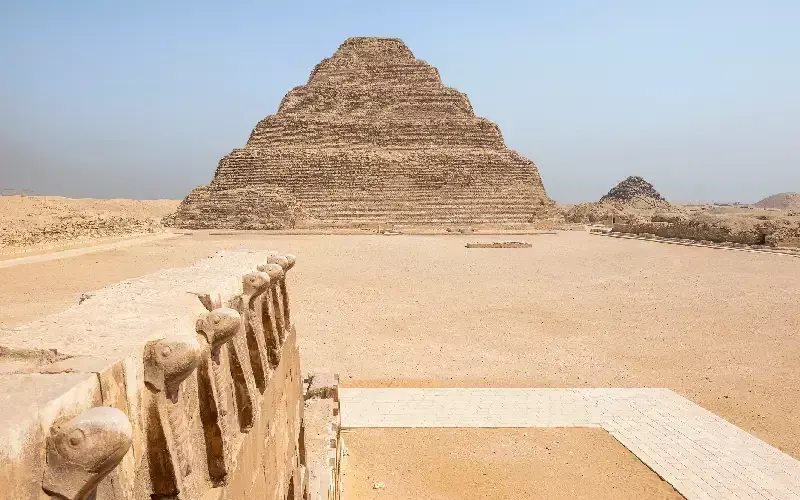
The necropolis contains a wide range of ancient structures, including pyramids, mastaba tombs, rock-cut tombs, temples, causeways, and valley temples. It also houses colossal statues, stelae, and burial complexes belonging to pharaohs, nobles, and high officials.
Saqqara is the oldest and largest cemetery within the necropolis. It features Djoser’s Step Pyramid, the world’s earliest large-scale stone monument, as well as hundreds of decorated tombs, pyramid complexes from various dynasties, and recently discovered burial shafts.
Customize Your Dream Vacation!
Get in touch with our local experts for an unforgettable journey.
Plan Your TripArchitectural evolution across dynasties
The evolution of pyramid construction reveals the ingenuity and experimentation of ancient Egyptian builders. Changes in design reflect shifts in religious beliefs, political circumstances, and available materials.
From stepped to smooth-sided pyramids
Djoser’s Step Pyramid marked the beginning of monumental stone building. By the Fourth Dynasty, Sneferu introduced major innovations. The Meidum Pyramid shows the transition from stepped to smooth-sided structures, while the Bent Pyramid captures an unusual mid-construction shift in angle. Sneferu’s final Red Pyramid achieved the fully smooth design perfected later at Giza.
Construction techniques and materials
Local limestone formed the core of most pyramids, while fine Tura limestone provided bright white casing blocks. Aswan granite was used for burial chambers and structural elements requiring exceptional strength. Workers transported massive stones using sledges pulled across dampened sand, reducing friction. Copper tools enabled craftsmen to shape softer stone with remarkable precision.
Symbolism in pyramid design
Pyramids symbolized the primordial mound from which creation emerged and echoed the sun’s rays descending to Earth. Their gleaming surfaces reflected sunlight, reinforcing their connection to solar worship. Many pyramids bore names associated with brilliance and radiance. Burial chambers featured shafts aligned to specific stars, providing symbolic pathways for the king’s soul to ascend to the heavens.
The rise and fall of pyramid building
The Fourth to Sixth Dynasties marked the golden age of pyramid construction, culminating with Khufu’s Great Pyramid. By the Fifth Dynasty, pyramid size and craftsmanship declined as royal power waned. Although pyramids continued into the Middle Kingdom, they shifted toward smaller structures often built with mudbrick, reflecting changes in political authority and religious focus.
Pyramid architecture in Egypt evolved from stepped structures to smooth-sided pyramids. It began with Djoser's Step Pyramid at Saqqara, progressed through experimental designs like Snefru's Bent Pyramid, and reached its pinnacle with the Great Pyramid of Khufu at Giza. Over time, the scale and precision of pyramid construction declined, with later pyramids often built using mudbrick instead of stone.
What archaeology reveals about Memphis Egypt
Modern archaeological technology has transformed our understanding of Memphis, challenging long-held assumptions about the layout and nature of the ancient capital.
Lack of early remains at Mit Rahina
Mit Rahina—long considered the heart of ancient Memphis—surprisingly contains few visible Old Kingdom remains. Continuous Nile flooding deposited layers of silt over millennia, burying early levels nearly four meters below today’s surface, which explains the limited remains currently visible.
New findings from drill core surveys
Since 1985, drill core projects led by the Egypt Exploration Society have uncovered deep layers of archaeological material long out of reach. The Abusir Drill Core Survey revealed early settlement traces across a wide area, demonstrating that Memphis extended far beyond previously identified boundaries.
Evidence of dispersed urban settlements
Recent findings show that the Nile once flowed several kilometers west of its current course, placing Memphis closer to the desert edge. Instead of a centralized city, Memphis consisted of scattered settlements spread across the entire necropolis zone. Artifacts from the Early Dynastic Period through the Old Kingdom appear at sites such as Abusir, Giza, Saqqara, and Dahshur.
Reassessing Memphis as a regional capital
Memphis differed from Mesopotamian-style enclosed cities. Instead, it functioned as a network of loosely connected settlements surrounding administrative and religious centers. Population estimates vary from 6,000 to 30,000 during the Old Kingdom. This dispersed pattern likely enhanced the city’s control over resources, promoting flexibility and regional integration.
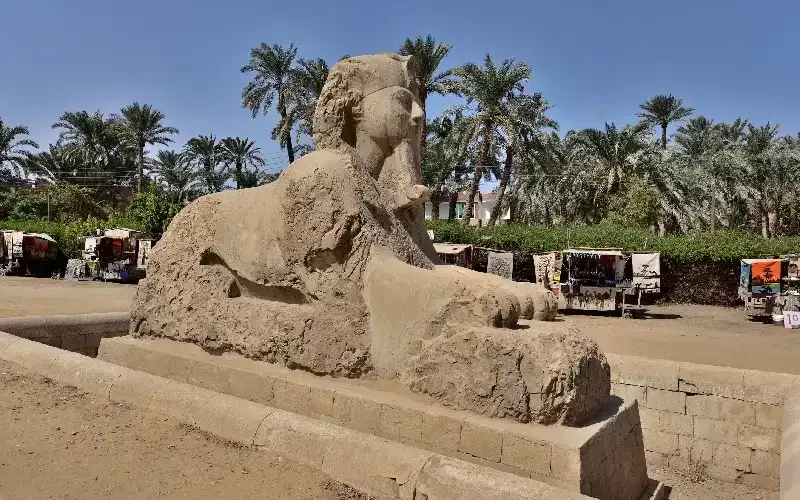
Modern excavations, mapping projects, and remote sensing technologies have revealed new tombs, mummy caches, and temples. These discoveries have expanded knowledge of daily life, religious rituals, and architectural techniques throughout Egypt’s Old Kingdom and beyond.
Across its 30-kilometer expanse, the Memphis Necropolis preserves an extraordinary record of ancient Egyptian civilization. Monumental pyramids, elaborate tombs, and religious structures reflect centuries of architectural innovation and spiritual devotion. Archaeological discoveries reveal a capital far more complex than previously believed—less a singular city than a constellation of interconnected settlements.
From the pioneering Step Pyramid at Saqqara to the Great Pyramid of Giza, Memphis showcases the evolution of engineering mastery and the changing fortunes of Egypt’s rulers. Although layers of silt hide much of the original city, ongoing research continues to shed light on its development. Today, the Memphis Necropolis stands as one of the world’s most important archaeological landscapes—a testament to a civilization whose monuments were built to last for eternity.
Memphis was the first capital of unified Egypt, founded about 5,000 years ago. It served as a crucial political and religious center, controlling the unified Egyptian state from its strategic location at the Nile Delta. The city's necropolis, stretching 30 kilometers along the Western Desert plateau, contains numerous pyramids, tombs, and temples, including the world's earliest stone monument - the Step Pyramid at Saqqara.
The Memphis Necropolis is a vast funerary landscape that includes the pyramid fields of Giza, Abusir, Saqqara, and Dahshur. Visitors can explore more than thirty-eight pyramids, thousands of rock-cut tombs, temples, shrines, and ceremonial courts. The site also features the Great Pyramid of Giza and the iconic Sphinx, offering a comprehensive view of ancient Egyptian mortuary practices and architectural evolution.
Recent archeological surveys, particularly drill core techniques, have revealed that Memphis was not a single concentrated settlement but rather a dispersed string of settlements extending throughout the 30-kilometer necropolis region. Evidence suggests the ancient Nile flowed closer to the desert edge, and early dynastic material has been found at various sites including Abusir, Abu Rowash, Giza, Saqqara, and Dahshur.
The Memphis Necropolis was recognized as a UNESCO World Heritage Site in 1979 due to its exceptional historical and archeological significance. It represents over 3,000 years of ancient Egyptian civilization, showcasing the evolution of funerary practices, architectural innovations, and religious beliefs. The site includes the only surviving wonder of the ancient world and provides invaluable insights into one of the world's earliest and most influential civilizations.
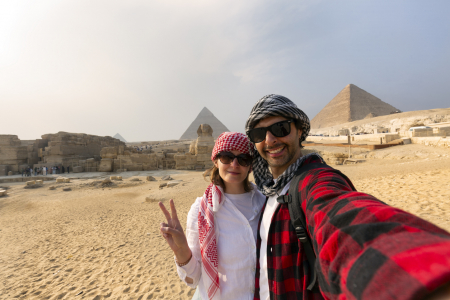

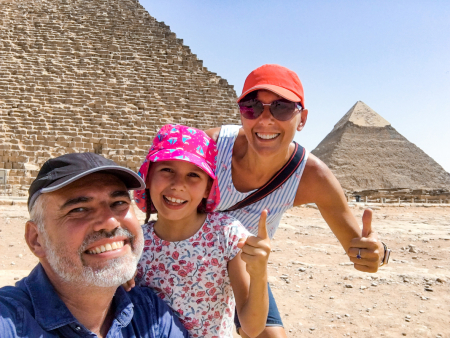
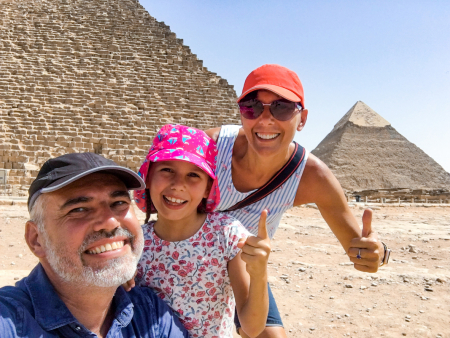

The Great Pyramids of Giza, Egypt’s iconic monuments, showcase ancient engineering brilliance and remain the last wonder of the ancient world, continuing to fascinate visitors and researchers alike.

The Egyptian Museum in Cairo houses over 170,000 ancient artifacts, including Tutankhamun's complete collection and golden death mask. Opened in 1902, it's the world's largest repository of Egyptian antiquities.

Khan el-Khalili is Cairo’s legendary medieval bazaar, where centuries-old Islamic architecture, vibrant trade, and timeless cafés create a living cultural landmark.

The Great Sphinx of Giza, with its lion body and pharaoh head, represents ancient Egyptian artistry, symbolic power, and enduring cultural fascination.

Tanoura is a traditional Egyptian Sufi dance known for its colorful spinning skirts, spiritual rhythm, and deep roots in ancient mystic traditions.

Saqqara, Egypt's ancient necropolis, features Djoser's Step Pyramid—the world's oldest. Spanning 3,000 years, it preserves royal tombs and sacred animal burials.

The Valley Temple at Giza, built 2570 BCE by Khafre, features 16 granite columns and hosted sacred afterlife rituals. Explore Fourth Dynasty architecture.

The Citadel of Cairo is a historic medieval fortress and royal complex, showcasing centuries of Egyptian power, Mamluk architecture, and Islamic heritage, now preserved as a UNESCO World Heritage Site.

Khufu's Solar Boat is a 142-foot cedar vessel discovered 1954 near the Great Pyramid. Built without nails 4,500 years ago, it's now at Grand Egyptian Museum.

St. George Church in Old Cairo, founded 684 AD, features unique circular design, sacred healing relics & underground chapel linked to the Holy Family's refuge.

Pyramids Sound and Light Show transforms Giza into open-air theater with 50 minutes of narration, music & lighting bringing ancient Egyptian history alive.

The Djoser Pyramid at Saqqara is Egypt's first pyramid, built 2600 BCE by architect Imhotep. Standing 62.5m tall, it reopened to visitors in 2020.

The Hanging Church in Old Cairo is a 1,300-year-old Coptic sanctuary built on Babylon Fortress. Free entry, open daily 9 AM-5 PM, dress modestly required.
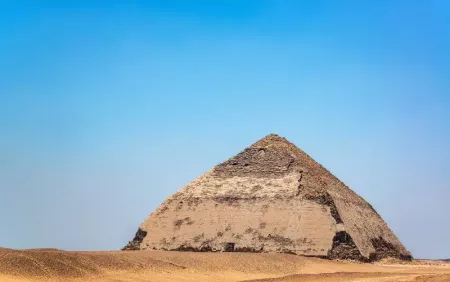
The Bent Pyramid at Dahshur features a rare bent profile created by ancient construction adjustments, offering insight into Egypt’s earliest attempts at smooth-sided pyramids.

Coptic Cairo features 4th-century churches and recent tomb discoveries revealing early Christian heritage. Explore the Hanging Church, Abu Serga & sacred sites.
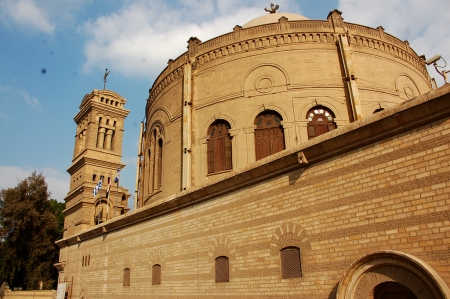
Saint Barbara’s Church in Coptic Cairo is one of Egypt’s oldest Christian monuments, dating back to the 5th–6th century. Known for housing the relics of Saint Barbara, the church reflects centuries of Coptic heritage, architectural evolution, and deep spiritual significance.

Explore the Fortress of Babylon, a major Roman fort in Old Cairo known for its strategic location, massive towers, and enduring historical significance.
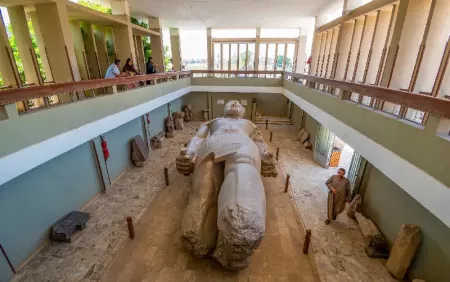
Memphis Necropolis is Egypt’s ancient royal burial site, home to pyramids, tombs, and monuments that reflect the early development of pharaonic civilization.
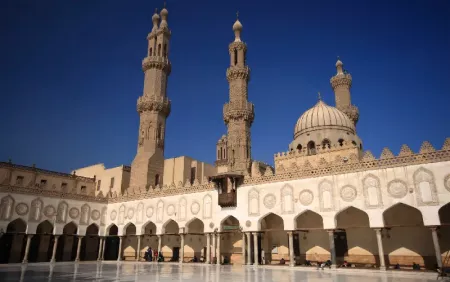
Al-Azhar Mosque is a landmark of Islamic scholarship and Fatimid architecture, home to the world’s second-oldest university and a symbol of Cairo’s spiritual heritage.
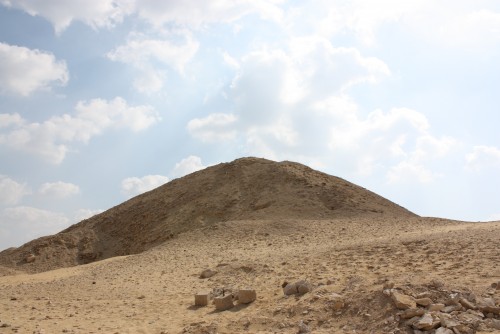
Teti’s Pyramid in Saqqara is an Old Kingdom monument built for the first king of the Sixth Dynasty. Known for its Pyramid Texts and unique mortuary chapel, it remains one of Egypt’s most historically important royal tombs.
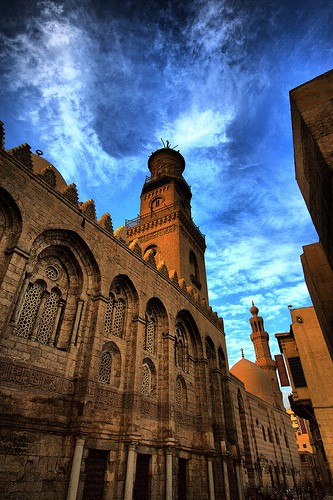
Al Muizz Street is one of Cairo’s oldest and most vibrant historic avenues, showcasing centuries of Islamic architecture. Lined with mosques, palaces, and bustling markets, it offers a captivating walk through Egypt’s medieval past.
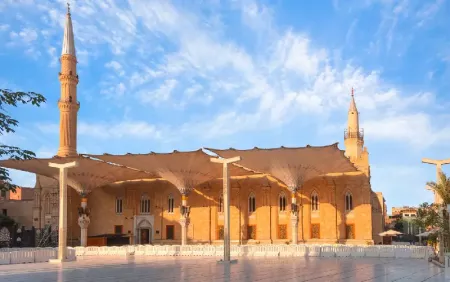
Al-Hussein Mosque is one of Cairo’s most sacred Islamic landmarks, built in 1154 and revered for housing the head of Imam Hussein. Located by Khan El-Khalili, it blends centuries of architectural heritage and remains a major pilgrimage site.
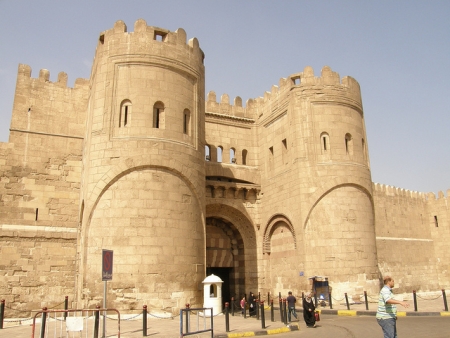
Bab al-Futuh is an 11th-century Fatimid gate in Old Cairo, famous for its massive round towers and strategic role in the city’s medieval fortifications.
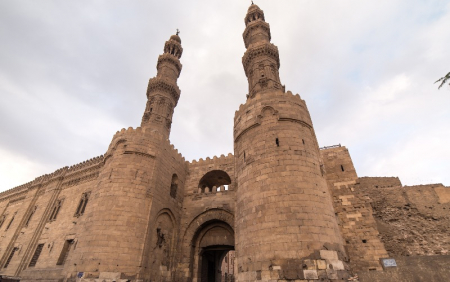
Bab Zuweila is one of Cairo’s last surviving medieval gates, built in 1092 CE by the Fatimid vizier Badr al-Jamali. Famous for its towering twin bastions, massive wooden doors, and later Mamluk minarets, it served as a defensive stronghold, execution site, and ceremonial gateway. Today, it stands as one of Cairo’s most iconic historic monuments.
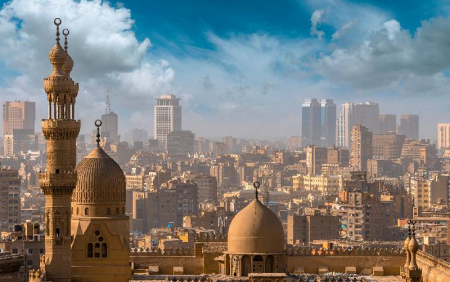
Al Rifai Mosque in Cairo blends Neo-Mamluk architecture with royal history. Completed in 1912, it serves as both a majestic mosque and mausoleum for Muhammad Ali’s family.
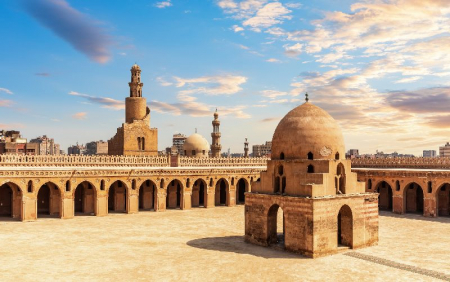
The Ibn Tulun Mosque, Cairo’s oldest well-preserved mosque, dates back to 879 CE. Famous for its vast square layout, intricate arches, and 128 ornate stucco windows, it remains a pinnacle of early Islamic architecture and a must-visit historical landmark.
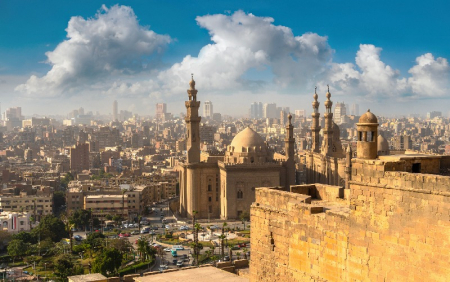
The Sultan Hassan Mosque, built in the 14th century, is a Bahri Mamluk architectural marvel in Cairo, renowned for its grand portal, extensive madrasas, and historic significance.

The Suez Canal, Egypt’s iconic waterway, connects Africa and Asia, handling thousands of ships yearly and shaping international trade.
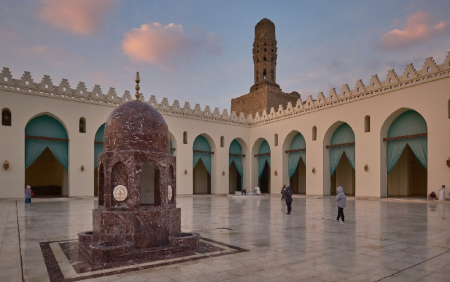
Al-Hakim Mosque, Cairo, is a stunning Fatimid-era mosque built between 990–1013 CE. Famous for its grand courtyard, distinctive minarets, and rich history, it remains a key cultural and religious landmark.
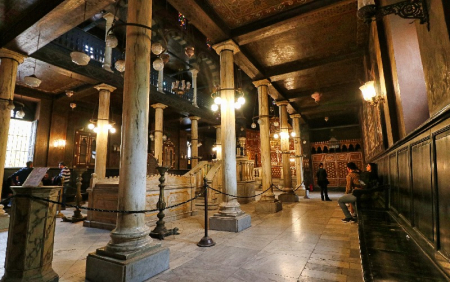
The Ben Ezra Synagogue, founded in the 11th century in Old Cairo, is Egypt’s oldest Jewish monument and the discovery site of the renowned Cairo Geniza.