Home
Home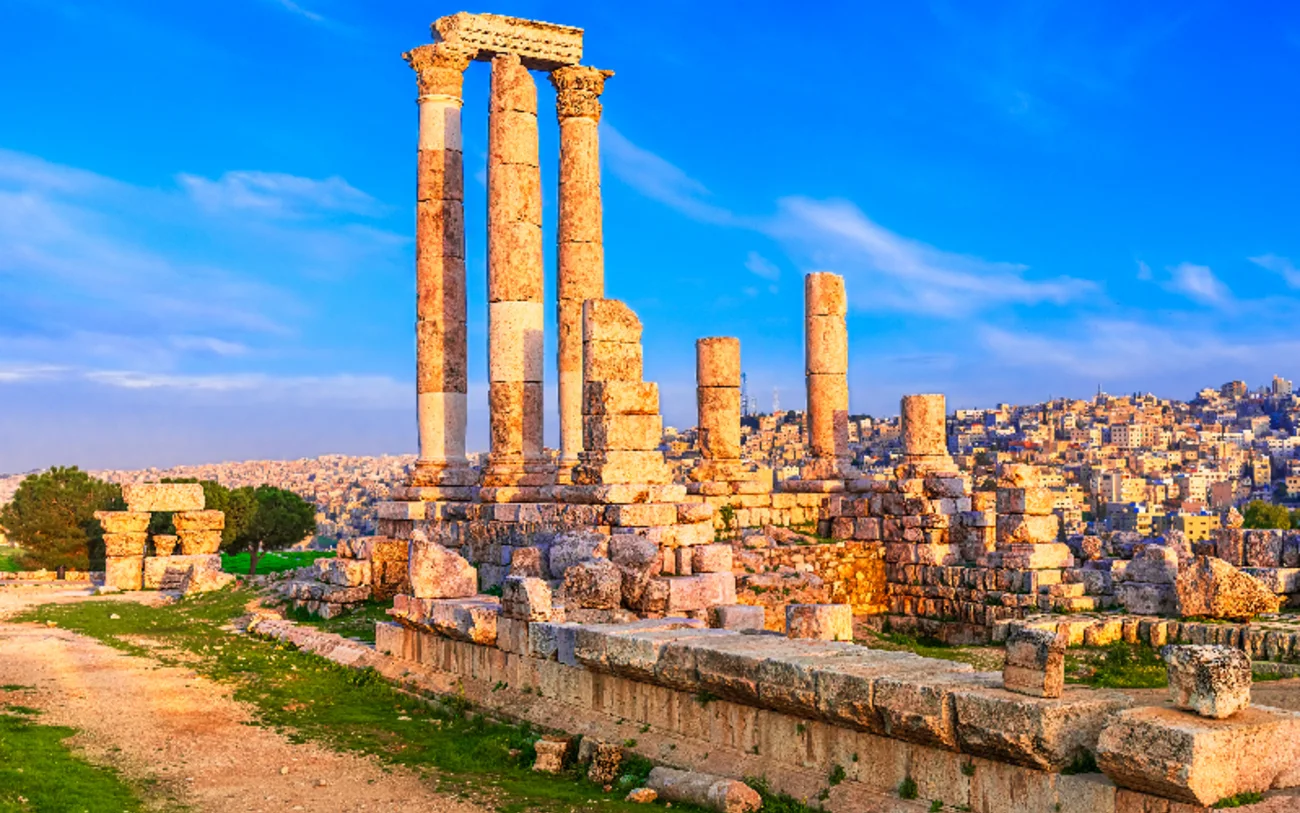
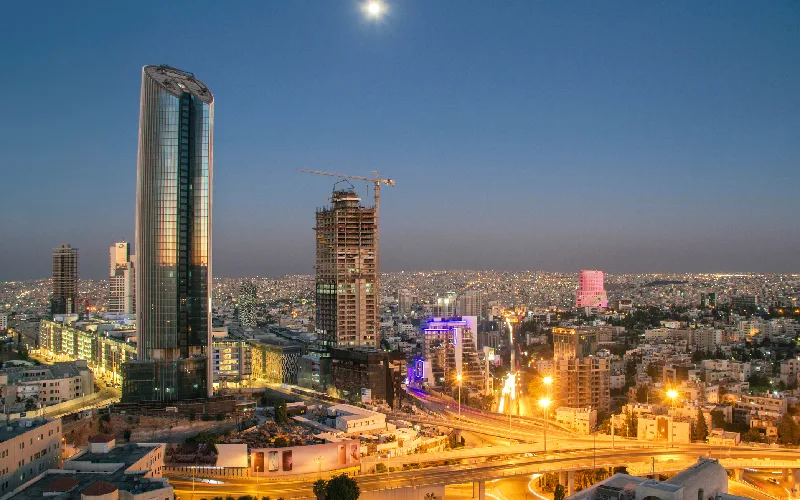
Most capital cities announce themselves. Amman doesn't. It reveals itself gradually — a white limestone city spilling across hills, where a Roman theatre sits below an ancient citadel, and where a settlement 9,000 years old shares ground with neighbourhoods built last decade.
It is one of the oldest continuously inhabited places on earth, and also one of the newest capitals in the region. Both are true, and that tension explains almost everything about the city.
What Is Amman?
Amman is the capital and largest city of Jordan, built across a series of hills on the East Bank plateau at elevations ranging roughly from 700 to 1,100 metres.
- Population: around 4 million in the metropolitan area — about 40% of Jordan's total
- Founded: continuously inhabited since at least 7000 BC
- Became capital: 1921, under Abdullah I
- Historic names: Rabbath Ammon, Philadelphia, Amman
- Climate: semi-arid, with cold winters and snow most years
The city was originally built on seven hills; expansion has spread it across nineteen or more. Those hills, called jabal in Arabic, still function as the city's mental map — ask someone where they live and you'll get a hill, not a street.
Amman capital of Jordan is a recent designation. For most of its history this was a provincial town, never the centre of anything.
Nine Thousand Years in One Place
Neolithic beginnings. At Ain Ghazal, on the city's northeastern edge, archaeologists uncovered one of the largest known Neolithic settlements in the Near East, occupied from around 7250 BC. It produced plaster statues dating to roughly 7000 BC — among the oldest large-scale human figures ever made, predating writing, pottery and metalworking.
Rabbath Ammon. By the Iron Age the city was capital of the Ammonites, a kingdom appearing repeatedly in the Hebrew Bible. The name survives directly: Ammon became Amman, essentially unchanged across three thousand years.
Philadelphia. In the third century BC, Ptolemy II Philadelphus rebuilt and renamed the city after himself. It later joined the Decapolis and prospered under Rome — the theatre, odeon and Temple of Hercules all date from this period.
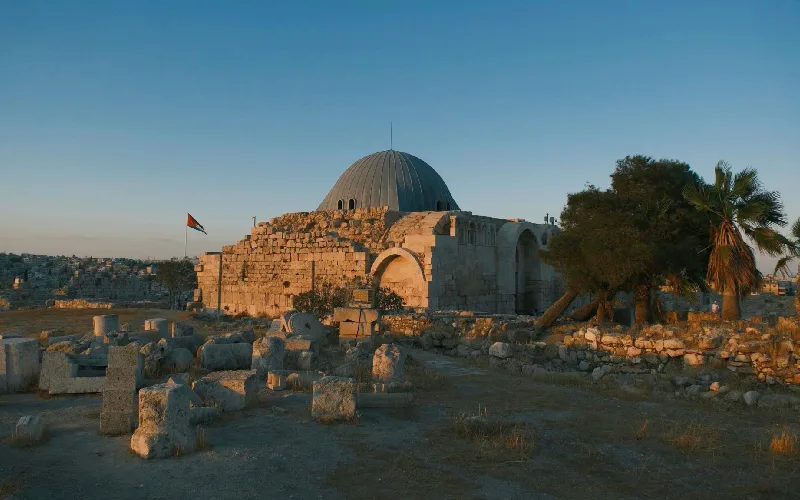
Umayyad Amman. After the Muslim conquest the ancient name returned, and the Umayyads built a substantial palace complex on the Citadel hill in the eighth century.
The long decline. From around the tenth century Amman shrank drastically — earthquakes, shifting trade routes and instability reduced it to ruins. Nineteenth-century travellers described an empty site with impressive Roman remains.
Circassian resettlement. In 1878 the Ottoman authorities settled Circassian refugees from the Caucasus here. They rebuilt around the Roman theatre and established the nucleus of the modern city.
Capital city. In 1921 Abdullah I chose Amman as seat of the new Emirate of Transjordan, largely for its position on the Hejaz Railway. The population then was in the low thousands.
Because it absorbed successive waves of regional displacement. Growth came in surges tied to events elsewhere — large refugee arrivals followed the conflicts of 1948 and 1967, and later instability brought further waves from Iraq and Syria. Each influx reshaped the city's neighbourhoods and demographics, and the rapid, sometimes improvised expansion is still visible in its layout.
The Citadel and the Roman City Below
Amman's ancient core sits on two levels, one directly above the other.
Jabal al-Qal'a — the Citadel has been occupied more or less continuously for thousands of years. Surviving on the plateau today:
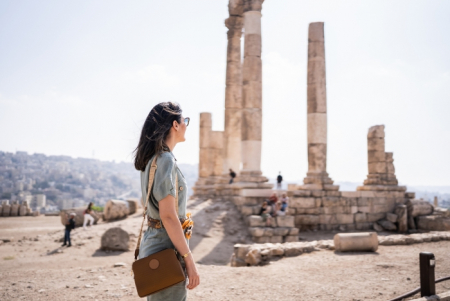
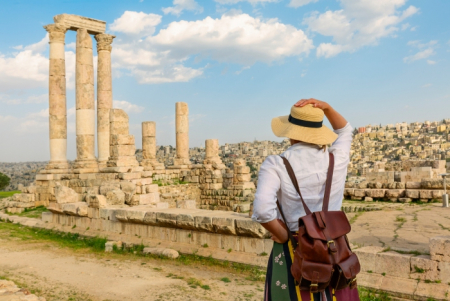
- The Temple of Hercules, Roman, second century AD — fragments of a colossal marble hand suggest a statue possibly over ten metres tall
- The Umayyad Palace, eighth century, with a partially reconstructed domed audience hall
- A Byzantine church, sixth century
- Iron Age and Ammonite remains, including defensive walls
- The Jordan Archaeological Museum, holding finds from across the country
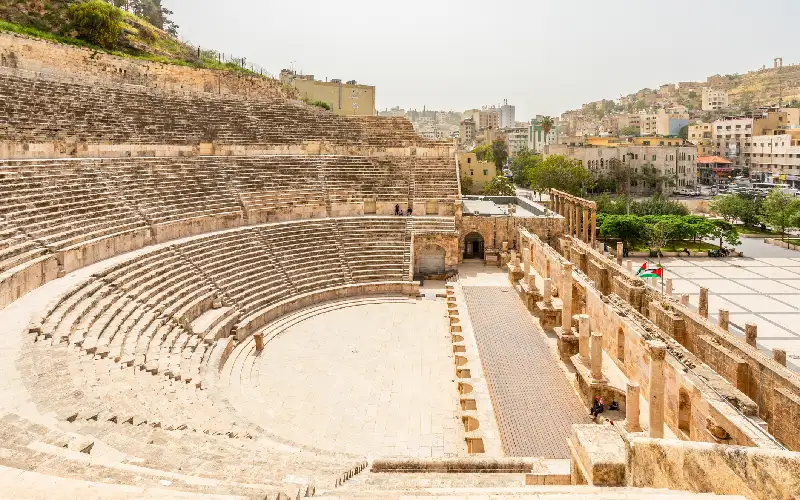
The Roman Theatre, cut into the hillside directly below, seated around 6,000 and faces north to keep the audience out of direct sun. It's still used for performances. Beside it sit the smaller Odeon and the remains of the Nymphaeum.
Partly material, partly luck. Theatres cut into hillsides survive far better than free-standing ones, because the slope carries the structural load — there are simply fewer walls to collapse. Amman's long decline also helped: with few people around to quarry the stone for reuse, the theatre was left intact rather than dismantled for building material, which is what happened to many Roman structures elsewhere.
Customize Your Dream Vacation!
Get in touch with our local experts for an unforgettable journey.
Plan Your Trip
How the City Is Laid Out
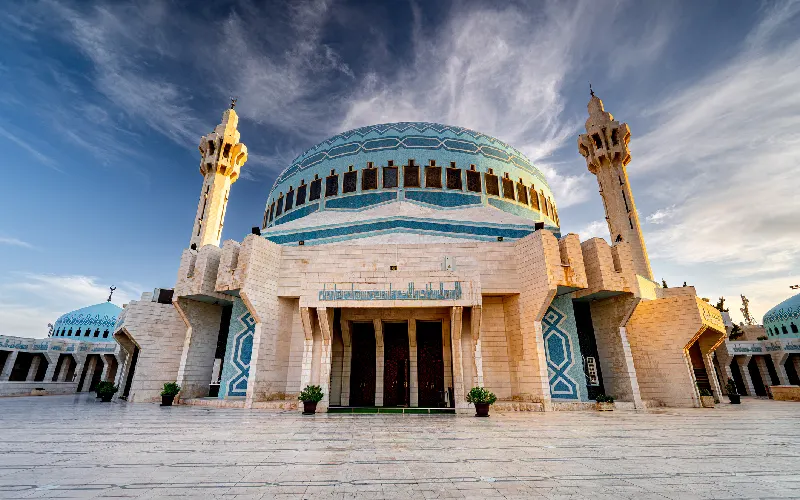
Downtown, or al-Balad, sits in a valley at the base of the hills — the Roman theatre, the Grand Husseini Mosque, the gold and spice souks. Everything else radiates upwards from here.
The hills rise on all sides. Jabal Amman and Jabal al-Weibdeh, next to downtown, are the older residential quarters: 1920s–50s stone villas, narrow stairways connecting streets at different levels, galleries and cafés.
West Amman developed later and holds most of the modern commercial activity. East Amman contains much of the older residential density.
The Circles. The main east–west artery is punctuated by numbered roundabouts — First Circle through Eighth. Residents navigate by them constantly, giving addresses relative to the nearest circle rather than by street name. Several have since been replaced by junctions or tunnels; the names persist anyway.
The stairs. Because neighbourhoods sit at different elevations on the same hillside, Amman has an extensive network of public staircases, some with hundreds of steps.
The practical consequence: distances mislead. Two points can be close in a straight line and far apart by road, because a valley sits between them.
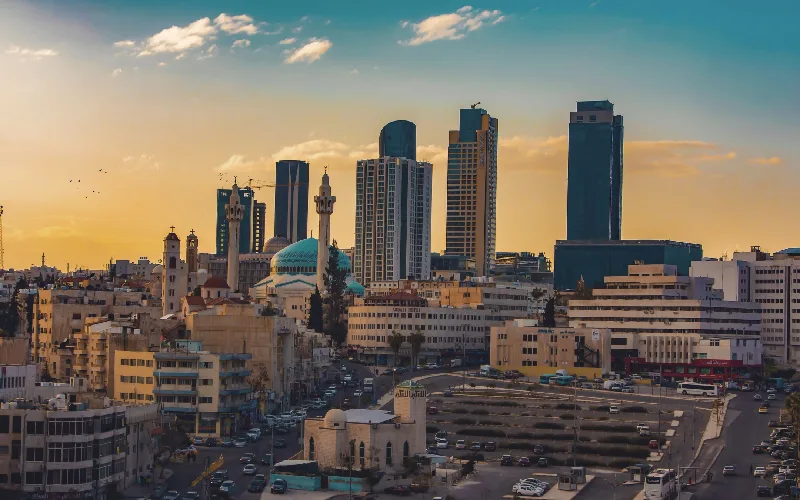
The Look and Feel of the City
Amman is overwhelmingly white, and that's not an accident. Municipal regulations require buildings to be faced in local limestone — white through cream to pale pink — giving the city a visual coherence unusual for somewhere that grew this fast.
The climate surprises people. At 700–1,100 metres, Amman is far cooler than its latitude suggests. Summers are hot but dry with meaningful evening drops; winters run near freezing at night, and snow falls most years.
The pace is calmer than most regional capitals — visitors arriving from Cairo or Beirut almost always remark on it.
The culture blends Jordanian tribal traditions, the Circassian and Chechen communities descended from the 1878 settlement, a large Palestinian-origin population, and more recent Iraqi and Syrian arrivals. Mansaf — lamb cooked in fermented dried yoghurt over rice — is the national dish and carries real ceremonial weight at weddings and funerals.
Arabic, in its Levantine dialect — closely related to Syrian, Lebanese and Palestinian speech. Within Amman several variants coexist, reflecting the different origins of the population. English is very widely spoken, particularly in West Amman and among younger residents, and most signage is bilingual. Circassian is still spoken within that community.
Amman's Place in Jordan and the Region
Geographically, Amman sits at a crossroads. The Dead Sea lies roughly an hour west at over 400 metres below sea level — a vertical drop of more than a kilometre. Madaba and Mount Nebo are southwest, Jerash and Ajloun north, and the King's Highway runs south towards Kerak, Petra and Wadi Rum.
Economically, Jordan has limited natural resources, no significant oil, and severe water scarcity, so the economy leans on services, trade, and a well-developed medical and educational sector drawing patients and students from across the region.
Regionally, Jordan's position between Israel, the Palestinian territories, Syria, Iraq and Saudi Arabia has made Amman a centre for diplomacy, international organisations and humanitarian operations.
Culturally, a substantial arts scene has developed over the past two decades, particularly in Jabal al-Weibdeh.
The site has been inhabited for around 9,000 years, with the Neolithic settlement at Ain Ghazal dating to roughly 7250 BC — making Amman one of the oldest continuously inhabited places on earth. "Continuously" comes with an asterisk, since the city was very nearly abandoned for several centuries before its resettlement in 1878.
Because building regulations require exteriors to be faced in local limestone, which is predominantly white or cream. The rule produces unusual visual uniformity across a city that otherwise grew rapidly and without much overall planning.
No. It became capital in 1921, when Abdullah I established the Emirate of Transjordan and chose Amman as his seat — partly for its position on the Hejaz Railway. Before that it was a town of a few thousand people, and for most of its history a provincial centre rather than a capital of anything.
Philadelphia, after Ptolemy II Philadelphus, who rebuilt the city in the third century BC. It has no connection to the American city, which took the same Greek roots — meaning "brotherly love" — independently.
Yes, most years. At 700–1,100 metres, winter temperatures drop near or below freezing at night and snowfall is a normal part of the season. Heavier storms occasionally shut the city down for a day or two, since the hilly terrain makes even modest accumulation hard to drive on.
Broadly age, density and development pattern. East Amman holds much of the older residential fabric and several neighbourhoods that grew from refugee settlement. West Amman developed later and more spaciously, with most modern commercial activity. The distinction is real but often overstated — the city is far more mixed than the shorthand suggests.
Because the terrain makes a grid impossible. The main western artery runs along a ridge marked by numbered roundabouts, and those became natural reference points in a city where street names were inconsistently used and hills interrupt every straight line. Several circles have been rebuilt as junctions, but the numbering survives in speech.
Large plaster human figures found at the Neolithic site on Amman's northeastern edge, dating to around 7000 BC. They stand up to roughly a metre tall with painted eyes and modelled features, and are among the earliest large-scale representations of the human form ever discovered — predating writing by several thousand years.



Learn about Jordan attractions, ancient history, and local traditions. Find must-visit places and start planning your unforgettable experience today.
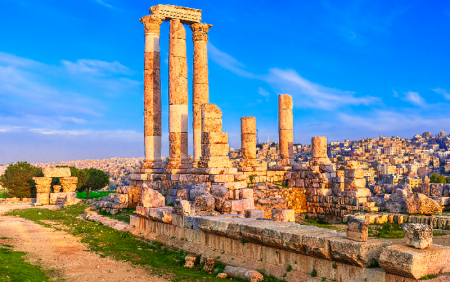
Jordan's capital and largest city, Amman spreads across a landscape of hills with a history reaching back nine millennia — from Neolithic settlement to Roman Philadelphia to modern Arab capital.
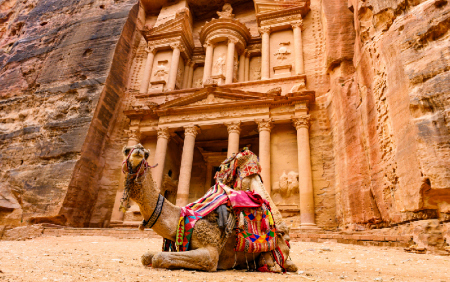
Petra is an ancient city carved into rose-red sandstone cliffs in southern Jordan, once the capital of the Nabataean civilisation and one of the most significant archaeological sites in the world — a UNESCO World Heritage Site and one of the New Seven Wonders of the World.
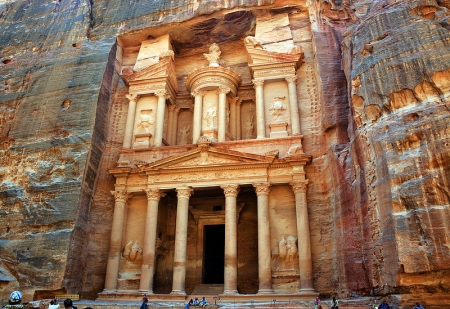
The Treasury (al-Khazneh) positioned opposite the main route into Petra. it was given by the local Bedouin tribes behind the belief that the urn on top of the front entrance contained the treasure of a pharaoh.
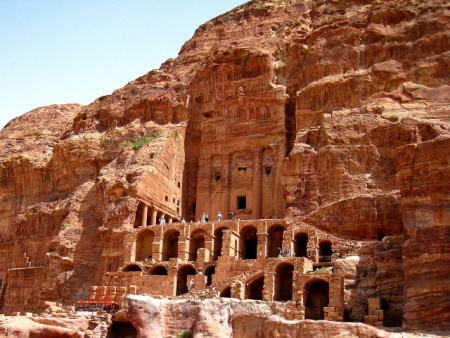
During any trip to Petra, you shouldn't miss the unpredictable Royal Tombs that took its name from the rich decoration. Know More!
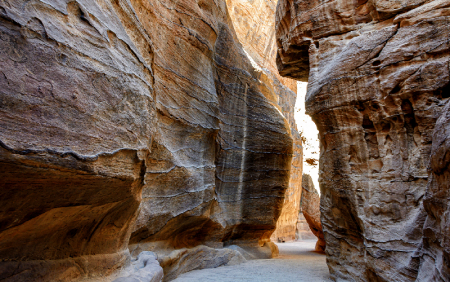
A 1.2-kilometre gorge with walls rising up to 180 metres, the Siq is Petra's main entrance — a natural rock fissure the Nabataeans turned into a processional way and a water system.
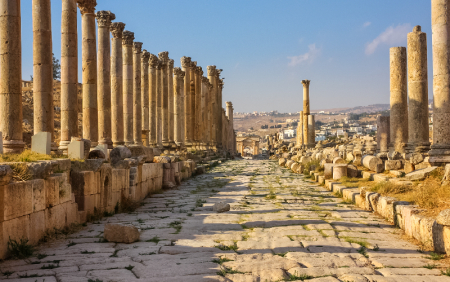
Jerash in northern Jordan is one of the best-preserved Roman cities outside Italy. A former member of the Decapolis league, it retains its colonnaded streets, temples, theatres and triumphal arches after nearly two thousand years.
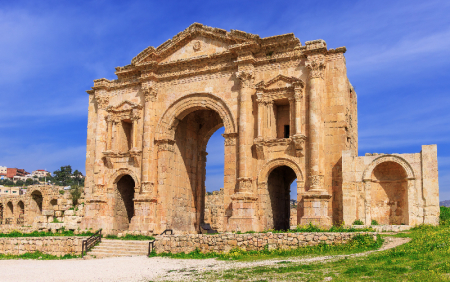
The monumental Roman gateway built to welcome Emperor Hadrian to ancient Gerasa in AD 129 — and still the most dramatic first sight in Jerash today.
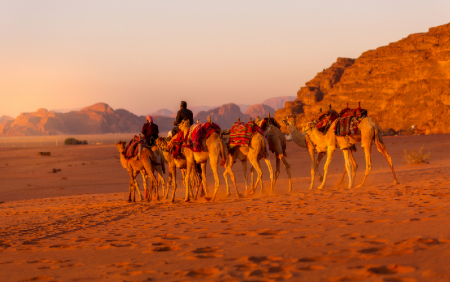
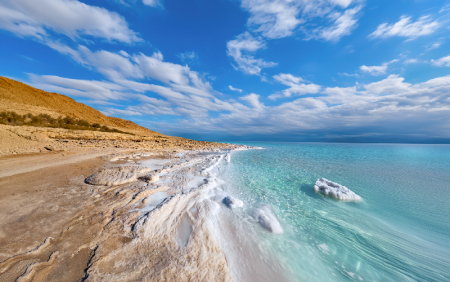
The Dead Sea is a hypersaline lake in the Jordan Rift Valley, sitting around 430 metres below sea level — the lowest point on Earth and one of the saltiest waters in the world. Its mineral-rich water and therapeutic mud have drawn health seekers for thousands of years.
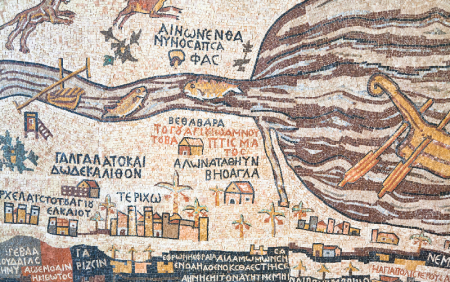
A sixth-century mosaic pavement in Madaba, Jordan, the Madaba Map is the oldest surviving cartographic image of the Holy Land — and the earliest detailed depiction of Jerusalem anywhere.
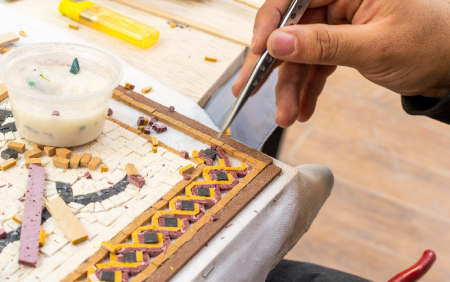
An ancient town on Jordan's King's Highway, Madaba holds the greatest concentration of Byzantine mosaics in the country — including the oldest surviving map of the Holy Land.
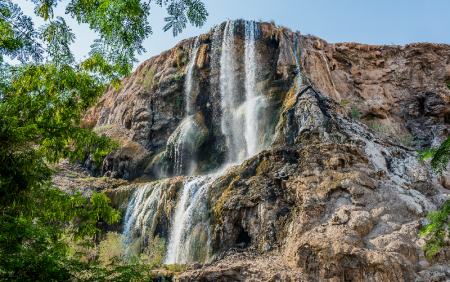
A chain of thermal waterfalls in a desert gorge below sea level, Ma'in Hot Springs has drawn bathers since antiquity — and appears on the sixth-century Madaba Map by name.
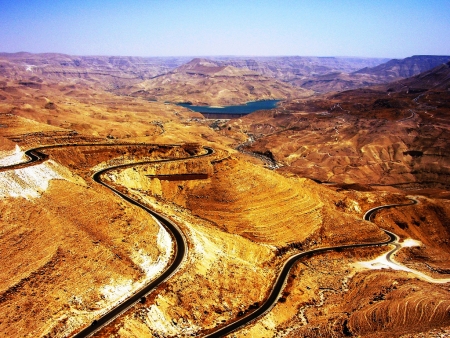
Mount Nebo is an elevated Mountain in Jordan, approximately 817 metres above sea level,.... Know More!
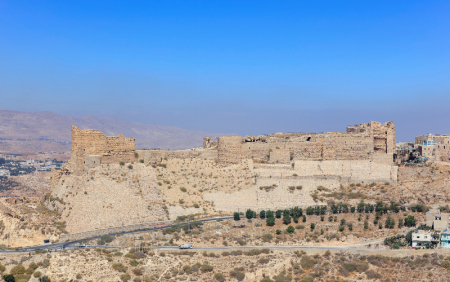
Built from the 1140s on a spur above the King's Highway, Kerak Castle is one of the largest Crusader fortresses in the Levant — and the setting for one of the strangest sieges in medieval history.
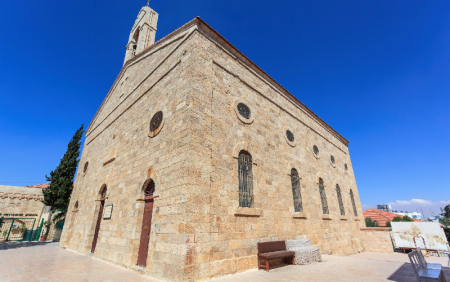
A working Greek Orthodox church in Madaba, Jordan, built in the 1890s over a Byzantine predecessor — and home to the sixth-century mosaic map of the Holy Land.

Mukawir (Machaerus) is an hour away and about 45 kms, away from Madaba on the Kings’ Highway. Know More !
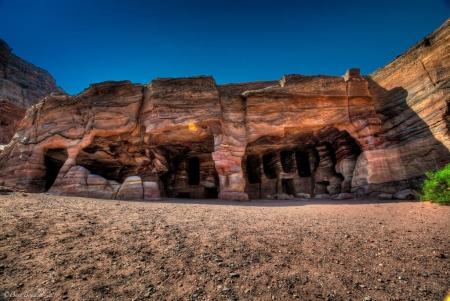
The Nabataeans (Nabateans) were an Arab people who lived in northern Arabia and the Southern Levant. They built the assumed capital city of Petra. Know more!
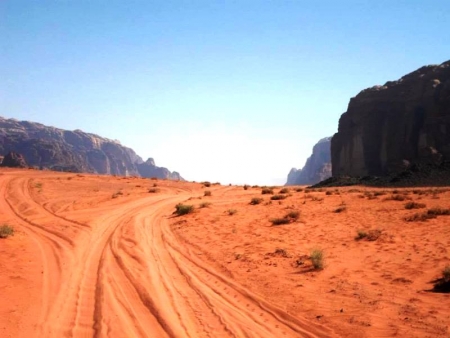
Lawrence of Arabia is a film directed by the global British director David Lean in 1962 and production of Sam Spiegel and starring Peter O'Toole role Lawrence.