Home
Home
Petra is an ancient archaeological city located in the Ma'an Governorate of southern Jordan, carved directly into rose-coloured sandstone cliffs by the Nabataean civilisation approximately 2,300 years ago. Known widely as the Rose City for the distinctive hue of the rock from which it is hewn, Petra served as the capital of the Nabataean Kingdom and one of the ancient world's most prosperous trading centres. Today it stands as Jordan's most visited destination, a UNESCO World Heritage Site since 1985, and one of the New Seven Wonders of the World as declared by a global vote in 2007.
The ancient city of Petra occupies a dramatic landscape of mountains, gorges, and desert valleys in the southern Jordanian highlands, hidden from the outside world by a series of narrow canyons that made it both naturally fortified and strategically positioned along the trade routes connecting Arabia, Egypt, the Levant, and the Mediterranean world.
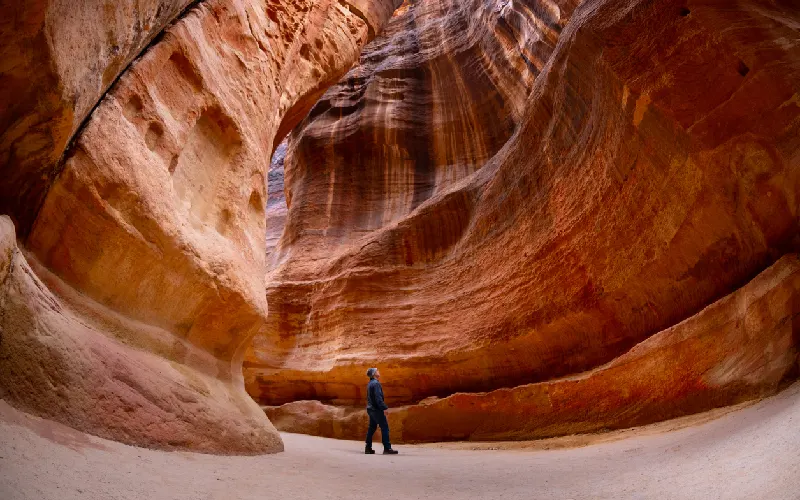
The Origins and History of Petra
The history of Petra begins with the Nabataeans, a nomadic Arab people who settled in the region around the fourth century BCE and gradually transformed a naturally fortified desert location into one of the ancient world's most sophisticated urban centres. The Nabataeans were not merely traders but accomplished engineers, architects, and water managers who built an entire civilisation within a landscape that offered almost no natural water supply.
At the height of its power between the first century BCE and the first century CE, Petra City Jordan functioned as the commercial hub of a kingdom that controlled the trade in frankincense, myrrh, spices, silk, and other luxury goods passing between Arabia and the Mediterranean world. The wealth generated by this trade financed the extraordinary building programme that produced the monuments visible today.
In 106 CE, the Roman Emperor Trajan annexed the Nabataean Kingdom and incorporated Petra into the Roman province of Arabia Petraea. Under Roman rule, the city gained colonnaded streets, public baths, and additional monumental architecture, leaving a layered legacy that blends Nabataean, Hellenistic, and Roman influences across a single site.
The city's gradual decline began with the shifting of trade routes away from overland caravans toward maritime routes, a process accelerated by a catastrophic earthquake in 363 CE that destroyed much of the city's infrastructure. By the Byzantine period Petra had shrunk considerably, and following the Islamic conquest of the seventh century it faded further from prominence. A second major earthquake in 749 CE caused widespread destruction, and Petra slipped into relative obscurity for nearly a thousand years. The city was reintroduced to the Western world in 1812 by Swiss explorer Johann Ludwig Burckhardt, who disguised himself as a Muslim pilgrim to gain access to what local Bedouin communities had quietly inhabited for centuries.

Petra was built by the Nabataeans, an ancient Arab civilisation, beginning around the fourth century BCE. The city reached its peak between the first century BCE and the first century CE, when it served as the capital of the Nabataean Kingdom and one of the ancient world's most important trading centres.
The Nabataean Civilisation and Their Legacy
The Nabataeans were one of the ancient world's most remarkable peoples — a civilisation that rose from nomadic origins to build a sophisticated urban culture with advanced hydraulic engineering, distinctive artistic traditions, and a written script that formed the direct ancestor of modern Arabic writing.
Their mastery of water management was perhaps their greatest achievement. In a desert environment receiving minimal annual rainfall, Nabataean engineers constructed an elaborate network of dams, cisterns, channels, and ceramic pipelines that collected, stored, and distributed water throughout Petra and its surrounding agricultural territories. This system allowed a city of an estimated 20,000 to 30,000 inhabitants to thrive in conditions that would otherwise have made permanent settlement impossible.
Nabataean religious practice was polytheistic, centred on deities associated with natural phenomena, celestial bodies, and ancestral spirits. Their principal deity was Dushara, a god represented by a simple block of stone, alongside the goddess Al-Uzza, associated with the planet Venus. Evidence of religious practice is visible throughout the ancient city of Petra in the form of high places of sacrifice, carved niches, and altars hewn directly into the cliff faces.
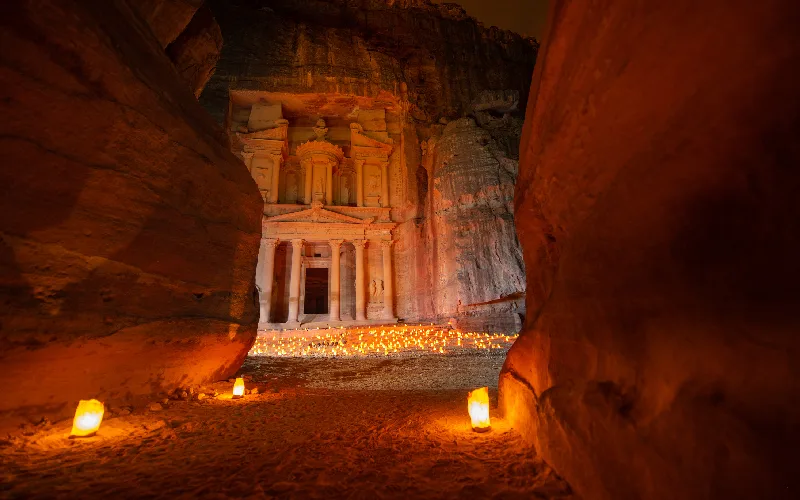
The Nabataeans engineered one of the ancient world's most sophisticated water management systems, constructing dams, cisterns, channels, and ceramic pipelines that collected and distributed rainwater and flash flood water throughout the city. This hydraulic infrastructure allowed a population of up to 30,000 people to thrive in an environment with minimal natural water supply.
Customize Your Dream Vacation!
Get in touch with our local experts for an unforgettable journey.
Plan Your Trip
The Architecture of the Rose City
The defining characteristic of Petra's architecture is its rock-cut construction — structures carved directly into natural sandstone formations rather than built from separate materials. This technique, refined over centuries by Nabataean craftsmen, produced monuments of extraordinary visual impact whose integration with the natural landscape remains unmatched in the ancient world.
The architectural vocabulary of Petra reflects the civilisation's position at the crossroads of multiple cultural traditions. Nabataean elements — characterised by distinctive stepped crow-step mouldings and simplified classical forms — appear alongside Hellenistic decorative motifs, Roman structural innovations, and Egyptian architectural references, creating a hybrid visual language that is entirely unique to this place and period.
The rock through which Petra is carved is Nubian sandstone, formed over millions of years from ancient desert sands compressed and oxidised into the swirling layers of red, orange, purple, and gold that give the Rose City its extraordinary visual character. No two facades are identical in their colouration, as the natural variation in mineral composition produces an ever-changing palette across the cliff faces.
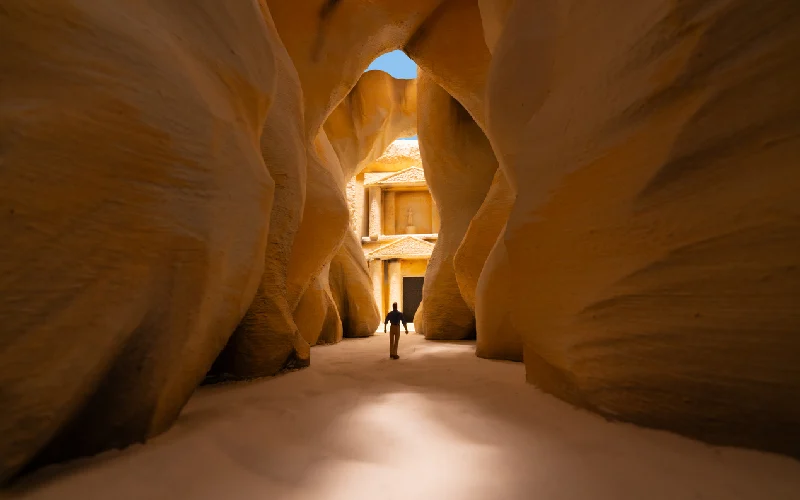
Petra earned the nickname the Rose City from the distinctive rose-red colour of the Nubian sandstone into which its monuments are carved. The rock's natural mineral composition produces swirling layers of red, orange, purple, and gold that give the ancient city its extraordinarily vivid and constantly changing visual character.
The Major Monuments of Petra
Al-Khazneh — The Treasury
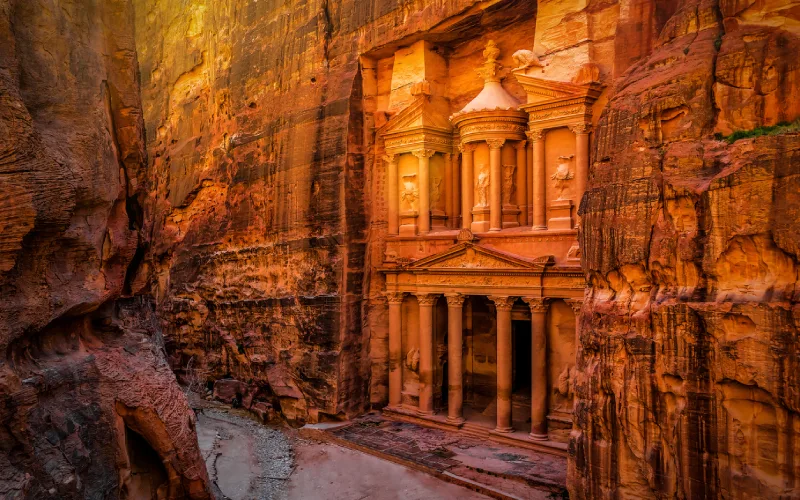
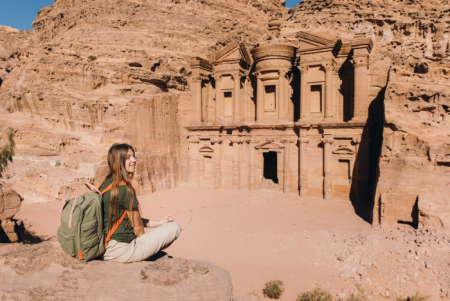
Al-Khazneh is the most iconic monument in Petra and one of the most recognised archaeological structures in the world. Its elaborately carved facade rises approximately 40 metres from the canyon floor, featuring two storeys of columns, statues, and intricate decorative reliefs influenced by Hellenistic architectural conventions. The popular name Treasury derives from a Bedouin legend that an ancient pharaoh concealed treasure within the urn carved at its summit — a legend entirely without historical foundation. Scholars generally believe Al-Khazneh functioned as a royal tomb, most likely for the Nabataean King Aretas III, dating to the first century BCE.
The Siq
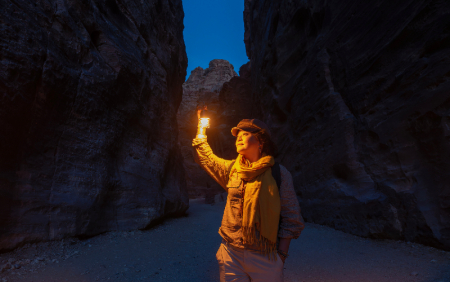
The Siq is the primary entrance corridor to the ancient city of Petra — a natural geological fissure stretching approximately 1.2 kilometres through towering sandstone walls that reach heights of up to 80 metres. Formed by tectonic forces that split the mountain rather than by water erosion, the Siq was enhanced by the Nabataeans with paved surfaces, water channels running along both sides, and votive niches carved into the walls. The dramatic narrowing and winding of the passage creates a carefully orchestrated approach that culminates in the sudden revelation of the Treasury facade — an architectural sequence of exceptional theatrical power.
Ad-Deir — The Monastery
Ad-Deir, known as the Monastery, is the largest monument in Petra, its facade measuring approximately 47 metres wide and 48 metres tall. Reached via a climb of more than 800 rock-cut steps, it shares architectural similarities with the Treasury but is substantially less ornate and significantly larger. The interior consists of a single large chamber whose walls bear the marks of Christian crosses, suggesting the building was used as a church during the Byzantine period — the origin of its modern name.
The Royal Tombs
The eastern cliff face of Petra contains a series of monumental facades collectively known as the Royal Tombs, comprising the Urn Tomb, Silk Tomb, Corinthian Tomb, and Palace Tomb. Each represents a different scale and degree of architectural elaboration, and together they provide valuable evidence for the development of Nabataean funerary architecture across several centuries.
The Colonnaded Street and Roman Quarter
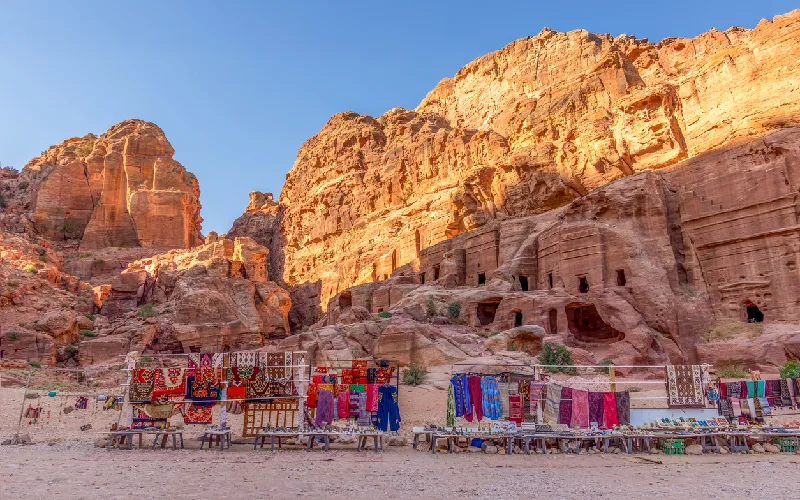
The main street of ancient Petra follows the course of a seasonal watercourse and was transformed under Roman rule into a colonnaded thoroughfare flanked by shops, public buildings, and temples. The remains of the Nymphaeum, the Great Temple, the Temple of the Winged Lions, and various Byzantine churches indicate the successive layers of occupation that accumulated here over several centuries.
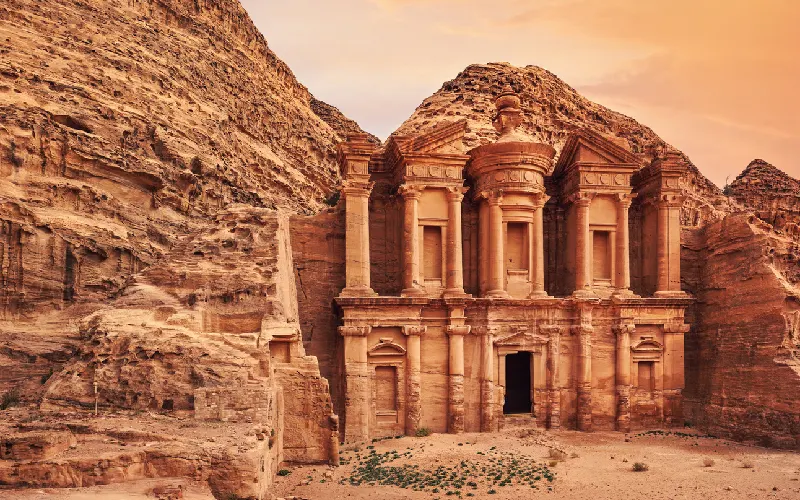
Despite its popular name, Al-Khazneh — the Treasury — was almost certainly not used to store treasure. Most archaeologists believe it functioned as a royal tomb, most likely built for the Nabataean King Aretas III in the first century BCE. The name Treasury derives from a Bedouin legend claiming an ancient pharaoh hid riches within the decorative urn at its summit.
Petra as a UNESCO World Heritage Site
Petra was inscribed on the UNESCO World Heritage List in 1985, recognised for its outstanding universal value as an archaeological site of exceptional cultural and historical significance. The inscription acknowledged both the extraordinary preservation of the Nabataean monuments and the broader archaeological landscape of the surrounding region, which contains evidence of human occupation spanning many thousands of years.
Conservation challenges at Petra are significant. Salt crystallisation within the sandstone is causing ongoing surface deterioration of carved facades. Increased visitor numbers have accelerated erosion of pathways and monuments. Flash flooding through the Siq and surrounding valleys poses periodic risks to both visitors and structures. International conservation organisations work alongside Jordanian authorities to monitor, document, and mitigate these threats to one of the world's most irreplaceable archaeological sites.
Petra in the Context of World Heritage
The ancient city of Petra occupies a singular position in the history of human civilisation — a place where the ingenuity of a relatively little-known ancient people produced monuments that have outlasted their creators by more than two millennia and continue to astonish the modern world. Its designation as one of the New Seven Wonders of the World in 2007 reflected a recognition that extends far beyond academic or archaeological circles.
The site also carries significance as a point of intersection between multiple ancient civilisations — a place where Arabian, Egyptian, Greek, Roman, and later Byzantine and Islamic cultures met, interacted, and left their marks on a single landscape. In this sense, the Rose City of Petra is not merely a monument to one civilisation but a physical record of the connected ancient world.
Visiting Petra Today
Petra is located near the modern town of Wadi Musa in southern Jordan, which provides accommodation, transport connections, and visitor services. The most favourable seasons for visiting are spring, from March through May, and autumn, from September through November, when temperatures across the site's exposed canyon landscape are most comfortable for extended exploration on foot. Summer months bring intense heat, while winter visits are possible though occasionally subject to rain and flash flooding.
Petra by Night is a separately ticketed evening experience in which the pathway through the Siq and the area before the Treasury are illuminated by thousands of candles, accompanied by traditional Jordanian music. The experience offers a dramatically different perspective on the site's most iconic space and has become an integral part of the Petra visitor experience for those spending multiple days at the ancient city of Petra Jordan.
Petra was reintroduced to the Western world in 1812 by Swiss explorer Johann Ludwig Burckhardt, who disguised himself as a Muslim pilgrim to gain access to the site. Local Bedouin communities had maintained knowledge of the city throughout the centuries it remained unknown to the wider world.
Petra was inscribed on the UNESCO World Heritage List in 1985, recognised for its outstanding universal value as one of the most significant archaeological sites in the world. It was further recognised as one of the New Seven Wonders of the World in 2007 following a global public vote.
The primary threats to Petra's preservation include salt crystallisation causing deterioration of sandstone facades, erosion from increased visitor footfall, and periodic flash flooding through the Siq and surrounding canyons. International conservation organisations work alongside Jordanian authorities to monitor and address these ongoing challenges.
The Siq is approximately 1.2 kilometres long and typically takes between 20 and 30 minutes to walk at a comfortable pace. The path is relatively flat and accessible, though the surface is uneven in places. The walk culminates in one of the most dramatic architectural reveals in the world — the sudden appearance of the Treasury facade at the end of the narrowing gorge.
Spring, from March through May, and autumn, from September through November, offer the most comfortable conditions for exploring Petra. Summer brings intense heat across the exposed canyon landscape, while winter visits are possible but may be affected by rain and occasional flash flooding.
A minimum of one full day is needed to cover the essential highlights — the Siq, the Treasury, the Royal Tombs, and the Colonnaded Street. Two days allows for a more thorough exploration including the Monastery and several lesser-visited areas. Those with a serious interest in Nabataean history and archaeology will find three days rewarding.
Petra by Night is an evening experience where the Siq and the area before the Treasury are lit by thousands of candles, accompanied by traditional Jordanian music. It offers a strikingly different atmosphere from the daytime site and is available on selected evenings throughout the week.




Learn about Jordan attractions, ancient history, and local traditions. Find must-visit places and start planning your unforgettable experience today.
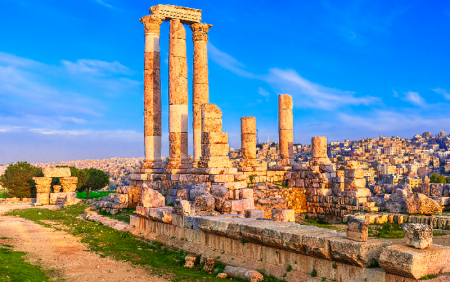
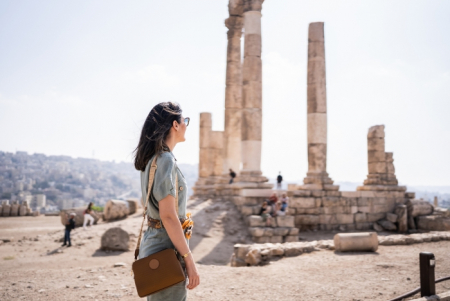
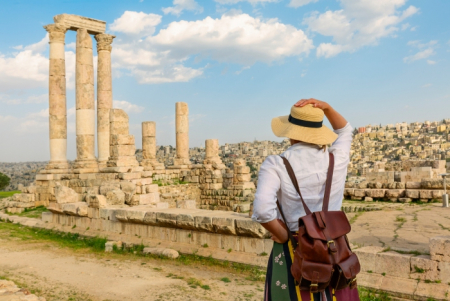
Jordan's capital and largest city, Amman spreads across a landscape of hills with a history reaching back nine millennia — from Neolithic settlement to Roman Philadelphia to modern Arab capital.
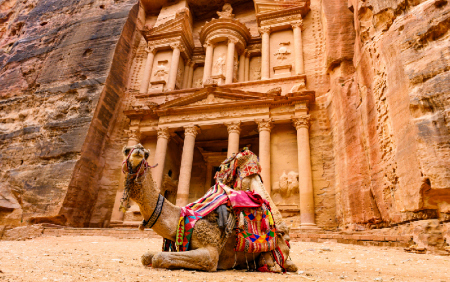
Petra is an ancient city carved into rose-red sandstone cliffs in southern Jordan, once the capital of the Nabataean civilisation and one of the most significant archaeological sites in the world — a UNESCO World Heritage Site and one of the New Seven Wonders of the World.
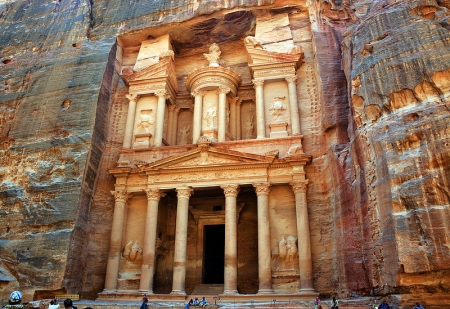
The Treasury (al-Khazneh) positioned opposite the main route into Petra. it was given by the local Bedouin tribes behind the belief that the urn on top of the front entrance contained the treasure of a pharaoh.
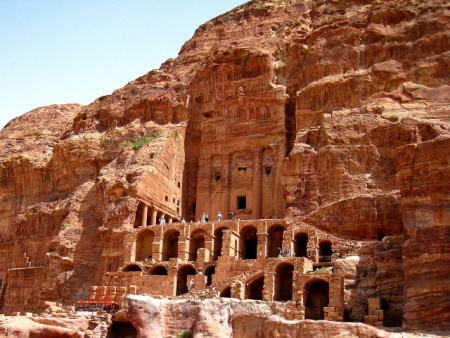
During any trip to Petra, you shouldn't miss the unpredictable Royal Tombs that took its name from the rich decoration. Know More!
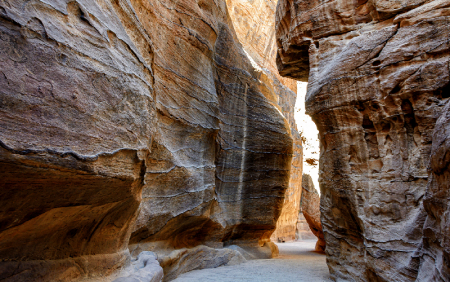
A 1.2-kilometre gorge with walls rising up to 180 metres, the Siq is Petra's main entrance — a natural rock fissure the Nabataeans turned into a processional way and a water system.
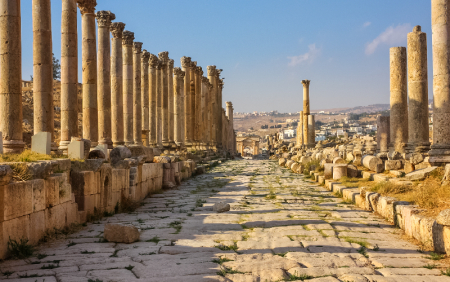
Jerash in northern Jordan is one of the best-preserved Roman cities outside Italy. A former member of the Decapolis league, it retains its colonnaded streets, temples, theatres and triumphal arches after nearly two thousand years.
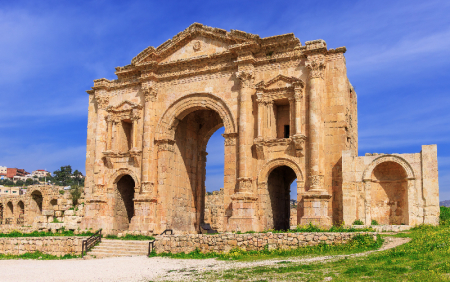
The monumental Roman gateway built to welcome Emperor Hadrian to ancient Gerasa in AD 129 — and still the most dramatic first sight in Jerash today.
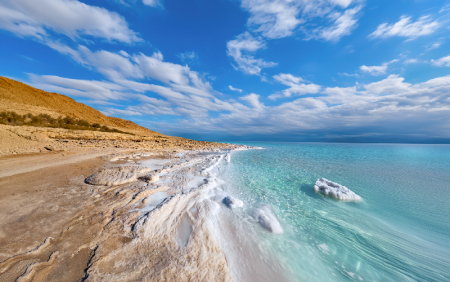
The Dead Sea is a hypersaline lake in the Jordan Rift Valley, sitting around 430 metres below sea level — the lowest point on Earth and one of the saltiest waters in the world. Its mineral-rich water and therapeutic mud have drawn health seekers for thousands of years.
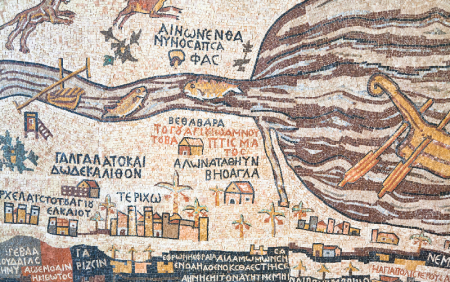
A sixth-century mosaic pavement in Madaba, Jordan, the Madaba Map is the oldest surviving cartographic image of the Holy Land — and the earliest detailed depiction of Jerusalem anywhere.
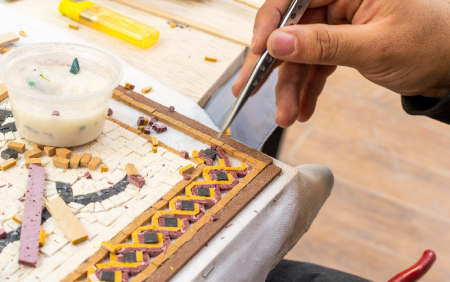
An ancient town on Jordan's King's Highway, Madaba holds the greatest concentration of Byzantine mosaics in the country — including the oldest surviving map of the Holy Land.
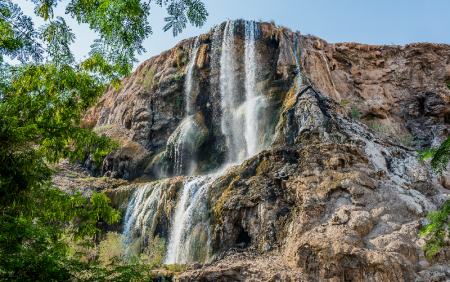
A chain of thermal waterfalls in a desert gorge below sea level, Ma'in Hot Springs has drawn bathers since antiquity — and appears on the sixth-century Madaba Map by name.
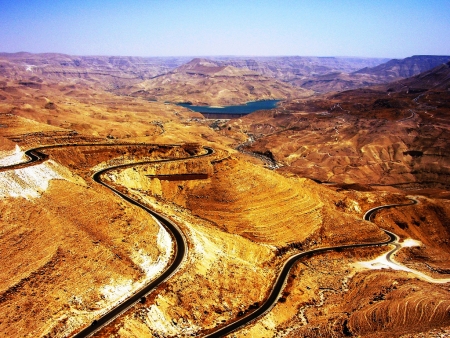
Mount Nebo is an elevated Mountain in Jordan, approximately 817 metres above sea level,.... Know More!
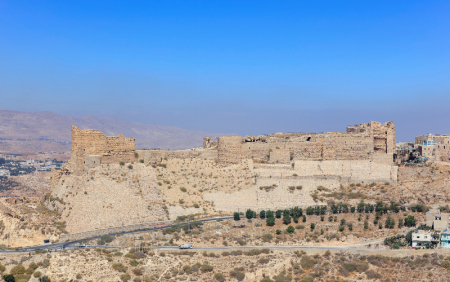
Built from the 1140s on a spur above the King's Highway, Kerak Castle is one of the largest Crusader fortresses in the Levant — and the setting for one of the strangest sieges in medieval history.
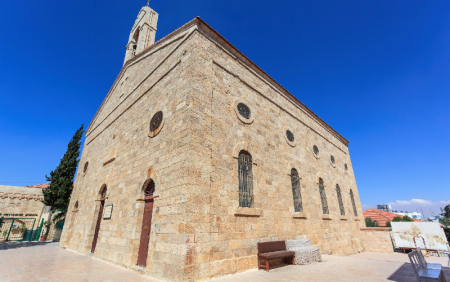
A working Greek Orthodox church in Madaba, Jordan, built in the 1890s over a Byzantine predecessor — and home to the sixth-century mosaic map of the Holy Land.

Mukawir (Machaerus) is an hour away and about 45 kms, away from Madaba on the Kings’ Highway. Know More !
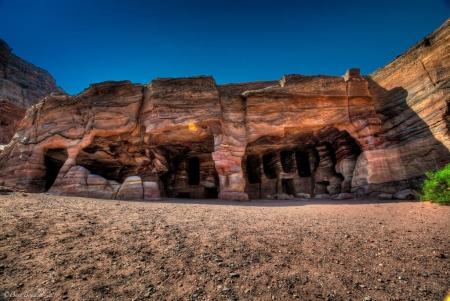
The Nabataeans (Nabateans) were an Arab people who lived in northern Arabia and the Southern Levant. They built the assumed capital city of Petra. Know more!
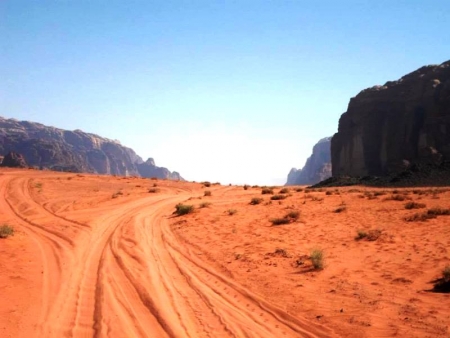
Lawrence of Arabia is a film directed by the global British director David Lean in 1962 and production of Sam Spiegel and starring Peter O'Toole role Lawrence.