
 Home
Home
Lake Nasser's remarkable physical presence—spanning 5,250 square kilometers (2,030 square miles) with an average depth of 25.2 meters (83 feet)—tells only part of its story. The reservoir has fundamentally reshaped Egypt's economic landscape through several vital pathways. Egypt's arable land expanded by approximately 30% following the lake's creation, delivering substantial benefits to the nation's agricultural foundation. The lake has evolved into a flourishing aquatic ecosystem, hosting 52 distinct fish species while nurturing a dynamic fishing industry. The Aswan High Dam surpassed its predecessor's capabilities considerably, yet its construction carried profound consequences, notably displacing ancient temples such as Abu Simbel from their millennia-old positions as rising waters claimed the land.
Physical and Geographical Features of Lake Nasser
Size, depth, and location
Positioned precisely between latitudes 22° and 24° and longitude 30° and 34° within southern Egypt's boundaries, Lake Nasser stands as Egypt's premier freshwater reservoir. This aquatic giant encompasses a surface area of approximately 5,250 square kilometers (2,030 square miles), while its shoreline weaves an intricate pattern across 7,844 kilometers (4,874 miles). The remarkable shoreline complexity emerges from countless flooded valleys, which local inhabitants call "khors" or "wadis."
Beneath the surface, the reservoir plunges to depths reaching 180 meters (590 feet) at its deepest points, maintaining an average depth of 25.2 meters (83 feet). When water levels peak at 180 meters above sea level, the lake achieves its maximum breadth of 18 kilometers while stretching approximately 350 kilometers in total length. The reservoir's capacity reaches 162.3 billion cubic meters, a volume specifically calculated to support Egypt's annual water requirements of 55 billion cubic meters.
Difference between Lake Nasser and Lake Nubia
Political boundaries, rather than natural features, divide this singular water body into two named sections. Egypt claims ownership of roughly 83% of the reservoir, officially designating this portion as Lake Nasser. Sudan maintains sovereignty over the remaining 17%, which they call Lake Nubia—a designation honoring the historical Nubian communities who once inhabited the region.
The 1959 bilateral agreement between Egypt and Sudan established Sudan's water allocation at 653 billion cubic feet (18.5 billion cubic meters) annually, representing a substantial increase from the 1929 arrangement. This diplomatic accord became essential for coordinating water management between both nations once the reservoir began operations.
Water sources and outflows
The Nile River serves as Lake Nasser's principal water source, supplemented by contributions from the Wadi Allaqi. Water exits the system primarily through the Nile's downstream course beyond the Aswan High Dam, with secondary outflow channeled through the Toshka Spillway, which feeds into southern Egypt's Toshka Depression.
Exceptional rainfall throughout the Nile's source regions during the 1990s pushed Lake Nasser to unprecedented water levels. This surplus triggered westward flooding through the spillway into the Toshka depression, ultimately creating the Toshka Lakes. Authorities responded by installing a pumping station and canal system in 2000 to regulate water flow into this area.
Despite functioning as Egypt's "national freshwater bank", Lake Nasser loses water through natural evaporation and minimal seepage. Water movement patterns fluctuate dramatically across the lake's expanse, ranging from swift currents of 100-150 cm/s in the southern fluvial zone to nearly motionless conditions of 0-3 cm/s elsewhere.
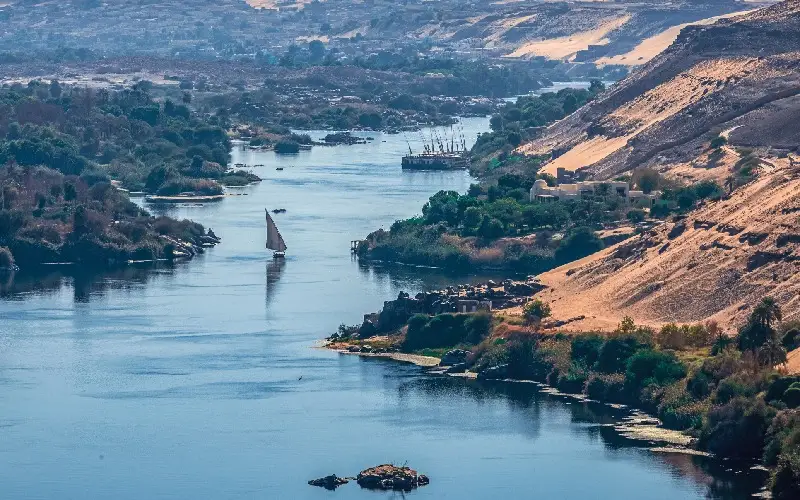
Lake Nasser is one of the world's largest man-made lakes, stretching about 550 kilometers across southern Egypt and northern Sudan. It covers an area of approximately 5,250 square kilometers and has an average depth of 25.2 meters.
The History Behind Lake Nasser
Life in Nubia before the dam
Before Lake Nasser's waters claimed the ancient landscape, Nubian civilization flourished along the Nile's banks for over 7,000 years. This remarkable region held profound historical significance as the birthplace of several Egyptian pharaohs and powerful empires like the Kingdom of Kush. Nubian communities developed their unique cultural identity around the Nile's fertile shores, where generations practiced agriculture, fishing, and cattle-raising with deep connection to their environment.
Nubian existence knew no rigid boundaries, with communities flowing naturally across what would later become the Egypt-Sudan border. Ancient temples and monuments dotted the landscape, bearing witness to millennia of human achievement and spiritual devotion. Lower Nubia, now resting silently beneath Lake Nasser's depths, has earned recognition as Egypt's own "lost Atlantis".
Why the Aswan High Dam was built
The inadequate Aswan Low Dam, constructed in 1902, sparked the need for its mighty successor. This original structure, despite being raised twice between 1907-1933, proved insufficient against the Nile's formidable annual floods. The near-overflow crisis of 1946 finally convinced authorities that a more powerful solution was essential.
Egypt's expanding population and modernization ambitions demanded superior water management capabilities. Engineers conceived the High Dam with three fundamental purposes: establishing reliable water supply, expanding agricultural output, and producing electricity. President Gamal Abdel Nasser viewed this monumental undertaking as crucial for national industrialization and independence from foreign reliance.
Timeline of dam construction (1960–1970)
Construction commenced officially on January 9, 1960, under President Nasser's direct oversight. When American financial backing disappeared, the Soviet Union stepped forward with a loan of GBP 0.87 billion and technical expertise from the Moscow-based Hydroproject Institute.
Initial construction phases focused on excavating diversion channels and tunnels reinforced with concrete. Water redirection through these channels began in May 1964, effectively closing the Nile's natural course and initiating reservoir storage. October 1967 marked the beginning of electricity production as turbines came online.
The colossal structure reached completion in July 1970, though President Anwar Sadat conducted the official inauguration ceremony in January 1971. This extraordinary engineering achievement created one of Earth's largest artificial lakes while requiring an investment of approximately GBP 0.79 billion.
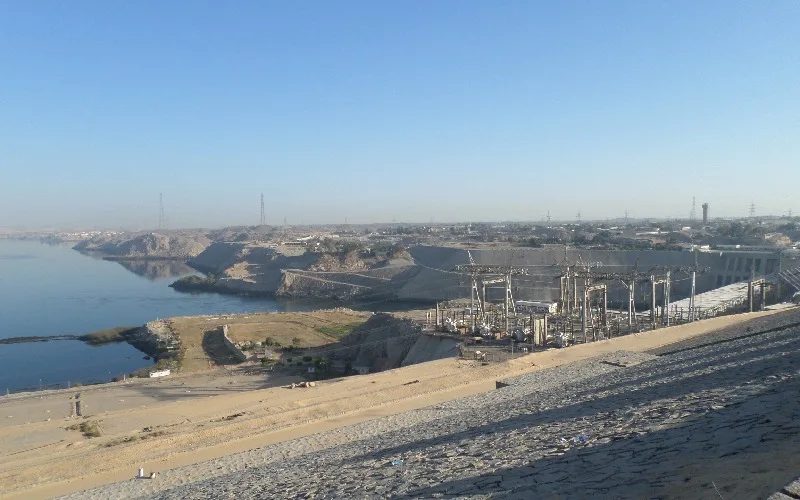
The filling of Lake Nasser took approximately six years. The lake has a storage capacity of more than 100 cubic kilometers of water and stretches 480 kilometers in length and 16 kilometers in width.
Customize Your Dream Vacation!
Get in touch with our local experts for an unforgettable journey.
Plan Your TripControversies and Consequences
The Aswan High Dam's monumental construction unleashed a cascade of challenges that rippled through both human communities and natural ecosystems across the region, revealing the complex price of such ambitious engineering.
Displacement of Nubian communities
Lake Nasser's formation uprooted approximately 50,000 Nubians from Egyptian territories, forcing their relocation to New Nubia, situated about 45 kilometers from Aswan. Sudan witnessed the displacement of roughly 54,000 inhabitants, hastily resettled at New Halfa. This sweeping relocation severed ancestral connections to lands that had supported communities for millennia. The disruption gradually diminished traditional riverine lifestyles, causing the erosion of distinctive languages and cultural practices that had flourished for generations. Government authorities proceeded with minimal community consultation, leaving both Egyptian and Sudanese Nubians without meaningful voice in decisions that would reshape their entire existence.
Loss and relocation of ancient monuments
Rising waters posed an imminent threat to countless archaeological treasures, spurring UNESCO's ambitious 1960 International Campaign to Save the Monuments of Nubia. The rescue of Abu Simbel's temples became the operation's crown jewel—engineers meticulously divided the structures into 1,042 massive blocks, each weighing 20-30 tons, before reconstructing them at elevated positions. While such heroic preservation efforts rescued numerous monuments, many others succumbed to the advancing waters. Buhen's ancient fortress exemplifies this loss, now resting permanently beneath Lake Nasser's depths. This extraordinary archaeological undertaking, requiring approximately USD 10 million of investment, successfully preserved temples at Kalabsha, Wadi es-Sebua, and Amada.
Ecological changes in the Nile ecosystem
The dam's presence fundamentally disrupted the Nile's ancient rhythms. The most profound impact emerged from halting downstream sediment flow, eliminating the fertile silt deposits that had sustained Egyptian agriculture since pharaonic times. Farmers compensated through chemical fertilizers and pesticides, introducing new contamination concerns to water systems. Fish populations suffered dramatic changes—sardine species vanished entirely from affected waters—while urban infrastructure faced unexpected challenges from elevated water tables damaging sewer systems. The reservoir's influence even extended to Aswan's local climate, producing unusual rainfall patterns and potentially triggering previously unknown seismic activity throughout the region.
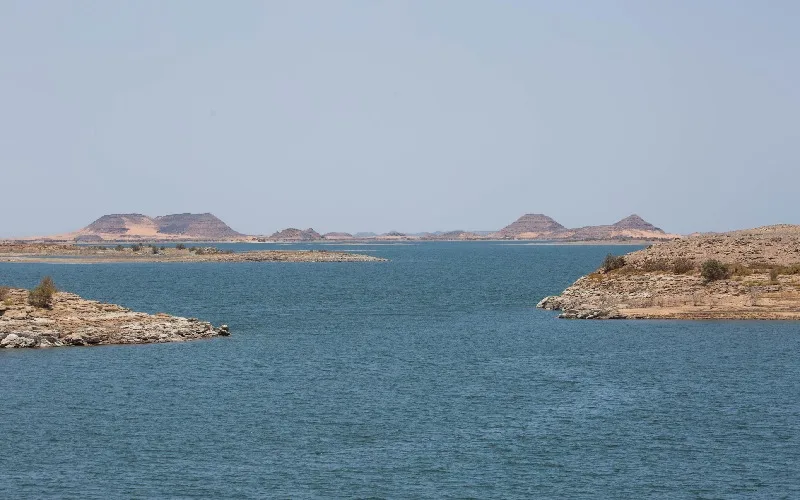
The main water source for Lake Nasser is the Nile River. Additionally, the Wadi Allaqi contributes to the lake's water supply.
Economic Role of Lake Nasser in Egypt
Agricultural expansion and irrigation
Lake Nasser's creation sparked a remarkable agricultural revolution across Egypt's landscape. Reliable irrigation water allowed cropping intensities to soar between 180-200% in established farmlands. Agriculture's contribution reached significant heights by 2000, accounting for 16.6% of Egypt's GDP and generating 20% of the nation's export earnings. The sector became a massive employer, providing work for over 5 million people—more than 30% of Egypt's entire workforce. Water channeled from Lake Nasser now nourishes hundreds of thousands of hectares through ambitious projects like the Toshka initiative, where sophisticated pumping systems transport water westward to transform barren desert into productive agricultural land.
Fishing industry and biodiversity
The reservoir's aquatic environment sustains 34 distinct fish species, forming the backbone of a thriving fishing industry that yields between 12,000 and 20,000 tons annually. Tilapia represents the dominant catch, comprising roughly 80% of all harvests, while Nile perch and Tiger fish constitute other valuable species. The lake's southern reaches demonstrate particularly robust productivity levels. This inland fishery contributes 25-40% of Egypt's freshwater fishing output, sustaining approximately 8,000 fishermen and their families. Commercial operations generated an estimated value of GBP 13.50 million in 2005.
Hydroelectric power generation
Twelve generating units within the Aswan High Dam's power plant deliver a combined capacity of 2.1 gigawatts, producing up to 10 billion kilowatt-hours each year. During the early 1980s, this electrical output satisfied more than half of Egypt's power requirements. Today, Lake Nasser's hydroelectric contribution supplies approximately one-fifth of the nation's energy needs. This domestic power generation dramatically reduced Egypt's energy import expenses, providing crucial relief for the country's balance of payment pressures.
Tourism around historical sites
Lake Nasser has emerged as a distinctive tourist destination, drawing visitors primarily to its rescued archaeological monuments and world-class fishing experiences. Travelers journey to preserved sites like Abu Simbel, while specialized cruises provide access to remote temples scattered along the reservoir's expansive shoreline. The lake's reputation for exceptional freshwater angling, particularly for Nile Perch specimens reaching up to 200 pounds, attracts fishing enthusiasts from around the globe. Additionally, the ecosystem hosts approximately 100 bird species, presenting opportunities for ecotourism development as an alternative to traditional hunting activities.
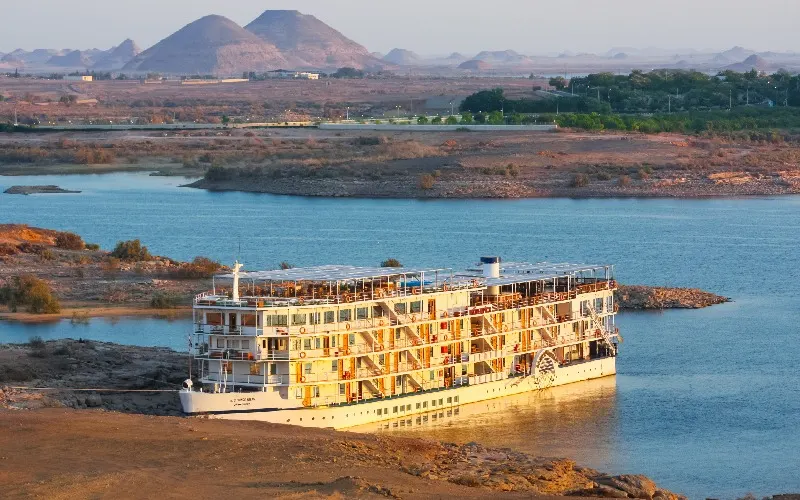
Lake Nasser plays a crucial role in Egypt's economy by supporting agriculture, fishing, hydroelectric power generation, and tourism. It has enabled agricultural expansion, supports a significant fishing industry, generates about one-fifth of Egypt's electricity needs, and attracts tourists to historical sites and fishing opportunities.
Lake Nasser is one of the 20th century’s most transformative infrastructure projects, reshaping Egypt’s relationship with the Nile through controlled water management. Created to support agriculture, hydroelectric power, and water security, it has successfully expanded farming, generated about one-fifth of Egypt’s electricity, supported fishing, and sustained livelihoods for a large portion of the population.
However, these benefits came at a high cost. More than 100,000 Nubians were displaced, vast archaeological sites were submerged, and the loss of natural Nile silt forced farmers to rely on chemical fertilizers. Environmental challenges such as evaporation and ecosystem changes persist.
Despite these drawbacks, Lake Nasser remains Egypt’s hydrological backbone, playing a vital role in food production, energy supply, tourism, and national water security. Its legacy reflects both the ambition and the long-term social, cultural, and environmental consequences of large-scale development.
The creation of Lake Nasser led to the displacement of over 100,000 Nubian people from their ancestral lands. It also resulted in the loss of numerous ancient monuments, though some were relocated. Additionally, the dam's construction caused significant ecological changes to the Nile ecosystem, including the interruption of sediment flow downstream.
Lake Nasser acts as Egypt’s primary freshwater reservoir, storing surplus Nile water during high-flow years and releasing it during droughts. This regulation protects Egypt from floods and water shortages, making the lake central to national water security.
The creation of Lake Nasser forced the relocation of Nubian communities, disrupting traditional lifestyles, languages, and cultural practices tied to the Nile. Although resettlement villages were built, many Nubians continue to advocate for cultural preservation and recognition of their heritage.
UNESCO-led international efforts successfully relocated major monuments such as Abu Simbel, Philae Temple, and Kalabsha Temple. Despite these achievements, many smaller sites and artifacts remain submerged beneath the lake.
Key challenges include high evaporation rates due to extreme heat, changes in aquatic ecosystems, shoreline erosion, and the spread of invasive plants. These issues require continuous environmental monitoring and management.
Yes, Lake Nasser attracts tourists for fishing, Nile cruises, and visits to relocated temples and remote archaeological sites. It is also popular among anglers for its large Nile perch and offers unique desert-lake landscapes rarely found elsewhere in the world.
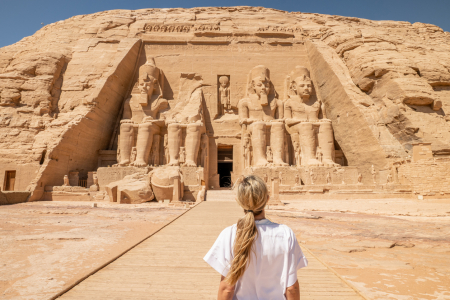
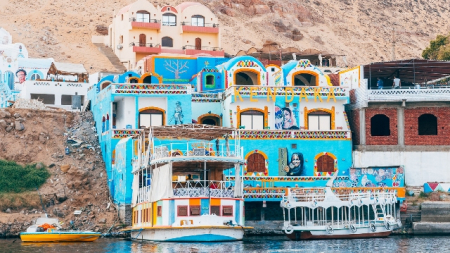
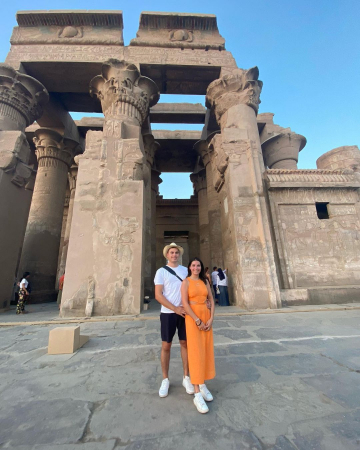
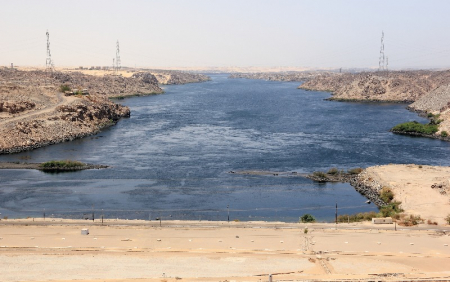
Lake Nasser, Egypt’s vast artificial reservoir, reshaped the Nile, boosted agriculture and fishing, and preserved historic sites like Abu Simbel.
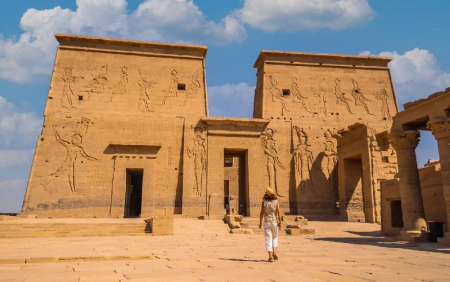
Philae Temple, dedicated to Isis, was relocated to Agilkia Island to preserve its ancient Ptolemaic structures and remains a UNESCO World Heritage site.
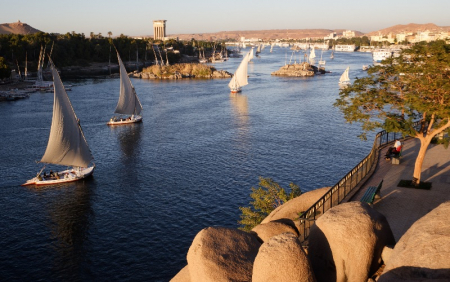
Aswan is one of the world’s oldest cities, marking ancient Egypt’s southern frontier. Rich in history, science, trade, and UNESCO-listed monuments, it remains a living link between past and present.
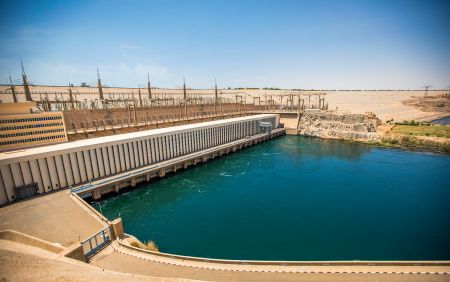
Aswan High Dam, completed 1970, transformed Egypt through Lake Nasser reservoir, hydroelectric power & year-round irrigation while displacing 100,000+ Nubians.
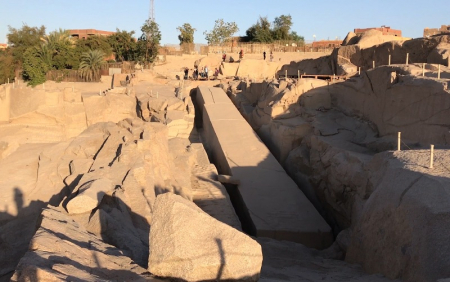
The Unfinished Obelisk in Aswan reveals ancient Egyptian quarrying techniques and ambitions, offering a rare glimpse into their engineering mastery.
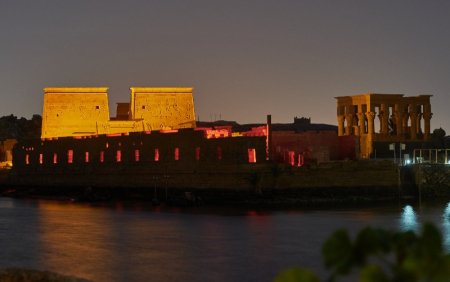
Discover the magic of Philae Temple after dark with a Sound & Light Show that brings the myths of Isis to life amid the beautifully preserved island sanctuary.
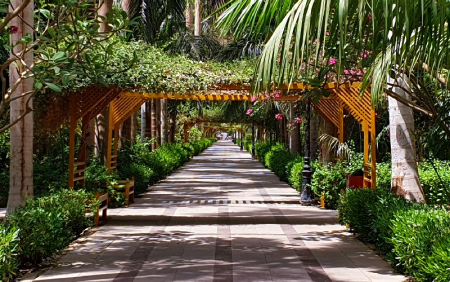
Explore El Nabatat Island, Aswan’s historic botanical garden featuring exotic plants, towering palms, and a sanctuary for birds along the Nile.

Nubian Museum Aswan features 3,000+ artifacts showcasing ancient Nubian heritage. Discover jewelry, statues & cultural displays in this 1997-opened institution.

Nubian Village near Aswan offers authentic culture with vibrant homes, traditional hospitality & henna art. Experience 8,000 years of living Nile heritage.
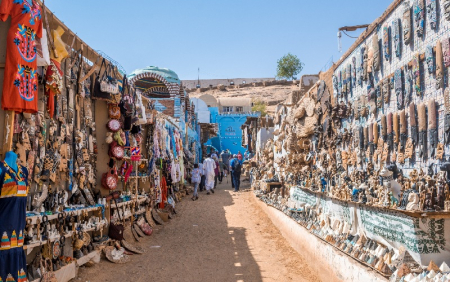
Aswan Old Souk offers a colorful, aromatic shopping experience along the Nile, featuring local crafts, spices, textiles, and souvenirs in Egypt’s southernmost city.
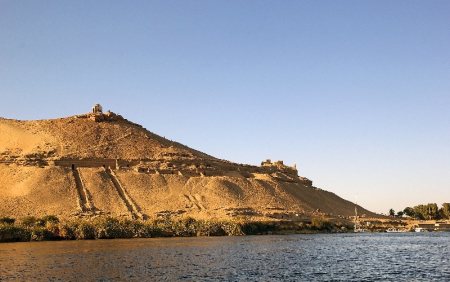
Elephantine Island in Aswan is a 5,000-year-old UNESCO site, once Egypt’s southern gateway, famed for its temples, Nilometers, and living Nubian heritage.
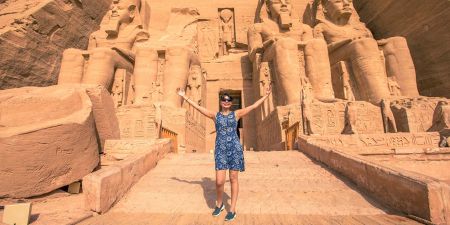
Discover Abu Simbel, Ramses II’s rock-cut temples famed for colossal statues, solar alignment, and an epic UNESCO rescue that saved them from Lake Nasser.