
 Home
Home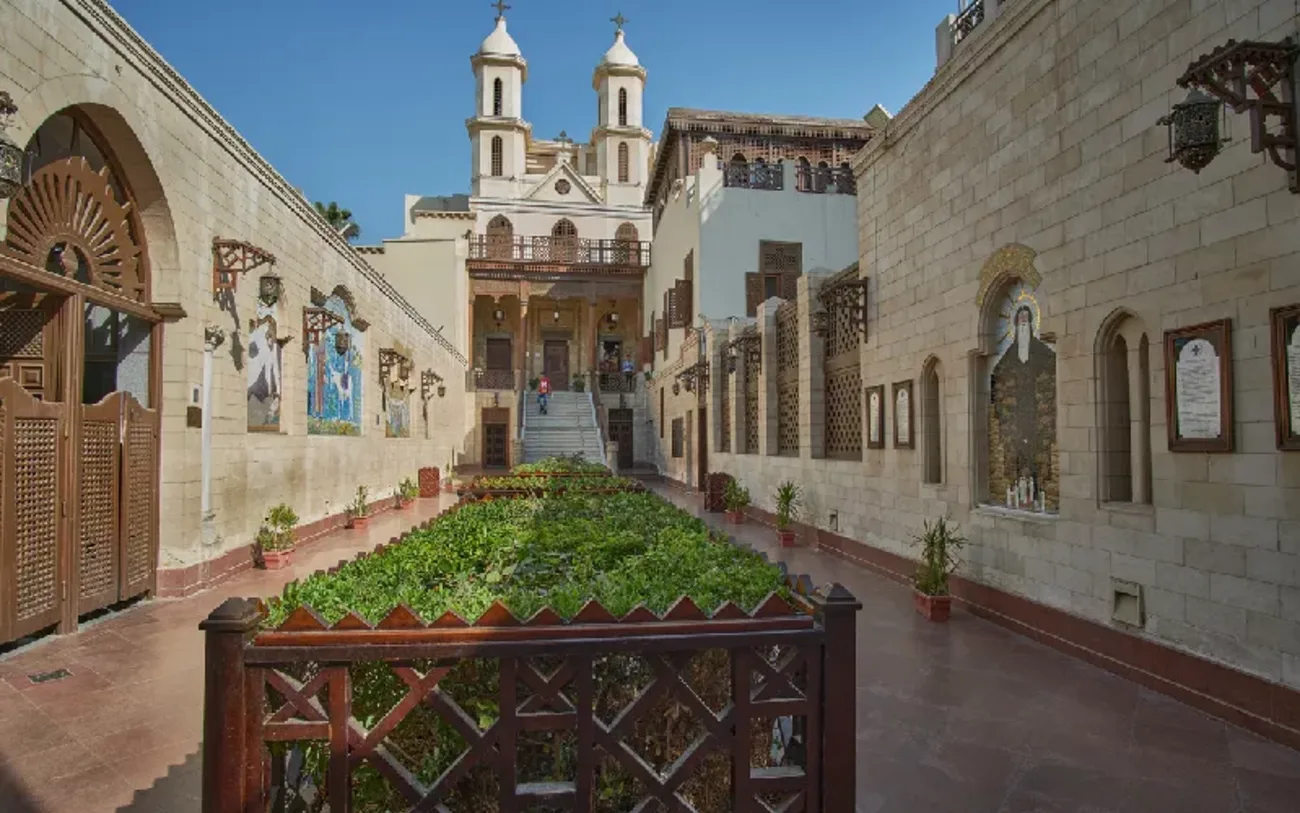
Tucked away in the heart of Old Cairo, the Hanging Church (Saint Virgin Mary's Coptic Orthodox Church) is one of Egypt’s most meaningful Christian landmarks. For more than 1,300 years, this remarkable sanctuary has stood as a place of prayer, resilience, and community.
What makes it truly special is the way it seems to float above the ground. Built on top of the southern gate of the ancient Babylon Fortress, the church appears “suspended,” which is how it earned its famous nickname.
Dedicated to the Virgin Mary, the Hanging Church has long been a spiritual home for Cairo’s Coptic community. For centuries, it even served as the official residence of the Coptic Orthodox Pope of Alexandria, making it one of the most important Christian sites in the Middle East.
After years of guiding visitors here, locals know that this church is more than just a stop on a tour. It’s a place where history, faith, and everyday life quietly come together. This guide will help you understand its story, plan your visit, and experience it with respect and depth.
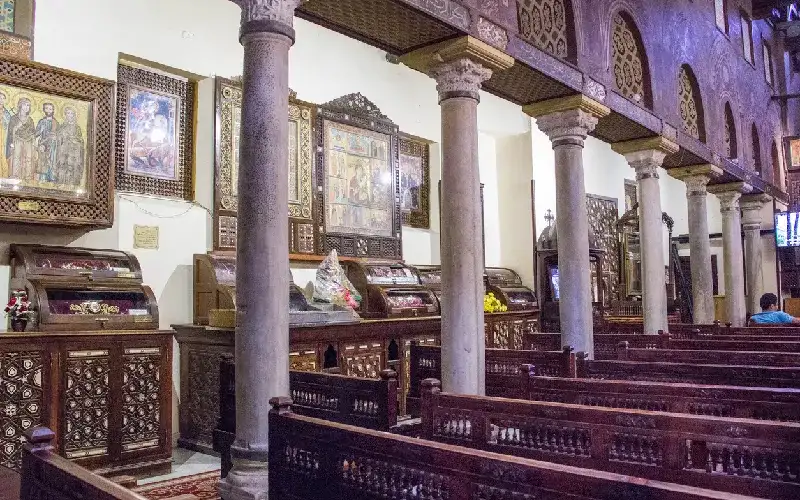
The Hanging Church is located in the heart of Old Cairo (Coptic Cairo), built on top of the southern gate of the ancient Babylon Fortress. The closest metro station is Mar Girgis on Line 1, making it easily accessible for visitors.
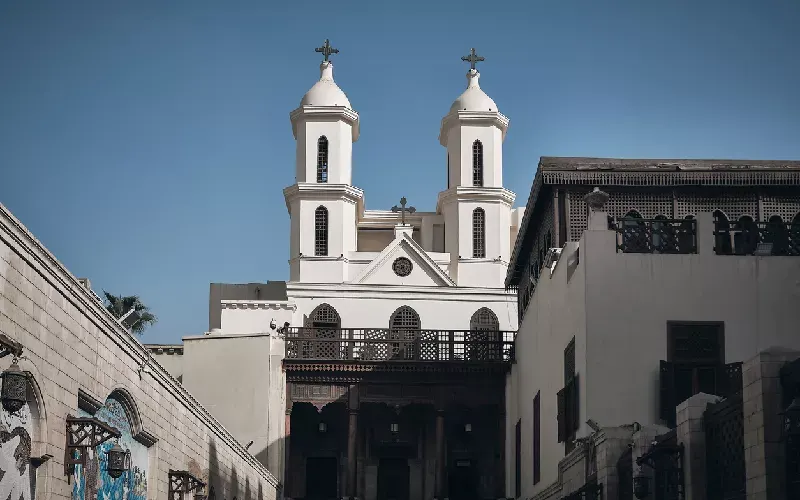
The church is called the Hanging Church (Al-Muʿallaqah in Arabic, meaning "The Suspended") because it was built on top of the southern gatehouse of the Babylon Fortress, making it appear to float or be suspended above the ground.
A Brief History of the Hanging Church
The story of the Hanging Church stretches back nearly 2,000 years. Few places in Egypt show the endurance of faith and community as clearly as this one.
Origins During the Roman Era
The church, known in Arabic as Al-Muʿallaqah (“The Suspended”), was founded in the late 3rd or early 4th century AD. This places it among the oldest Christian churches in Egypt.
Its most striking feature is its location. Instead of being built on open ground, it was constructed directly on top of the southern gatehouse of the Babylon Fortress. This unusual foundation created the raised appearance that still amazes visitors today.
In the early centuries of Christianity, this location offered protection. During times of Roman persecution, being inside a fortified complex helped shield worshippers. Some historical accounts even suggest that Christian soldiers stationed in the fortress helped protect the early community.
Role in Early Coptic Christianity
Over time, the Hanging Church became far more than just a place of worship.
Between the 7th and 13th centuries, it served as the main seat of the Coptic Patriarch. In 1047 AD, the patriarchal residence moved from Alexandria to Cairo, and the Hanging Church became the spiritual headquarters of the Coptic Orthodox Church.
For centuries, important events happened here:
- Election of patriarchs
- Major religious ceremonies
- Important church decisions
- Announcements of Easter dates
The church also played a role in one of Egypt’s most famous Christian legends: the miracle of the Mokattam Mountain. According to tradition, Patriarch Abraham prayed here before the Virgin Mary’s icon, leading to a miraculous event that strengthened the Christian community’s position.
Major Restorations and Events
Over the centuries, it faced:
- Partial destruction in 840 AD
- Temporary conversion to a mosque
- Rebuilding and reconsecration in the 10th century
- Renovations under several Islamic rulers
- Severe damage from the 1992 earthquake
In 1997, Egypt’s Supreme Council of Antiquities launched a major conservation project. This restoration lasted until 2011 and focused on stabilizing foundations, stopping water damage, and restoring icons and artwork with help from international specialists.
During this work, archaeologists made exciting discoveries, including parts of the original fortress gate, underground passages, and emergency stairways. These findings revealed how strategically important the site once was.
Despite centuries of political change, natural disasters, and social shifts, the Hanging Church has never lost its role as a spiritual home.
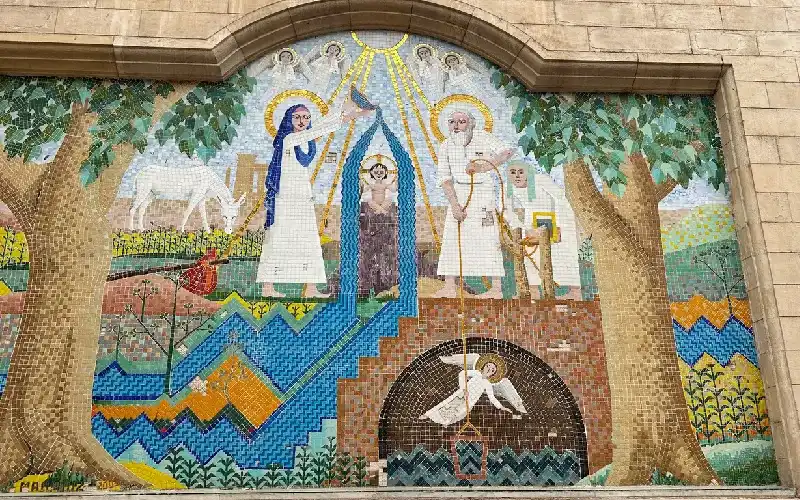
The Hanging Church was founded in the late 3rd or early 4th century AD, making it more than 1,300 years old and one of the oldest Christian churches in Egypt. It has been serving as a place of worship for nearly 2,000 years.
Planning Your Visit to the Hanging Church
Knowing when and how to visit makes a big difference. A little planning can turn a quick stop into a meaningful experience.
Optimal Seasonal Considerations
The best time to visit Cairo is between October and April, when temperatures are cooler and more comfortable.
Winter (December–February) is especially pleasant. There are fewer tourists, and the church feels quieter and more peaceful.
For the best atmosphere, aim for early morning between 8:30 and 11:00 AM. At this time, sunlight filters through stained glass, and tour groups haven’t yet arrived.
Midday and weekends tend to be busier, especially with organized tours.
Access Hours and Financial Considerations
The Hanging Church is usually open daily from 9:00 AM to 5:00 PM (some days close to 4:00 PM).
Entry is completely free, which makes it accessible to everyone. Donations are welcome and help support maintenance.
If you’d like to attend a service:
- Wednesdays and Fridays: 8:00–11:00 AM
- Sundays: 9:00–11:00 AM
The church is easy to reach by metro. The closest station is Mar Girgis on Line 1, right in Coptic Cairo.
Customize Your Dream Vacation!
Get in touch with our local experts for an unforgettable journey.
Plan Your TripSartorial Requirements and Sacred Protocol
This is an active place of worship, so respectful dress matters.
For men:
- Long trousers
- Shirts with sleeves
- Comfortable closed shoes
For women:
- Skirts below the knee or loose trousers
- Tops covering shoulders
- A light scarf can be useful
Photography is generally allowed, but no flash is permitted. Always ask before photographing people or clergy.
During services, visitors should stay toward the back and remain quiet. Phones should be silenced, and conversations kept to whispers.
Physical Prerequisites
The church is historic, and that means:
- Steps and uneven floors
- Narrow passages
- Limited wheelchair access
Expect about 30 minutes of walking and standing inside. Good balance and comfortable shoes are important, as marble floors can be slippery.
If you’re exploring the rest of Coptic Cairo, plan for 2–3 hours total.
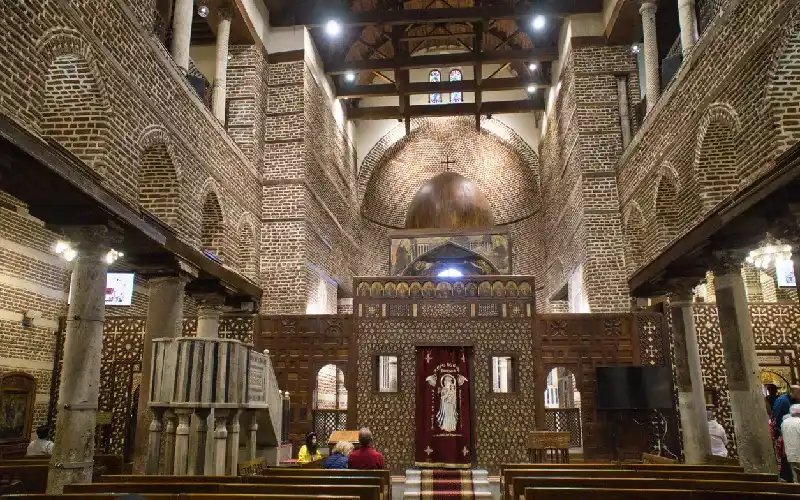
Hanging Church at a Glance
Here’s what to remember before visiting the Hanging Church:
- Best season: October–April for comfortable weather
- Best time: Early morning (9–10 AM) for quiet atmosphere
- Dress modestly: Covered shoulders, long pants/skirts, good shoes
- Free entry: Donations appreciated
- Moderate walking: Stairs and uneven surfaces are common
The Hanging Church offers a rare window into Egypt’s Christian heritage, combining ancient architecture, living faith, and deep historical meaning.
The official name is Saint Virgin Mary's Coptic Orthodox Church. It is dedicated to the Virgin Mary and has been a spiritual home for Cairo's Coptic community for centuries.
Building on top of the Babylon Fortress gatehouse served both practical and protective purposes. During early Christianity, when Roman persecution was common, the fortified location offered safety. Christian soldiers stationed in the fortress helped protect the early worshipper community.
No. Entry is free, but donations are encouraged to help with preservation.
It has over 1,700 years of history, unique “hanging” architecture, and deep importance in Coptic Christianity.
October to April is ideal. Visit between 9–10 AM for the most peaceful experience.

The Great Pyramids of Giza, Egypt’s iconic monuments, showcase ancient engineering brilliance and remain the last wonder of the ancient world, continuing to fascinate visitors and researchers alike.

The Egyptian Museum in Cairo houses over 170,000 ancient artifacts, including Tutankhamun's complete collection and golden death mask. Opened in 1902, it's the world's largest repository of Egyptian antiquities.

Khan el-Khalili is Cairo’s legendary medieval bazaar, where centuries-old Islamic architecture, vibrant trade, and timeless cafés create a living cultural landmark.

The Great Sphinx of Giza, with its lion body and pharaoh head, represents ancient Egyptian artistry, symbolic power, and enduring cultural fascination.

Tanoura is a traditional Egyptian Sufi dance known for its colorful spinning skirts, spiritual rhythm, and deep roots in ancient mystic traditions.

Saqqara, Egypt's ancient necropolis, features Djoser's Step Pyramid—the world's oldest. Spanning 3,000 years, it preserves royal tombs and sacred animal burials.

The Valley Temple at Giza, built 2570 BCE by Khafre, features 16 granite columns and hosted sacred afterlife rituals. Explore Fourth Dynasty architecture.

The Citadel of Cairo is a historic medieval fortress and royal complex, showcasing centuries of Egyptian power, Mamluk architecture, and Islamic heritage, now preserved as a UNESCO World Heritage Site.

Khufu's Solar Boat is a 142-foot cedar vessel discovered 1954 near the Great Pyramid. Built without nails 4,500 years ago, it's now at Grand Egyptian Museum.

St. George Church in Old Cairo, founded 684 AD, features unique circular design, sacred healing relics & underground chapel linked to the Holy Family's refuge.

Pyramids Sound and Light Show transforms Giza into open-air theater with 50 minutes of narration, music & lighting bringing ancient Egyptian history alive.

The Djoser Pyramid at Saqqara is Egypt's first pyramid, built 2600 BCE by architect Imhotep. Standing 62.5m tall, it reopened to visitors in 2020.

The Hanging Church in Old Cairo is a 1,300-year-old Coptic sanctuary built on Babylon Fortress. Free entry, open daily 9 AM-5 PM, dress modestly required.
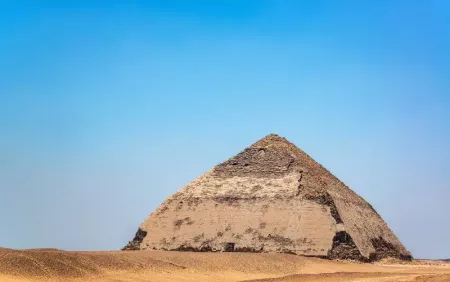
The Bent Pyramid at Dahshur features a rare bent profile created by ancient construction adjustments, offering insight into Egypt’s earliest attempts at smooth-sided pyramids.

Coptic Cairo features 4th-century churches and recent tomb discoveries revealing early Christian heritage. Explore the Hanging Church, Abu Serga & sacred sites.
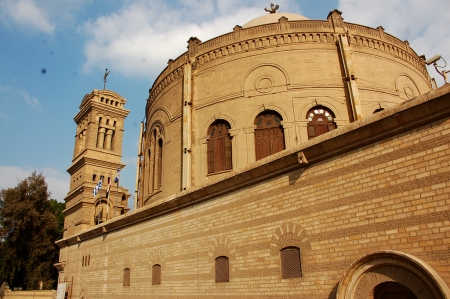
Saint Barbara’s Church in Coptic Cairo is one of Egypt’s oldest Christian monuments, dating back to the 5th–6th century. Known for housing the relics of Saint Barbara, the church reflects centuries of Coptic heritage, architectural evolution, and deep spiritual significance.

Explore the Fortress of Babylon, a major Roman fort in Old Cairo known for its strategic location, massive towers, and enduring historical significance.
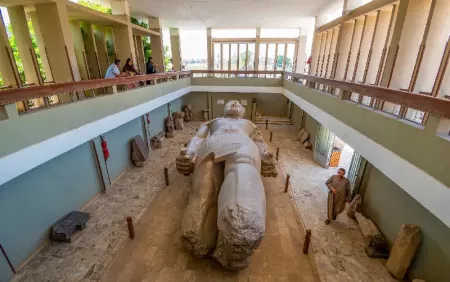
Memphis Necropolis is Egypt’s ancient royal burial site, home to pyramids, tombs, and monuments that reflect the early development of pharaonic civilization.
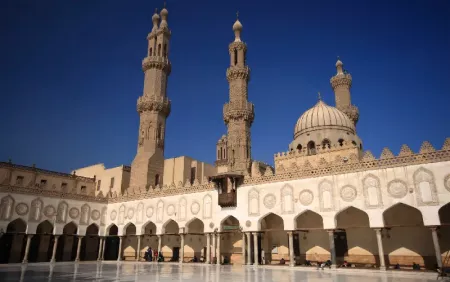
Al-Azhar Mosque is a landmark of Islamic scholarship and Fatimid architecture, home to the world’s second-oldest university and a symbol of Cairo’s spiritual heritage.
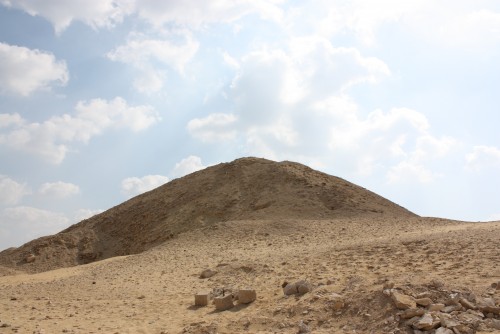
Teti’s Pyramid in Saqqara is an Old Kingdom monument built for the first king of the Sixth Dynasty. Known for its Pyramid Texts and unique mortuary chapel, it remains one of Egypt’s most historically important royal tombs.
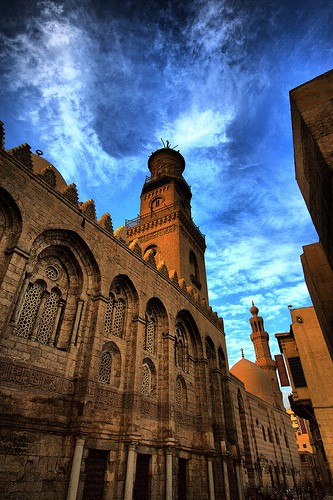
Al Muizz Street is one of Cairo’s oldest and most vibrant historic avenues, showcasing centuries of Islamic architecture. Lined with mosques, palaces, and bustling markets, it offers a captivating walk through Egypt’s medieval past.
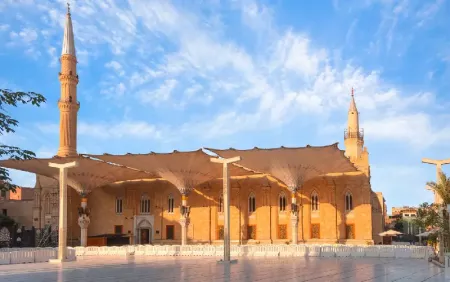
Al-Hussein Mosque is one of Cairo’s most sacred Islamic landmarks, built in 1154 and revered for housing the head of Imam Hussein. Located by Khan El-Khalili, it blends centuries of architectural heritage and remains a major pilgrimage site.
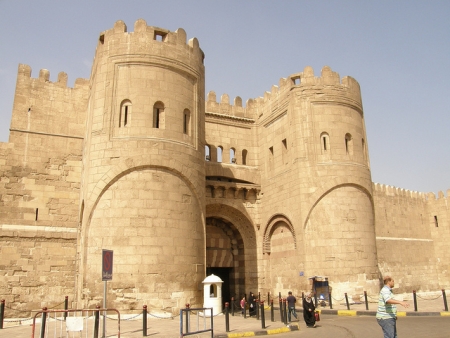
Bab al-Futuh is an 11th-century Fatimid gate in Old Cairo, famous for its massive round towers and strategic role in the city’s medieval fortifications.
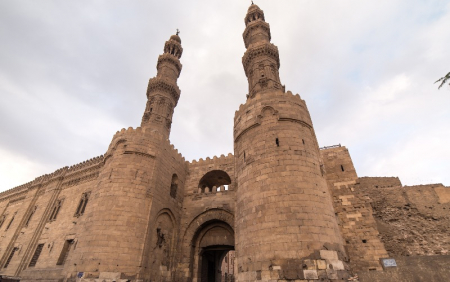
Bab Zuweila is one of Cairo’s last surviving medieval gates, built in 1092 CE by the Fatimid vizier Badr al-Jamali. Famous for its towering twin bastions, massive wooden doors, and later Mamluk minarets, it served as a defensive stronghold, execution site, and ceremonial gateway. Today, it stands as one of Cairo’s most iconic historic monuments.
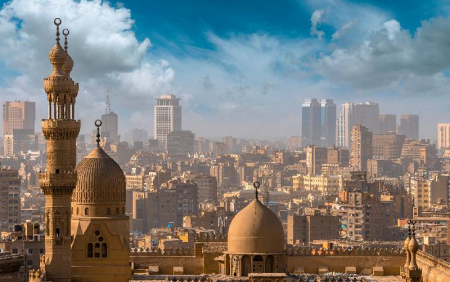
Al Rifai Mosque in Cairo blends Neo-Mamluk architecture with royal history. Completed in 1912, it serves as both a majestic mosque and mausoleum for Muhammad Ali’s family.
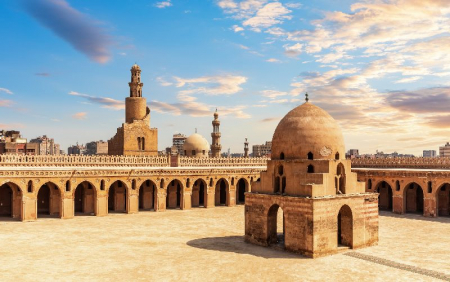
The Ibn Tulun Mosque, Cairo’s oldest well-preserved mosque, dates back to 879 CE. Famous for its vast square layout, intricate arches, and 128 ornate stucco windows, it remains a pinnacle of early Islamic architecture and a must-visit historical landmark.
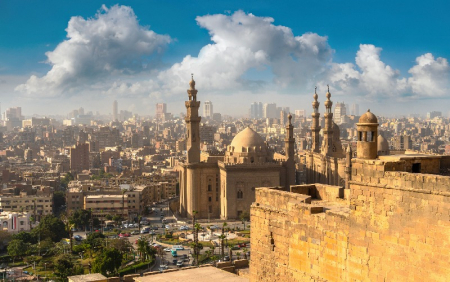
The Sultan Hassan Mosque, built in the 14th century, is a Bahri Mamluk architectural marvel in Cairo, renowned for its grand portal, extensive madrasas, and historic significance.

The Suez Canal, Egypt’s iconic waterway, connects Africa and Asia, handling thousands of ships yearly and shaping international trade.
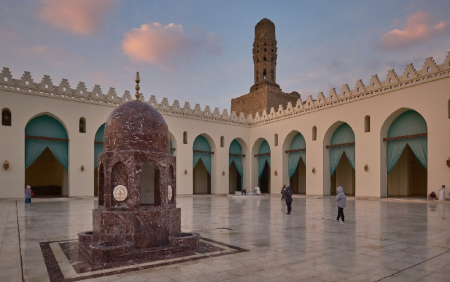
Al-Hakim Mosque, Cairo, is a stunning Fatimid-era mosque built between 990–1013 CE. Famous for its grand courtyard, distinctive minarets, and rich history, it remains a key cultural and religious landmark.
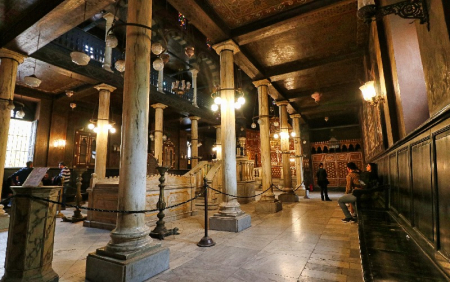
The Ben Ezra Synagogue, founded in the 11th century in Old Cairo, is Egypt’s oldest Jewish monument and the discovery site of the renowned Cairo Geniza.