
 Home
Home
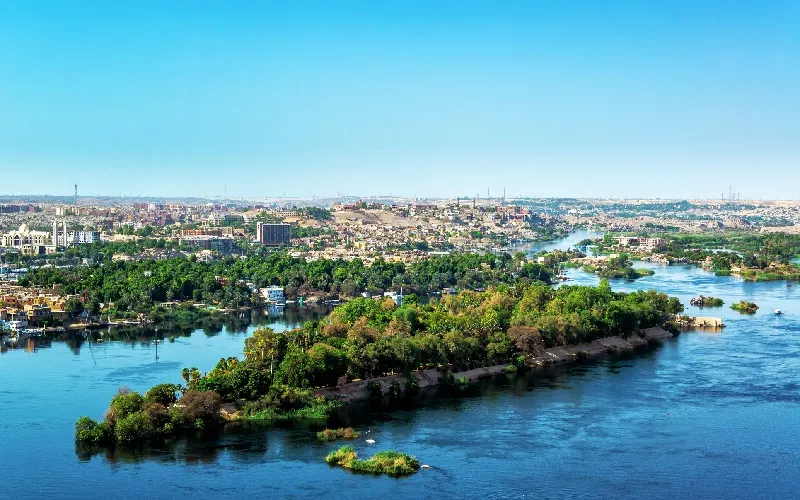
Early History and Dynastic Foundations
Archaeological evidence reveals that Elephantine Island's earliest settlements date to the Predynastic Period, establishing it as one of Egypt's oldest continuously inhabited sites. The island's natural position created a logical boundary between Upper Egypt and Nubia, making it strategically significant from the outset.
Predynastic and Old Kingdom occupation
Initially emerging as a Nilotic settlement, Elephantine Island quickly evolved into a strategic outpost by the Early Dynastic Period. Approximately 3000 BC, during the First Dynasty, Egyptian rulers established a fortress on the island. This early fortification signaled the beginning of Elephantine's military importance.
Throughout the Old Kingdom (circa 2686–2181 BCE), the island transformed into a prominent administrative center on Egypt's southern frontier. The nomarchs (provincial governors) of the First Nome of Upper Egypt operated from Elephantine, simultaneously managing defense and trade expeditions into Nubia. Excavations have uncovered significant Old Kingdom structures including fortifications, granaries, and official inscriptions, particularly from the reigns of Djedkare Isesi and Pepi II.
Amenemhat I and Nubian connections
Historical texts from the Middle Kingdom mention that the mother of Amenemhat I, founder of the Twelfth Dynasty, originated from the Elephantine nome known as Ta-Seti. This connection has led numerous scholars to suggest Amenemhat I's mother had Nubian origins. Notably, the entire Twelfth Dynasty (1991–1786 BCE) originated from the Aswan region, with their sculpture and relief work displaying strong Nubian features.
The relationship between Egyptians and Nubians remained largely peaceful despite occasional conquests. Extensive cultural interchange and intermarriage occurred between the two peoples, with many Egyptian Pharaohs carrying Nubian heritage. Moreover, Elephantine served as an administrative center for Egyptian-controlled Nubia during the Middle Kingdom (1938–c. 1600 BCE).
Elephantine as 'Door of the South'
In the Old Kingdom, Elephantine earned its reputation as the "door of the south," marking the southernmost city in Egypt and serving as the launching point for Sudanese trade. This position made it a natural cargo transfer point, particularly for ivory—a highly prized commodity in Ancient Egypt. Additionally, the island functioned as a trade hub on routes to southern Egypt and headquarters for government, military, and commercial missions traveling south or returning.
During periods of territorial expansion, pharaohs like Sesostris I and Sesostris III of the 12th Dynasty extended their control into certain parts of Nubia. Subsequently, from the Saite period (664–525 BCE), Elephantine regained prominence as a frontier fortress.
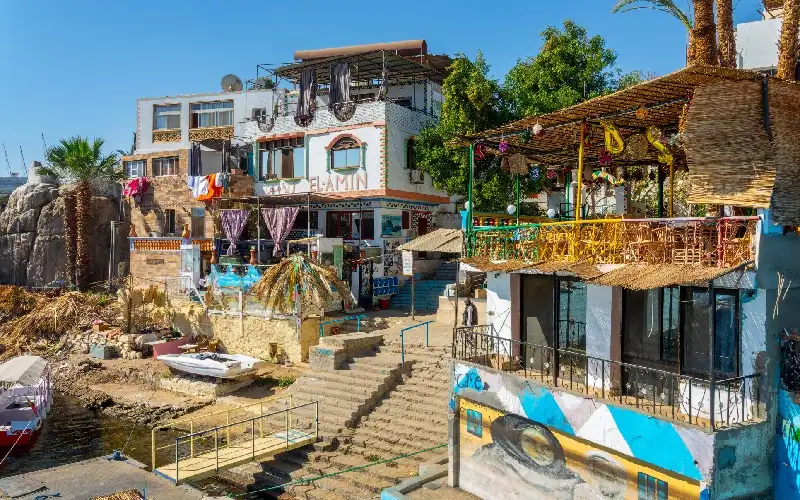
Elephantine Island is a 5,000-year-old archeological site that played a crucial role in ancient Egypt's history. It served as a strategic frontier, administrative center, and religious hub, known as the "door of the south" during the Old Kingdom period.
The island's name comes from the Egyptian word "Abu" or "Yebu," which means elephant. This name reflects the island's historical importance as a center for ivory trade in ancient times.
Religious Institutions and Mythology
The religious significance of Elephantine Island centers around the Elephantine Triad—three deities who governed the Nile's life-giving waters and protected Egypt's southern frontier. These divine entities shaped the island's spiritual landscape throughout ancient Egyptian history.
Khnum as guardian of the Nile
Khnum, depicted as a ram-headed god, held primacy among Elephantine's deities. Worshipped since the First Dynasty (c. 2925–2775 BCE), Khnum was believed to control the Nile's annual inundation by releasing water from caverns beneath the island. As "lord of the surrounding First Cataract," he regulated the river's flow. Khnum's creator aspect emerged from his association with the fertile Nile silt, as he fashioned humans and their life force (ka) from clay on his potter's wheel. His temple on Elephantine Island dates to the early Middle Kingdom, though archaeological evidence indicates his worship there began in the Early Dynastic period.
Satet's role in flood and fertility
Satet (also called Satis) formed a divine partnership with Khnum as his consort. Originally paired with the Theban god Montu, she later replaced Heket as Khnum's wife. Her temple on Elephantine, founded around 3200 BCE, ranks as "the best example of an ancient Egyptian temple whose construction is attested over the entire pharaonic period". Satet's sanctuary began as a modest cultic niche between three granite boulders. Her primary function involved purifying the dead with water from Elephantine. Consequently, she personified the Nile inundation and became a fertility goddess believed to grant wishes of those seeking love.
Anuket and the personification of the Nile
Completing the triad, Anuket (the daughter of Khnum and Satet) embodied the Nile's embracing waters. Her name means "She Who Embraces," likely referring to how the Nile's waters embraced the fields during inundation. Historically, Anuket was associated with the gazelle, while Satet connected to the antelope—both animals linked to water in Egyptian thinking. Throughout Upper Egypt, her festival marked the beginning of the annual flood, wherein people cast precious offerings into the Nile seeking divine favor.
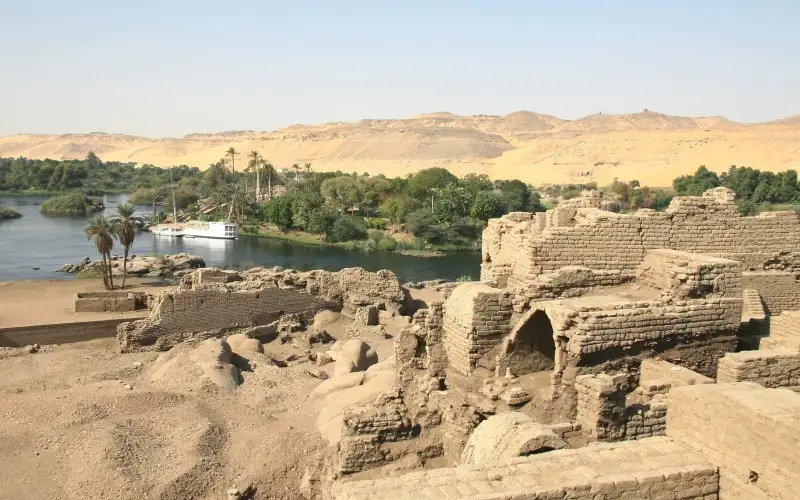
The island was home to the Elephantine Triad - Khnum, Satet, and Anuket. Khnum, the ram-headed god, was believed to control the Nile's annual flood. Satet was associated with fertility, while Anuket personified the Nile's embracing waters.
Customize Your Dream Vacation!
Get in touch with our local experts for an unforgettable journey.
Plan Your TripArchaeological Discoveries and Technological Insights
Systematic archaeological exploration of Elephantine Island began in earnest between 1893 and 1910, yielding remarkable discoveries that continue to reshape our understanding of ancient Egyptian technology and culture.
Excavations by German and French teams
The German Archaeological Institute has conducted extensive excavations on Elephantine Island since 1969, in collaboration with the Swiss Institute for architectural and archaeological research. These efforts followed earlier French investigations from the early 20th century and Egyptian excavations in the 1930s and 1940s. Excavations have uncovered invaluable Jewish archives written on Aramaic papyri, alongside hundreds of ostraca (pottery fragments used for writing). The ongoing work focuses primarily on two key areas: the ancient town and the temple of Khnum.
The Elephantine Calendar of Things
Among the most significant discoveries is the fragmented Elephantine Calendar of Things, dating to the reign of Thutmose III during the Eighteenth Dynasty. This rare calendar provides unique insights into time-keeping practices and administrative organization in ancient Egypt. Alongside this calendar, archaeologists uncovered one of Egypt's oldest nilometers, featuring ninety steps marked with Hindu-Arabic, Roman, and hieroglyphic numerals.
Use of arsenical bronze and speiss alloying
Recently, researchers identified the first direct evidence of arsenical bronze production on Elephantine Island from the Middle Kingdom period (c. 2000–1650 BCE). This groundbreaking discovery reveals that ancient Egyptian metallurgists intentionally used speiss—a slag-like alloy rich in arsenic and iron—in controlled processes to enhance the strength of bronze. This challenges previous assumptions about Egyptian metalworking technology, demonstrating sophisticated metallurgical knowledge much earlier than previously recognized.
Artifacts in global museums
Findings from Elephantine Island are now housed in museums worldwide. Major collections exist in Berlin, Brooklyn, Cairo, London, Munich, and Paris, with Berlin holding the largest collection. Currently, a monumental project led by Berlin's Verena Lepper is unifying these scattered texts through digitization and translation, making them accessible to researchers globally. This work has already cataloged 10,745 documents, providing unprecedented insights into Elephantine's diverse multicultural society.
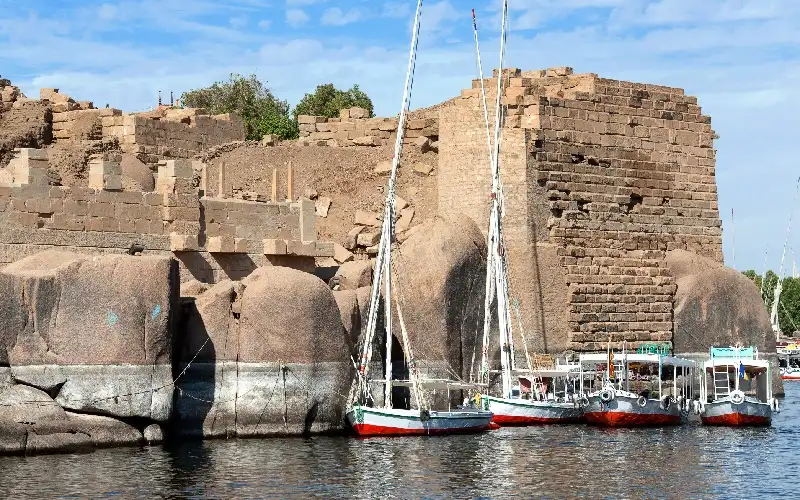
Significant finds include the Elephantine Calendar of Things from the 18th Dynasty, one of Egypt's oldest nilometers, and evidence of arsenical bronze production from the Middle Kingdom period. The island has also yielded important Jewish archives written on Aramaic papyri.
Cultural Shifts Through Foreign Rule
Throughout its history, Elephantine Island experienced dramatic cultural transformations as successive foreign powers controlled Egypt. The island's strategic position made it a valuable prize, controlling trade routes and access to Egypt's southern frontier.
Persian, Greek, and Roman influences
Following Cambyses II's conquest in 526 BCE, Elephantine Island experienced two extended periods of Persian rule (526–404 and 343–332 BCE). This era brought flourishing trade and occasional military alliances. The island housed a community of mercenaries who worshipped Yaho (Yahweh), as evidenced by Aramaic papyri documents discovered in the 19th and early 20th centuries. This multi-ethnic community existed in relative harmony until ethnic tensions erupted in 410 BCE, resulting in the destruction of the Yehudite temple.
Ptolemaic preservation of Egyptian traditions
After Alexander's conquest, the Ptolemaic dynasty (305–30 BCE) actively preserved ancient Egyptian religious practices. Although they established a Greek-dominated administration, Ptolemaic rulers presented themselves as legitimate pharaohs. At Elephantine Island specifically, Ptolemy VI and Ptolemy VIII extended the temple of Khnum, continuing projects begun by the final pharaonic dynasty. Even as Greek became the administrative language, traditional Egyptian temples maintained their architectural style, albeit with subtle Greek flourishes.
Decline during Byzantine and Islamic periods
Elephantine Island's prominence faded markedly during the Byzantine and Christian periods. In 392 CE, Egyptian temples were ordered closed by the Christian emperor of Byzantium. By the early fourth century, Elephantine lost its fortress role as Syene/Aswan became the region's dominant city. Archaeological evidence shows a small church from the early sixth century partially surviving in the Khnum temple's pronaos.
Gradually, buildings and monuments became quarries for construction materials elsewhere. Arabic sources mention a monastery and two churches on the island before its complete abandonment around the thirteenth or fourteenth century.
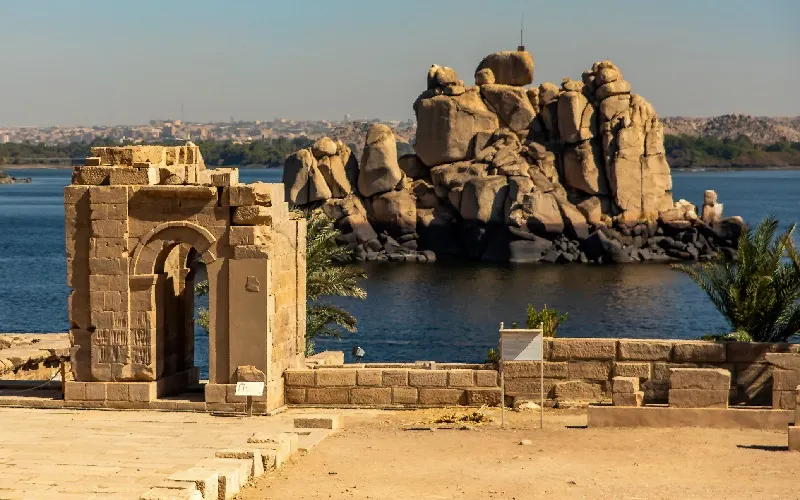
The island has undergone various cultural shifts due to foreign rule. It housed a diverse community including Jewish mercenaries during Persian rule, saw the preservation of Egyptian traditions under Ptolemaic rule, and eventually declined during the Byzantine and Islamic periods as Christianity replaced ancient Egyptian practices.
Elephantine Island stands as a remarkable testament to Egypt's profound historical legacy. Throughout its 5,000-year existence, this ancient settlement evolved from a predynastic outpost into a thriving administrative center, serving Egypt as both the "door of the south" and a vital strategic frontier. The island's position along the Nile made it uniquely valuable for trade, defense, and religious purposes alike.
Additionally, the Elephantine Triad—Khnum, Satet, and Anuket—shaped the island's spiritual landscape, their temples representing some of the oldest continuous religious structures in Egypt. Archaeological evidence particularly highlights Khnum's significance as guardian of the Nile's life-giving floods, while the Temple of Satet demonstrates extraordinary architectural continuity spanning thousands of years.
Archaeological excavations since the late 19th century have subsequently revealed technological sophistication previously unrecognized in ancient Egypt. The discovery of intentional arsenical bronze production challenges earlier assumptions about Egyptian metallurgy, therefore proving advanced knowledge existed during the Middle Kingdom period. Similarly, the Elephantine Calendar of Things provides unique insights into administrative practices of the Eighteenth Dynasty.
Elephantine Island likewise reflects Egypt's broader historical transitions. Under Persian rule, the island housed a diverse community including Jewish mercenaries who worshipped Yahweh. The Ptolemaic dynasty later preserved and expanded Egyptian religious traditions despite introducing Greek administrative systems. Eventually, the island's prominence declined during Byzantine times as Christianity replaced ancient Egyptian practices.
Undoubtedly, Elephantine Island represents a microcosm of Egypt's entire historical journey. From its earliest predynastic settlements to its recognition as a UNESCO World Heritage Site in 1979, the island preserves layers of cultural, religious, and technological developments that shaped Egyptian civilization. Ongoing excavations still uncover new findings, thus ensuring Elephantine Island remains an invaluable window into humanity's ancient past.
Elephantine Island is located in the Nile River at Aswan, near the First Cataract, between the modern city of Aswan and the island of Kitchener (Aswan Botanical Garden).
Yes, visitors can explore remains of ancient temples, fortifications, nilometers, residential ruins, and archaeological museums that showcase artifacts uncovered from ongoing excavations.
A Nilometer is a structure used to measure the Nile’s water levels. Elephantine Island houses some of the oldest Nilometers in Egypt, which were essential for predicting floods, agriculture yields, and taxation.
Yes, two Nubian villages still exist on the island today. Their residents maintain traditional Nubian culture, architecture, language, and customs, creating a living link between ancient and modern life.
Elephantine Island is easily accessible by local ferry or small motorboat from the Aswan Corniche. The short boat ride itself offers scenic views of the Nile and surrounding landmarks.
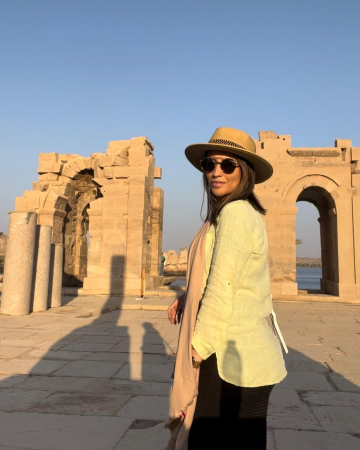

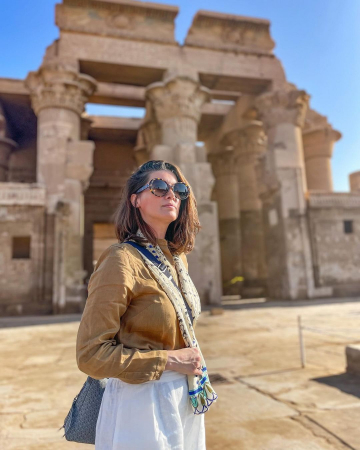
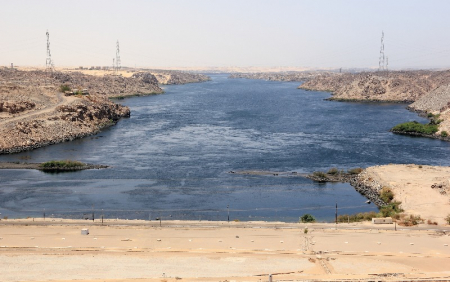
Lake Nasser, Egypt’s vast artificial reservoir, reshaped the Nile, boosted agriculture and fishing, and preserved historic sites like Abu Simbel.
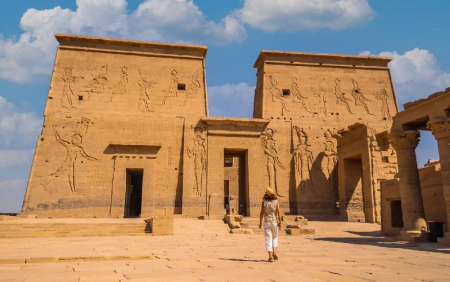
Philae Temple, dedicated to Isis, was relocated to Agilkia Island to preserve its ancient Ptolemaic structures and remains a UNESCO World Heritage site.

Aswan is one of the world’s oldest cities, marking ancient Egypt’s southern frontier. Rich in history, science, trade, and UNESCO-listed monuments, it remains a living link between past and present.
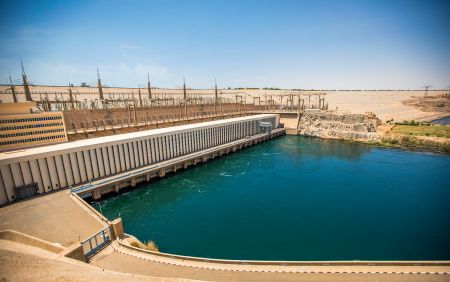
Aswan High Dam, completed 1970, transformed Egypt through Lake Nasser reservoir, hydroelectric power & year-round irrigation while displacing 100,000+ Nubians.
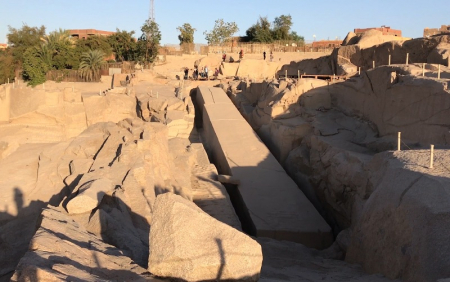
The Unfinished Obelisk in Aswan reveals ancient Egyptian quarrying techniques and ambitions, offering a rare glimpse into their engineering mastery.
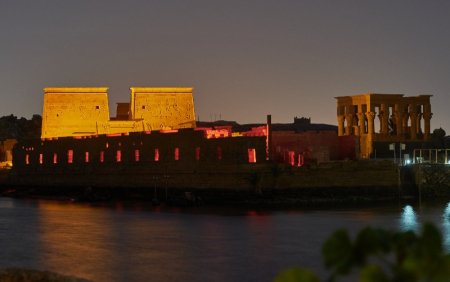
Discover the magic of Philae Temple after dark with a Sound & Light Show that brings the myths of Isis to life amid the beautifully preserved island sanctuary.

Explore El Nabatat Island, Aswan’s historic botanical garden featuring exotic plants, towering palms, and a sanctuary for birds along the Nile.

Nubian Museum Aswan features 3,000+ artifacts showcasing ancient Nubian heritage. Discover jewelry, statues & cultural displays in this 1997-opened institution.

Nubian Village near Aswan offers authentic culture with vibrant homes, traditional hospitality & henna art. Experience 8,000 years of living Nile heritage.
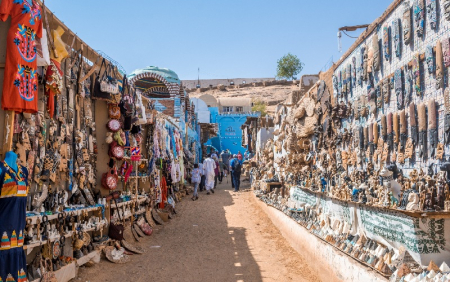
Aswan Old Souk offers a colorful, aromatic shopping experience along the Nile, featuring local crafts, spices, textiles, and souvenirs in Egypt’s southernmost city.
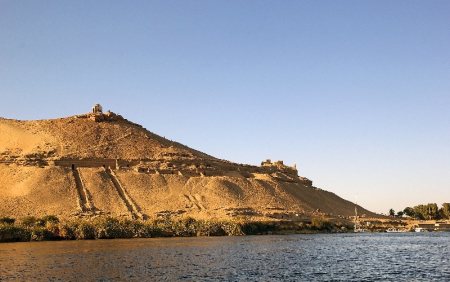
Elephantine Island in Aswan is a 5,000-year-old UNESCO site, once Egypt’s southern gateway, famed for its temples, Nilometers, and living Nubian heritage.
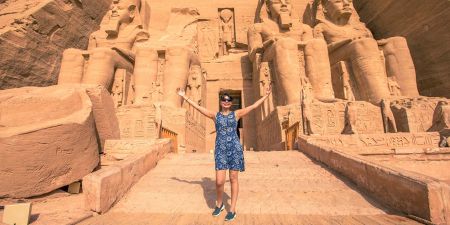
Discover Abu Simbel, Ramses II’s rock-cut temples famed for colossal statues, solar alignment, and an epic UNESCO rescue that saved them from Lake Nasser.