
 Home
Home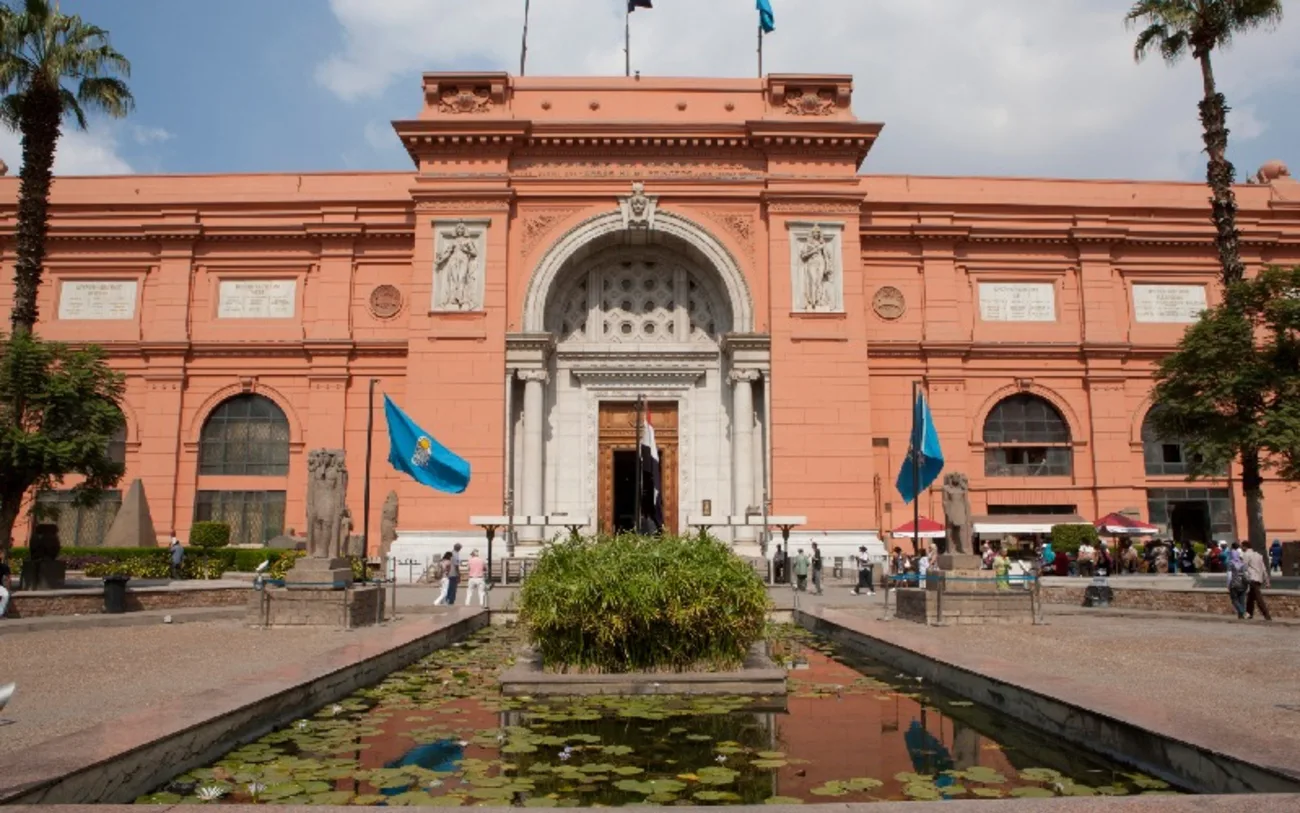
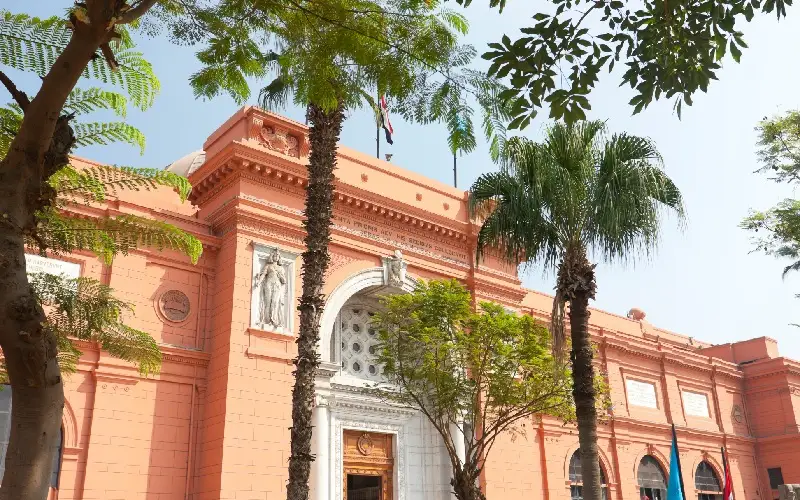
The Egyptian Museum houses the world's largest collection of Egyptian antiquities, comprising over 170,000 items. Constructed in 1901 on Tahrir Square in Cairo, this monumental institution was officially opened on November 15, 1902. The museum stands as one of the largest art museums in Africa and holds the distinction of being the first national museum established in the Middle East.
The Egyptian Museum Cairo represents an unparalleled treasury of ancient Egyptian civilization. Its vast collection includes the famous Tutankhamun artifacts, featuring the renowned gold death mask and sarcophagus, as well as the Royal Mummy room that housed eleven Pharaonic dignitaries. The museum's initial collection was so substantial that the first shipment alone contained approximately forty-eight stone coffins weighing more than a thousand tons in total.
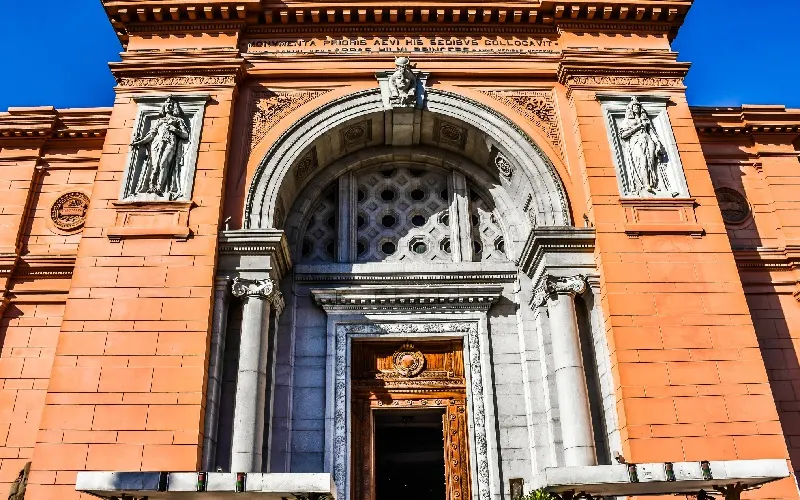
The Egyptian Museum is located on Tahrir Square in downtown Cairo, making it easily accessible from most parts of the city. Its central location near major hotels and transportation hubs makes it a convenient stop for visitors exploring Cairo's attractions.
How the Egyptian Museum came to be
The origins of the Egyptian Museum date back to 1835 when the Egyptian government established its first antiquities museum near the Ezbekieh Garden. Initially, this modest institution focused on artifacts discovered by farmers in Middle Egypt under the direction of Youssef Diaa Effendi, who headed the Antiquities Department.
The 19th-century push for preservation
During the 1840s, Muhammad Ali Pasha made early efforts to preserve Egyptian heritage by assigning Linan Bek, his Minister of Education, to document archeological sites and collect artifacts. Unfortunately, these preservation initiatives faltered after Muhammad Ali's death in 1849. The subsequent period saw increased antiquities trafficking, with the museum's collection gradually diminishing until it was relegated to a single hall in the Cairo Citadel. The situation deteriorated further in 1855 when Khedive Abbas I donated the entire contents to Archduke Maximilian of Austria during his visit.
This concerning trend highlighted the urgent need for systematic preservation of Egypt's archeological treasures. Throughout this period, European interest in Egyptian antiquities continued to grow, creating both opportunity and risk for the nation's heritage preservation efforts.
Auguste Mariette's role in founding the museum
The pivotal turning point came in 1858 when French archeologist Auguste Mariette established a new museum in Boulaq, using a former warehouse near the Nile. After being appointed Egypt's first Director of Antiquities by Ottoman ruler Said Pasha, Mariette implemented revolutionary policies that fundamentally changed how Egypt's artifacts were managed.
Mariette's most significant contributions included eliminating unauthorized excavations and restricting the sale and export of antiquities. These decisive actions helped preserve countless treasures for the Egyptian nation rather than seeing them dispersed to foreign collections. Mariette envisioned the Boulaq facility as merely temporary, understanding the need for a permanent institution of greater capacity.
From temporary spaces to a national institution
Following Mariette's death in 1881, Gaston Maspero continued building the collection. However, the Boulaq location suffered significant damage during an 1878 Nile flood, underscoring the need for relocation. By 1889, overcrowding had become severe, with no space for additional artifacts.
The collection moved temporarily to an annex of Khedive Ismail's Giza Palace. This stopgap solution proved inadequate for proper display and preservation. The growing collection, coupled with rising Egyptian nationalism, intensified calls for a proper national museum.
The breakthrough came in 1895 with an international competition for designing a permanent museum. French architect Marcel Dourgnon's neoclassical design was selected, and construction began at Tahrir Square in April 1897. The massive transfer of artifacts from Giza to the new location required five thousand wooden carts and nineteen train journeys. The Egyptian Museum officially opened its doors on November 15, 1902, marking a triumphant conclusion to nearly seven decades of institutional evolution.
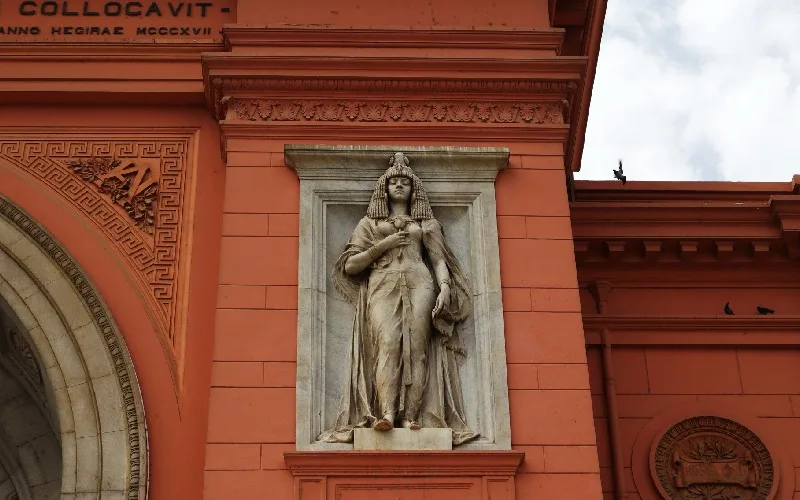
The Egyptian Museum was founded by French archeologist Auguste Mariette, who established the original collection in Boulaq in 1858. The current building, designed by French architect Marcel Dourgnon, was completed in 1901 and officially opened on November 15, 1902.
A building that tells its own story
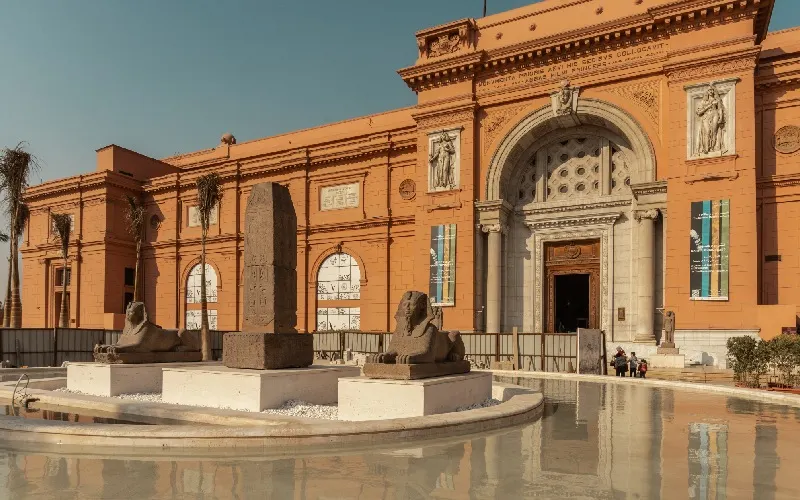
Designed by French architect Marcel Dourgnon, the Egyptian Museum building itself stands as a testament to late 19th-century architectural ideals. Completed in 1901, this neoclassical structure represents more than just a container for artifacts—it embodies a specific cultural moment in Egypt's relationship with its ancient past.
Architectural vision and European influence
The museum's design emerged from an international competition held in 1895, with Dourgnon's neoclassical proposal ultimately selected from among 73 submissions. This architectural choice reflects the prevailing European aesthetic sensibilities of the era, particularly the French academic tradition that dominated international exhibitions and cultural institutions. The building features a symmetrical façade, classical proportions, and formal exhibition spaces organized around a central axis—all hallmarks of European museum design.
Symbolism in the museum's layout
The internal organization of the Egyptian Museum conveys meaning through thoughtful spatial arrangement. The museum employs a chronological display strategy, with artifacts arranged to guide visitors through the progression of Egyptian civilization. This sequential journey through time transforms the building from a passive container into an active storytelling medium. The building's rational plan, with its clear circulation paths and orderly progression, reflects Enlightenment principles of knowledge organization.
Restoration efforts and modern upgrades
Throughout its existence, the museum building has undergone various conservation interventions. Recent restoration projects have focused on preserving both the structure itself and the artifacts it contains. Conservation specialists have implemented modern techniques for artifact preservation, particularly for vulnerable organic materials. Upgrades to climate control systems, security measures, and exhibition technologies have been implemented to meet international museum standards while respecting the building's historical significance.
Customize Your Dream Vacation!
Get in touch with our local experts for an unforgettable journey.
Plan Your TripThe museum's evolving role in Egyptian heritage
Since its founding, the Egyptian Museum has undergone a remarkable transformation in its approach to preserving and presenting the nation's cultural heritage. Originally conceived as a storage facility for ancient artifacts, the institution has evolved into a dynamic center for education and cultural identity.
From storage to storytelling
Throughout the 20th century, the Egyptian Museum gradually shifted from being merely a repository of artifacts to becoming an institution that interprets and contextualizes Egyptian history. The early years focused primarily on accumulation and cataloging, with displays organized taxonomically. By the mid-20th century, museum officials began implementing modern museology principles, creating thematic exhibitions that told coherent stories about ancient Egyptian life, beliefs, and achievements. This transition represented a fundamental shift in the museum's mission—from preservation alone to education and cultural interpretation.
Impact of political events on the museum
The Egyptian Museum has not existed in isolation from the nation's political transformations. The 1952 revolution marked a turning point as the new government emphasized the museum's role in promoting national identity. In more recent times, the 2011 events directly affected the museum when several artifacts were damaged during civil unrest. This unfortunate occurrence catalyzed renewed international support for improved security and preservation measures.
International collaborations and exhibitions
Beyond its role as a national institution, the Egyptian Museum has established itself as a global cultural ambassador. Since the mid-20th century, the museum has participated in numerous international loan programs, sharing treasures like the Tutankhamun collection with millions worldwide. These traveling exhibitions generated revenue and strengthened Egypt's cultural diplomacy. The museum has benefited from partnerships with international conservation experts, particularly in developing techniques for preserving fragile papyri and organic materials.
Inside the museum: A journey through time
Visitors to the Egyptian Museum encounter artifacts arranged in a deliberate sequence that unfolds the story of an ancient civilization. This vast collection provides an unparalleled journey through thousands of years of Egyptian history.
Chronological arrangement of artifacts
The museum's galleries guide visitors through a meticulously organized timeline of Egyptian civilization. Beginning with prehistory, the displays progress through the Old, Middle, and New Kingdoms, ultimately concluding with the Greco-Roman period. This chronological approach enables visitors to witness the evolution of Egyptian art, culture, and technology across millennia. The museum houses over 100,000 artifacts, with approximately half on permanent display.
The Tutankhamun collection and its legacy
Undoubtedly the museum's crown jewel, the Tutankhamun collection showcases the complete burial treasure discovered by Howard Carter in 1922. All 5,600 objects from the boy king's tomb are exhibited, including his iconic golden mask, ornate throne depicting him with Queen Ankhesenamun, childhood toys, six ceremonial chariots, and embroidered gloves. His coffin underwent meticulous restoration at the museum's conservation center in preparation for public display.
The Royal Mummy Hall and its relocation
Formerly housed within the Egyptian Museum, the Royal Mummy collection was relocated to the National Museum of Egyptian Civilization in April 2021. This transfer involved a grand procession with the mummies traveling in chronological order of their reigns. Prior to the move, each royal mummy was carefully placed in an oxygen-free nitrogen capsule for preservation. The collection comprised 20 royal mummies—18 kings and 2 queens—from the 17th through 20th dynasties.
Rare manuscripts and the museum library
The museum safeguards exceptional written treasures, notably a 4,000-year-old leather manuscript containing religious spells and vibrant illustrations predating the Book of the Dead. This remarkable document stands as both the longest and oldest surviving leather manuscript from ancient Egypt. Additionally, the museum's extensive papyri collection illuminates various facets of ancient life, from religious rituals and magical incantations to medical knowledge and administrative records.
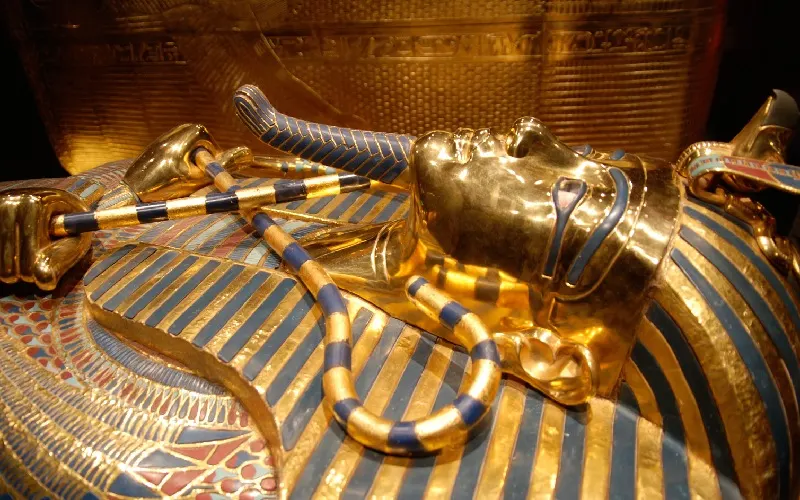
The Egyptian Museum houses over 170,000 artifacts, making it the world's largest collection of ancient Egyptian antiquities. Approximately 100,000 items are catalogued, with around half on permanent display throughout the museum's galleries.
The Royal Mummy collection was relocated from the Egyptian Museum to the National Museum of Egyptian Civilization in April 2021. The collection of 20 royal mummies—18 kings and 2 queens—was transferred in a grand procession, with each mummy carefully preserved in oxygen-free nitrogen capsules.
The Egyptian Museum stands as a monumental achievement in the preservation of ancient Egyptian civilization. Throughout its history, this institution transformed from a modest collection near the Ezbekieh Garden to the grand neoclassical structure on Tahrir Square that houses over 170,000 artifacts today. Auguste Mariette's revolutionary policies fundamentally altered how Egypt managed its archeological treasures, preventing countless artifacts from disappearing into foreign collections.
Marcel Dourgnon's architectural vision created not merely a container for artifacts but a storytelling medium that guides visitors chronologically through Egyptian history. Despite challenges, the Egyptian Museum adapted and evolved. Initially focused primarily on storage and cataloging, the institution eventually embraced modern museology principles with exhibitions that contextualize artifacts within their historical frameworks.
Collections like the complete Tutankhamun treasure and rare manuscripts such as the 4,000-year-old leather manuscript establish the museum's unparalleled significance. After more than a century of operation, the Egyptian Museum remains essential to understanding ancient Egyptian heritage, continuing its dual mission of preservation and education while serving as a window through which the world can appreciate the achievements of this ancient civilization.
The Egyptian Museum is typically open daily from 9:00 AM to 5:00 PM. However, it's always best to check the official website or contact the museum directly for the most up-to-date information on visiting hours, as they may change during holidays or special events.
It's recommended to allocate 4-6 hours for your visit to the Egyptian Museum. This should give you enough time to explore the main exhibits, including the Tutankhamun collection and other significant artifacts. However, if you're particularly interested in Egyptology, you might want to plan for a longer visit.
Personal photography is generally allowed in most areas of the museum, except for certain sections like the Tutankhamun Galleries where only mobile photography may be permitted. The use of tripods, selfie sticks, and flash photography is typically prohibited. Always check with museum staff for the most current photography rules.
The Egyptian Museum houses many remarkable exhibits, but some highlights include the complete Tutankhamun collection, featuring his famous golden mask, the Royal Mummy collection (before its relocation), and rare artifacts like the 4,000-year-old leather manuscript. The chronological arrangement of artifacts also offers a comprehensive journey through ancient Egyptian history.
The Tutankhamun collection is the museum's crown jewel, featuring all 5,600 objects discovered in the boy king's tomb by Howard Carter in 1922. This includes the iconic golden death mask, ornate throne, ceremonial chariots, and personal items—representing the only nearly intact royal tomb ever found in Egypt.
The museum has made efforts to improve accessibility, though as a historic building from 1902, some areas may present challenges. It's advisable to contact the museum in advance to discuss specific accessibility needs and available accommodations.
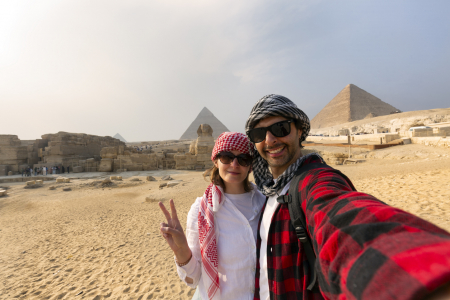
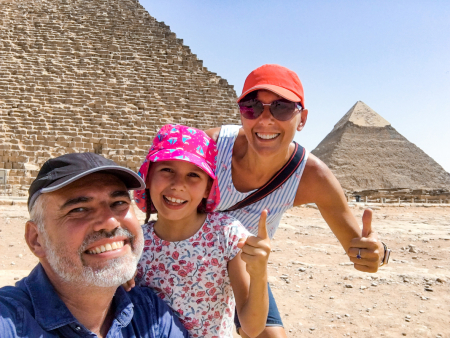

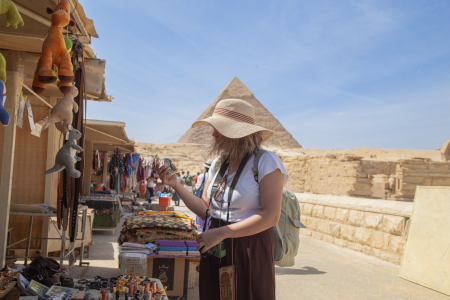

The Great Pyramids of Giza, Egypt’s iconic monuments, showcase ancient engineering brilliance and remain the last wonder of the ancient world, continuing to fascinate visitors and researchers alike.

The Egyptian Museum in Cairo houses over 170,000 ancient artifacts, including Tutankhamun's complete collection and golden death mask. Opened in 1902, it's the world's largest repository of Egyptian antiquities.

Khan el-Khalili is Cairo’s legendary medieval bazaar, where centuries-old Islamic architecture, vibrant trade, and timeless cafés create a living cultural landmark.

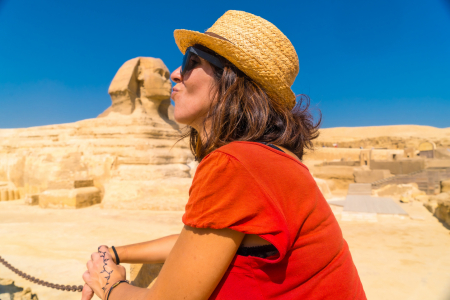
The Great Sphinx of Giza, with its lion body and pharaoh head, represents ancient Egyptian artistry, symbolic power, and enduring cultural fascination.

Tanoura is a traditional Egyptian Sufi dance known for its colorful spinning skirts, spiritual rhythm, and deep roots in ancient mystic traditions.

Saqqara, Egypt's ancient necropolis, features Djoser's Step Pyramid—the world's oldest. Spanning 3,000 years, it preserves royal tombs and sacred animal burials.

The Valley Temple at Giza, built 2570 BCE by Khafre, features 16 granite columns and hosted sacred afterlife rituals. Explore Fourth Dynasty architecture.

The Citadel of Cairo is a historic medieval fortress and royal complex, showcasing centuries of Egyptian power, Mamluk architecture, and Islamic heritage, now preserved as a UNESCO World Heritage Site.

Khufu's Solar Boat is a 142-foot cedar vessel discovered 1954 near the Great Pyramid. Built without nails 4,500 years ago, it's now at Grand Egyptian Museum.

St. George Church in Old Cairo, founded 684 AD, features unique circular design, sacred healing relics & underground chapel linked to the Holy Family's refuge.

Pyramids Sound and Light Show transforms Giza into open-air theater with 50 minutes of narration, music & lighting bringing ancient Egyptian history alive.

The Djoser Pyramid at Saqqara is Egypt's first pyramid, built 2600 BCE by architect Imhotep. Standing 62.5m tall, it reopened to visitors in 2020.

The Hanging Church in Old Cairo is a 1,300-year-old Coptic sanctuary built on Babylon Fortress. Free entry, open daily 9 AM-5 PM, dress modestly required.
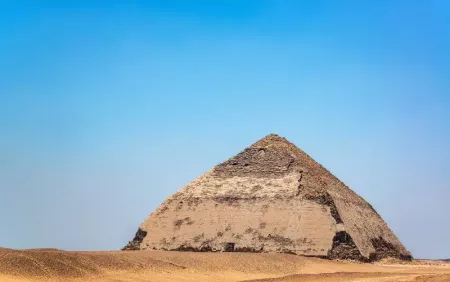
The Bent Pyramid at Dahshur features a rare bent profile created by ancient construction adjustments, offering insight into Egypt’s earliest attempts at smooth-sided pyramids.

Coptic Cairo features 4th-century churches and recent tomb discoveries revealing early Christian heritage. Explore the Hanging Church, Abu Serga & sacred sites.
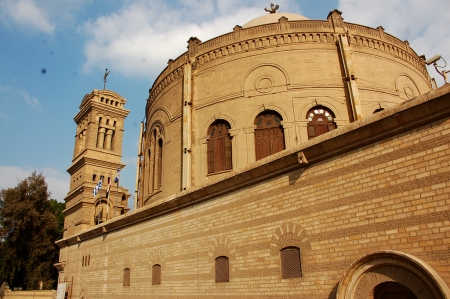
Saint Barbara’s Church in Coptic Cairo is one of Egypt’s oldest Christian monuments, dating back to the 5th–6th century. Known for housing the relics of Saint Barbara, the church reflects centuries of Coptic heritage, architectural evolution, and deep spiritual significance.

Explore the Fortress of Babylon, a major Roman fort in Old Cairo known for its strategic location, massive towers, and enduring historical significance.
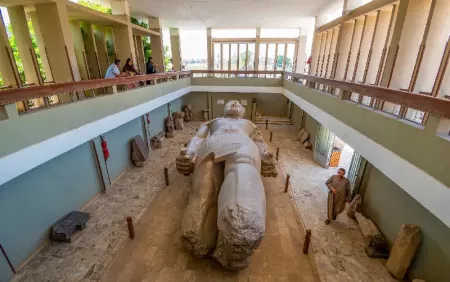
Memphis Necropolis is Egypt’s ancient royal burial site, home to pyramids, tombs, and monuments that reflect the early development of pharaonic civilization.
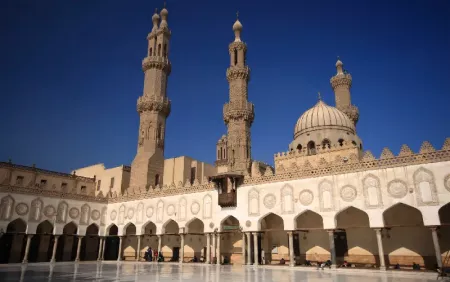
Al-Azhar Mosque is a landmark of Islamic scholarship and Fatimid architecture, home to the world’s second-oldest university and a symbol of Cairo’s spiritual heritage.
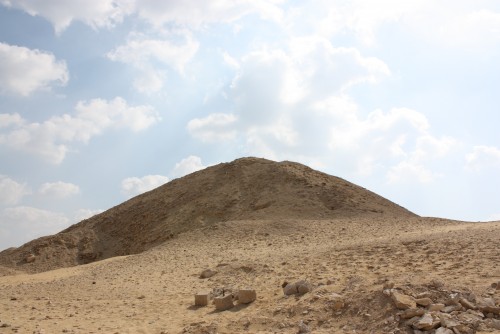
Teti’s Pyramid in Saqqara is an Old Kingdom monument built for the first king of the Sixth Dynasty. Known for its Pyramid Texts and unique mortuary chapel, it remains one of Egypt’s most historically important royal tombs.
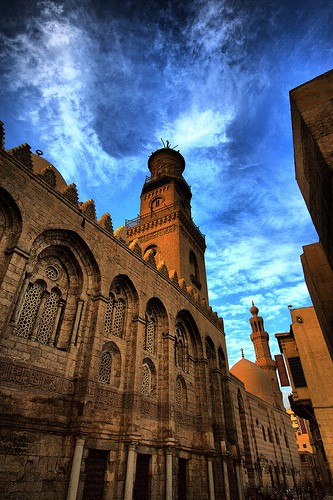
Al Muizz Street is one of Cairo’s oldest and most vibrant historic avenues, showcasing centuries of Islamic architecture. Lined with mosques, palaces, and bustling markets, it offers a captivating walk through Egypt’s medieval past.
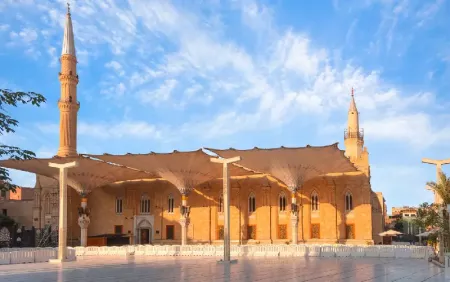
Al-Hussein Mosque is one of Cairo’s most sacred Islamic landmarks, built in 1154 and revered for housing the head of Imam Hussein. Located by Khan El-Khalili, it blends centuries of architectural heritage and remains a major pilgrimage site.
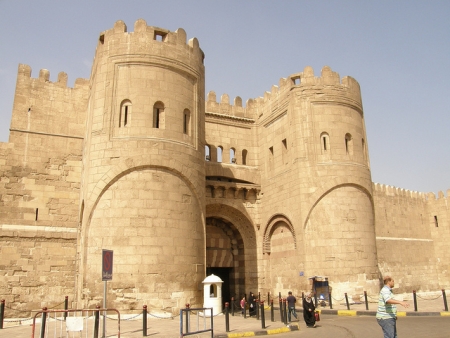
Bab al-Futuh is an 11th-century Fatimid gate in Old Cairo, famous for its massive round towers and strategic role in the city’s medieval fortifications.
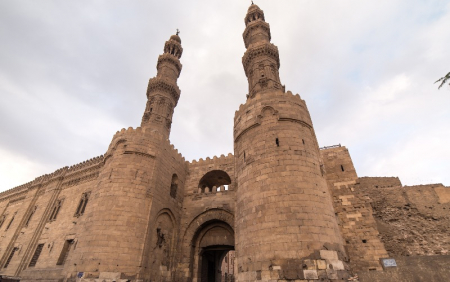
Bab Zuweila is one of Cairo’s last surviving medieval gates, built in 1092 CE by the Fatimid vizier Badr al-Jamali. Famous for its towering twin bastions, massive wooden doors, and later Mamluk minarets, it served as a defensive stronghold, execution site, and ceremonial gateway. Today, it stands as one of Cairo’s most iconic historic monuments.
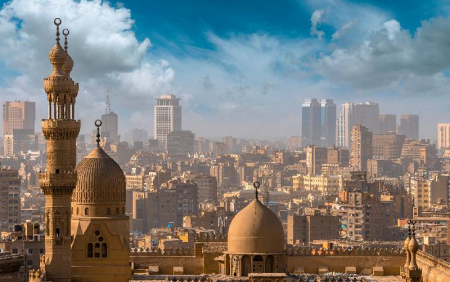
Al Rifai Mosque in Cairo blends Neo-Mamluk architecture with royal history. Completed in 1912, it serves as both a majestic mosque and mausoleum for Muhammad Ali’s family.
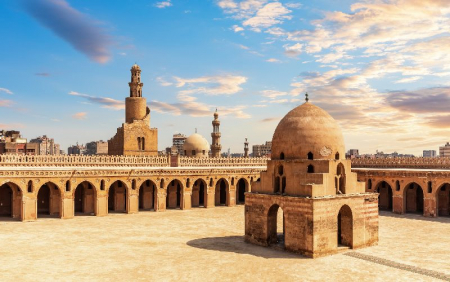
The Ibn Tulun Mosque, Cairo’s oldest well-preserved mosque, dates back to 879 CE. Famous for its vast square layout, intricate arches, and 128 ornate stucco windows, it remains a pinnacle of early Islamic architecture and a must-visit historical landmark.
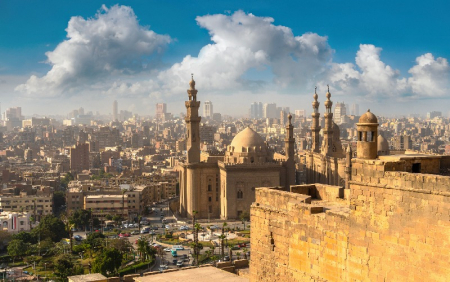
The Sultan Hassan Mosque, built in the 14th century, is a Bahri Mamluk architectural marvel in Cairo, renowned for its grand portal, extensive madrasas, and historic significance.

The Suez Canal, Egypt’s iconic waterway, connects Africa and Asia, handling thousands of ships yearly and shaping international trade.
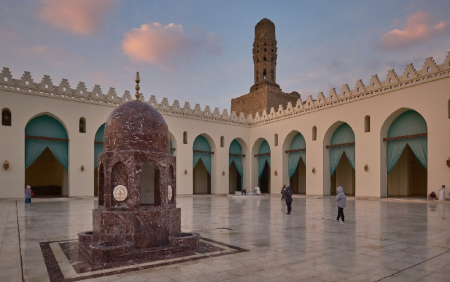
Al-Hakim Mosque, Cairo, is a stunning Fatimid-era mosque built between 990–1013 CE. Famous for its grand courtyard, distinctive minarets, and rich history, it remains a key cultural and religious landmark.
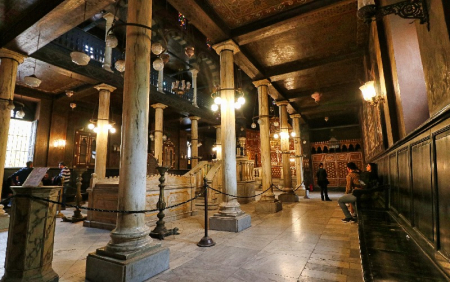
The Ben Ezra Synagogue, founded in the 11th century in Old Cairo, is Egypt’s oldest Jewish monument and the discovery site of the renowned Cairo Geniza.