
 Home
Home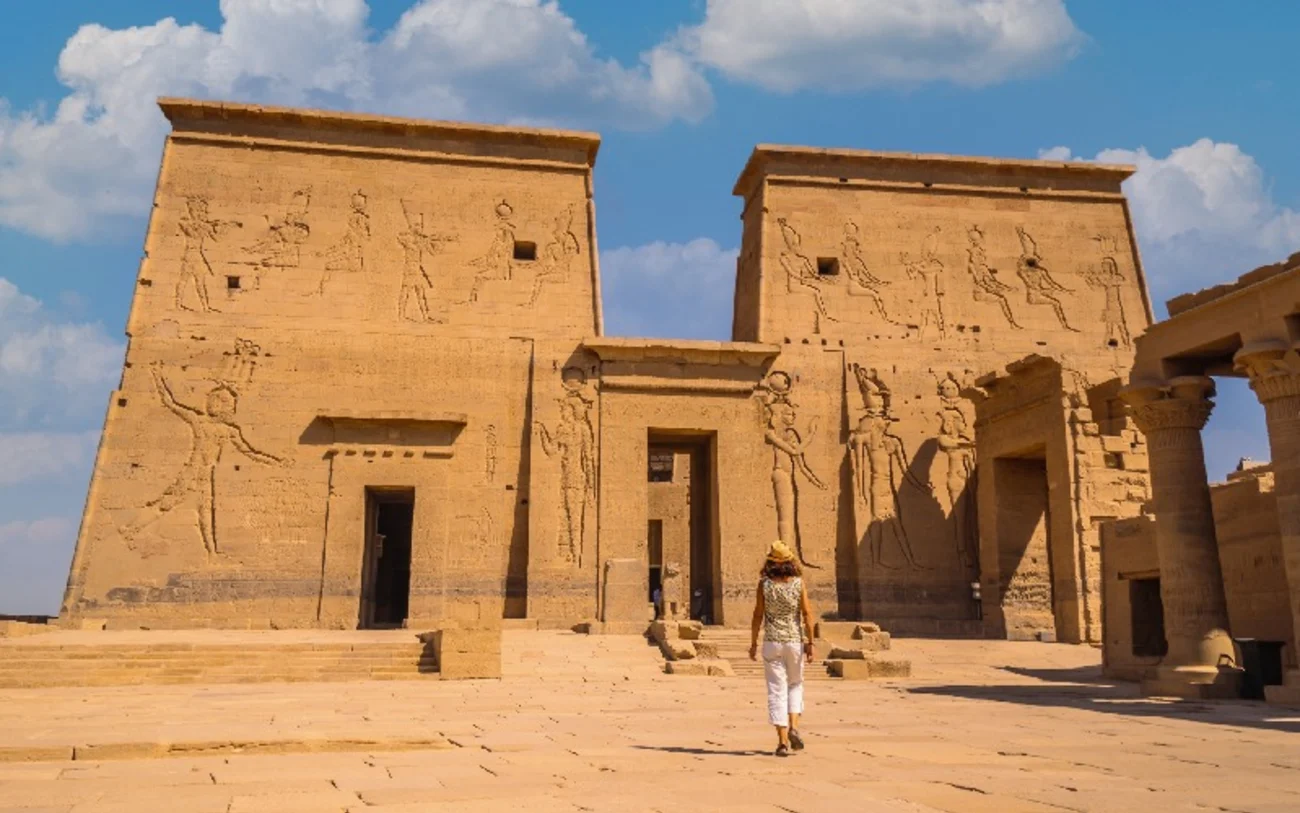
Agilkia Island harbors one of ancient Egypt's most captivating archaeological wonders. The Philae Temple emerges from these southern Egyptian waters as a testament to millennia of devotion, its origins tracing back to 690 BC when Pharaoh Taharqa commissioned this sacred edifice for Isis, the revered goddess of healing and magic.
This extraordinary sanctuary witnessed the ebb and flow of civilizations. Egyptians, Greeks, and Romans each left their mark across the centuries, weaving a cultural tapestry that speaks to the temple's enduring spiritual magnetism. Originally gracing Philae Island near Aswan, the temple complex faced an unprecedented challenge when the Aswan Dam project of the 1960s threatened to submerge 22 archaeological treasures beneath rising waters.
What followed between 1977 and 1980 ranks among history's most ambitious preservation endeavors. Engineers and archaeologists embarked on a painstaking mission, dismantling the entire Philae Temple complex stone by stone before reconstructing it on Agilkia Island, positioned 550 meters northeast of its ancestral home. This decade-long rescue operation preserved one of Egypt's most sublime temples from the depths of Lake Nasser.
The temple's rescue earned recognition alongside Abu Simbel and neighboring ruins when UNESCO granted World Heritage status in 1979. Today's visitors encounter structures perfected under Ptolemy II Philadelphus and his successor, Ptolemy III Euergetes, where steep walls and towering summits create an island sanctuary that seems to rise from the Nile itself.
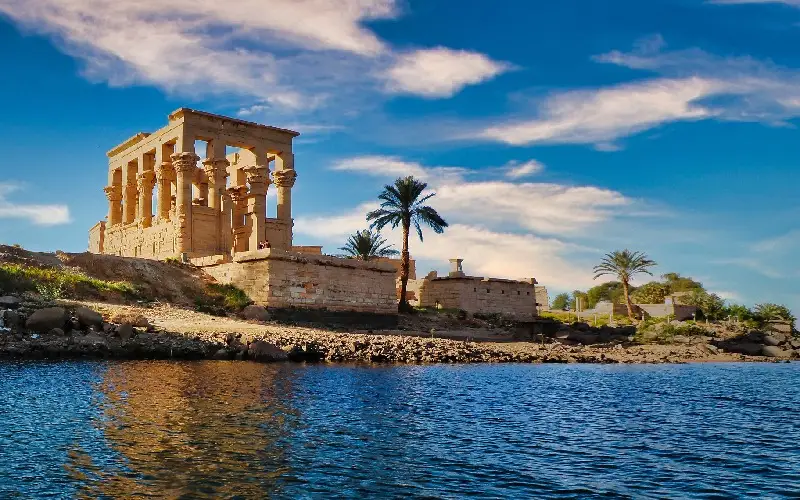
Philae Temple and the Cult of Isis
Philae Temple emerges as ancient Egypt's final bastion of traditional worship, where devotees continued their sacred rituals until the 6th century AD, centuries after Christianity had swept across the Roman Empire. This remarkable sanctuary, consecrated to Isis—goddess of healing, birth, and magic—stands as perhaps antiquity's most influential religious center.
Mythological stories depicted on temple walls
Philae's stone surfaces unfold one of humanity's most compelling mythological dramas. The walls speak through carved reliefs that chronicle Isis gathering her beloved Osiris's scattered remains after his brutal murder by Seth, his jealous brother. These ancient artists captured her desperate quest to resurrect him through divine magic, ultimately conceiving their son Horus. The temple's most sacred carvings present this eternal cycle: Isis breathing life back into Osiris, birthing Horus, and performing the sacred mummification that would ensure her husband's immortality. Hieroglyphic texts accompanying these scenes preserve the actual prayers and ceremonies that once echoed through these chambers.
Isis as healer, mother, and protector
Pyramid Texts from the 5th Dynasty (ca. 2465–2323 B.C.) first introduced Isis to written history, though her true power would unfold across millennia. Her healing abilities transcended mortal understanding—she could cure any affliction, demonstrated most famously when she restored her son Horus from near death. Motherhood found its perfect expression through Isis, who shielded young Horus from Seth's murderous schemes and fought relentlessly for eighty years to secure his rightful throne. Death held no dominion where Isis stood guard, joined by fellow protector goddesses Nephthys, Neith, and Selket. The tyet amulet bearing her sacred knot became Egypt's most trusted protection charm, worn by countless believers seeking her divine shield.
Spread of Isis worship beyond Egypt
Paradoxically, dedicated temples to Isis appeared relatively late in Egyptian history—Nectanebo II commissioned the first around 360-343 BCE. Yet her influence rippled far beyond the Nile Valley. Alexandria served as the launching point for her Mediterranean conquest, where she claimed patronage over seafarers navigating treacherous waters. Greece and Rome welcomed her with open arms, constructing at least 35 new sanctuaries in her honor. Archaeological evidence reveals 167 Isis sanctuaries scattered across an empire that spanned Africa, Palestine, Syria, Asia Minor, Greece, Italy, Gaul, the Balkans, Britain, and Spain. Cosmopolitan cities with diverse populations particularly embraced her worship. Merchants carried her blessings along trade routes, sailors invoked her protection on distant seas, and soldiers sought her favor before battle. Modern scholars note fascinating parallels between depictions of Isis nursing Horus and later Christian imagery of the Virgin Mary with infant Jesus.
Design and Symbolism in Temple Architecture
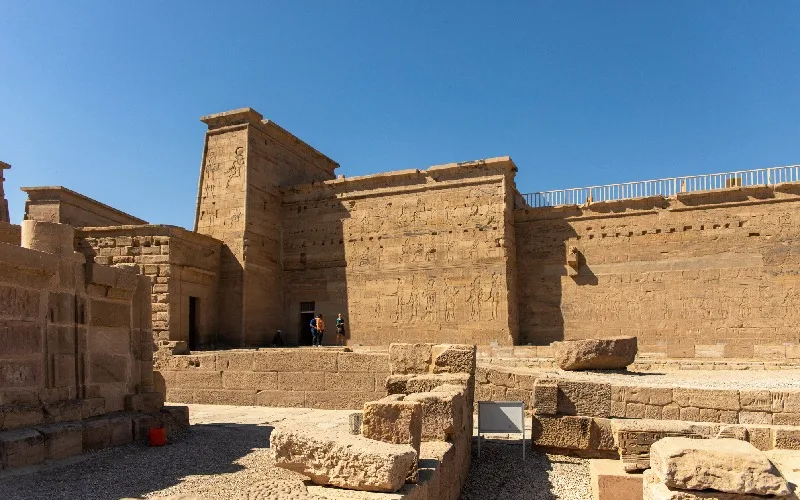
Philae Temple showcases architectural mastery that transcends mere construction—each element speaks to ancient Egyptian engineering prowess and spiritual symbolism. The Ptolemaic builders, later joined by Roman craftsmen, created a complex where traditional Egyptian design principles merged with innovative adaptations suited to the island's unique challenges.
Use of syenite and island topography
Syenite, the granite-like stone quarried locally, formed the backbone of Philae's construction. Ancient engineers shaped this durable material into steep walls and commanding summits that embraced the island's natural contours. The builders approached their task methodically, first preparing Philae's uneven terrain through careful leveling and strategic masonry reinforcement where the ground proved unstable. The western wall of the Great Temple, along with its corresponding dromos wall, demonstrates remarkable engineering foresight—these foundations extend below the pre-inundation water level, anchored directly into the granite bedrock that forms the Nile's riverbed.
Symbolic carvings and sacred spaces
Stone surfaces throughout the complex tell stories through intricate relief carvings, particularly the epic of Isis and Osiris. The central sanctuary represents the temple's spiritual heart, originally sheltering two granite shrines: one for a golden statue of Isis, another for the sacred barque employed during religious processions. Today, visitors find only the stone pedestal bearing inscriptions of Ptolemy III and his wife, Berenice. This inner sanctuary contained twelve chambers plus a crypt, their walls adorned with liturgical texts and offering scenes that bring the Isis and Osiris mythology to vivid life.
Birth house (Mammisi) and its meaning
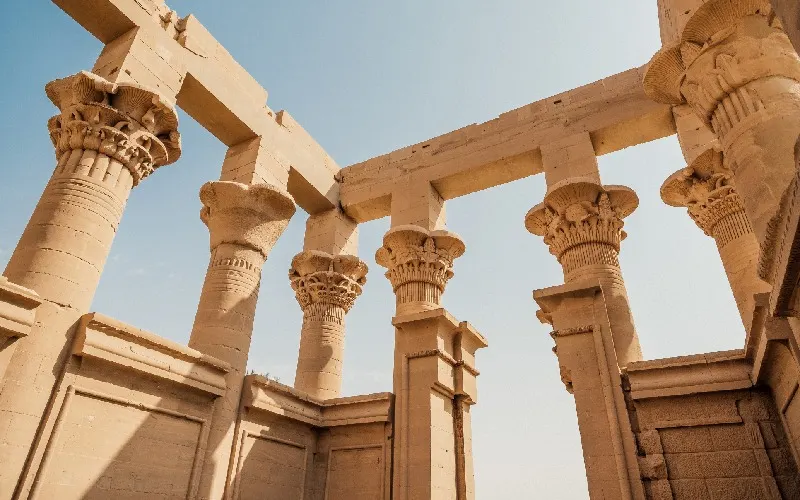
The western flank of the inner courtyard features the Mammisi, a birth house that served as a cornerstone of Ptolemaic temple design. This structure honored "Isis the Ancient" alongside the infant Horus, celebrating the divine birth narrative that anchored Egyptian religious thought. Visitors encounter a colonnade of floral-topped columns extending along three sides, each crowned with sistrum and Hathor-headed capitals. Constructed under Ptolemy II Philadelphus and Ptolemy III Euergetes, this birth house depicts Isis delivering Horus, symbolizing the eternal cycle of life, death, and renewal.
Customize Your Dream Vacation!
Get in touch with our local experts for an unforgettable journey.
Plan Your TripHistorical Layers of Influence
Philae's archaeological record unfolds like a palimpsest, where successive civilizations inscribed their cultural signatures upon this sacred island sanctuary.
Greek and Roman emperors' contributions
Ptolemaic rule transformed Philae into a magnetic pilgrimage center, drawing worshippers from Egypt, Nubia, Anatolia, Crete, and mainland Greece. The ambitious Ptolemy II Philadelphus (285-246 BCE) initiated the magnificent Temple of Isis, while his successors—Ptolemy III Euergetes, Ptolemy VI, and Ptolemy XII—methodically expanded the complex. Roman annexation in 30 BCE brought fresh architectural vision: Augustus constructed a new temple complex upon existing Ptolemaic foundations, Emperor Hadrian added the western gateway, and Trajan bequeathed his celebrated kiosk.
Nubian kings and their inscriptions
Nubian sovereignty profoundly shaped Philae's character across an remarkable millennium-long span. King Arqamani enhanced the Temple of Arensnuphis and mammisi, while his successor Adikhalamani contributed a stela later repurposed as floor filling. Nubian presence stretched from Taharqa's bark stand (690-664 BCE) through prayer inscriptions dating to the mid-fifth century CE. Three distinct phases marked Nubian involvement, with various groups journeying to Philae for ritual observances, including the distinctive Feast of Entry that echoed Meroitic royal funerary traditions.
Christianization and religious coexistence
Christianity's arrival created a fascinating period of religious plurality rather than immediate displacement. Bishop Macedonius introduced Christian presence during the early fourth century, yet by the mid-fifth century, churches operated alongside functioning pagan temples.
Traditional worship endured under protection of a 452 CE treaty between Rome and the Blemmyes and Nobades, guaranteeing continued access to Isis's sacred image. Emperor Justinian's official temple closure in 537 CE may have held less significance than previously assumed, as scholars now suggest organized paganism had already waned. Five temples eventually became Christian churches, their walls bearing crosses and Coptic inscriptions that testify to peaceful religious coexistence.
Philae Temple is a remarkable ancient Egyptian structure dedicated to the goddess Isis. Built during the Ptolemaic dynasty, it represents one of the last strongholds of ancient Egyptian religion, with worship continuing there until the 6th century AD. The temple's walls depict important mythological stories and it showcases architectural influences from Egyptian, Greek, Roman, and Nubian cultures.
Modern Rediscovery and Preservation
European scholars of the 19th century found themselves drawn to Philae's ancient enigmas like moths to flame. William John Bankes orchestrated a pivotal moment in 1818 when he commissioned Italian engineer Giovanni Belzoni to transport the Philae obelisk to England, where it arrived in 1821 before finding its permanent home at Kingston Lacy in 1829. This granite monument would unlock secrets of the ancient world, as Bankes discovered Cleopatra's name carved within its hieroglyphic text, providing crucial evidence for Jean-François Champollion's breakthrough in deciphering Egyptian writing in 1822.
19th-century European interest and obelisk removal
The island beckoned to Victorian adventurers and scholars alike. British Egyptologist Joseph Bonomi made his pilgrimage in the 1820s, followed by novelist Amelia Edwards during her 1873-1874 journey. Edwards captured the temple's ethereal beauty in her writing, describing Philae rising "out of the river like a mirage," its structures displaying "no sign of ruin or age". The obelisk's journey to England ignited Egyptian fever among Victorian society, transforming what had been scholarly curiosity into fashionable fascination.
Impact of the Aswan Dam on Philae Island
The 20th century brought modern engineering that would forever alter Philae's relationship with the Nile. The Aswan Low Dam's completion in 1902 marked the beginning of the temple's aquatic trials. Subsequent expansions between 1907-1912 and 1929-1934 elevated the dam's height, condemning Philae to near-constant submersion. The 1960s found approximately one-third of the ancient structures spending their days beneath the river's surface.
UNESCO relocation and global heritage status
UNESCO stepped forward in 1960 to orchestrate what would become archaeology's most ambitious rescue mission. Engineers constructed a massive coffer dam filled with one million cubic meters of sand, creating a dry workspace where teams could dismantle the temples into roughly 40,000 individual blocks before transporting each piece to Agilkia Island, positioned 500 meters from the original site. Twenty-three nations contributed to this $14 million international effort, culminating in the temple's reopening in 1980. UNESCO recognized both Philae and Abu Simbel with World Heritage designation in 1979.
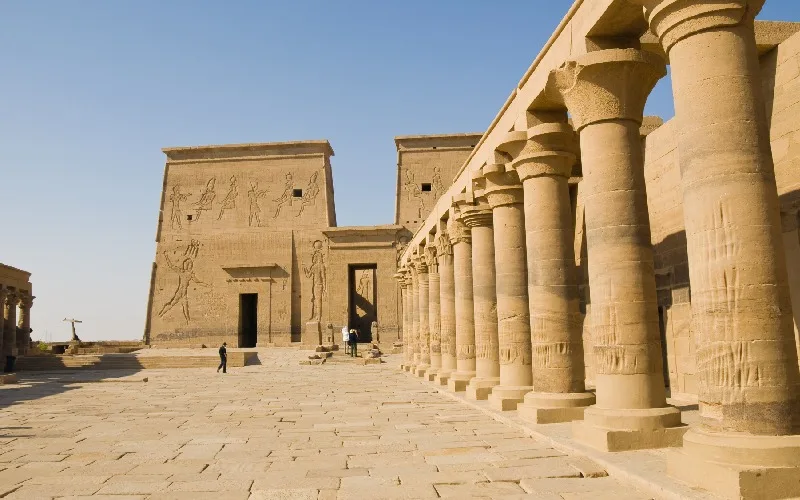
The Philae Temple was moved to protect it from permanent submersion due to the construction of the Aswan Dam. In a massive UNESCO-led preservation effort from 1977 to 1980, the entire temple complex was dismantled and reconstructed on Agilkia Island, about 500 meters from its original location.
Philae Temple stands as a timeless testament to human devotion, architectural mastery, and cultural preservation. Spanning nearly two millennia, it reflects the enduring worship of Isis, the coexistence of diverse faiths, and humanity’s commitment to safeguarding heritage. Its successful relocation highlights global collaboration to protect a treasure that transcends borders. Today, Philae Temple continues to inspire awe, education, and reflection, connecting modern visitors with generations past and affirming its role as a living symbol of humanity’s quest for spiritual and cultural understanding.
The Philae Temple was primarily dedicated to the worship of Isis, the goddess of healing, birth, and magic. It served as a significant pilgrimage site, attracting visitors from Egypt, Nubia, and various parts of the Mediterranean world. The temple complex included spaces for rituals, offerings, and the celebration of important mythological events.
The Philae Temple reflects a rich tapestry of cultural influences. While originally Egyptian, it saw significant contributions from Ptolemaic rulers, Roman emperors, and Nubian kings. Each ruling power left distinct architectural and religious imprints on the temple complex, resulting in a unique blend of styles and religious practices.
The earliest structures at Philae date back to around 690 BC during the reign of Pharaoh Taharqa, although most of the surviving buildings were constructed and expanded during the Ptolemaic and Roman periods.
Philae Temple is now located on Agilkia Island near Aswan in southern Egypt. It was carefully reconstructed there after being relocated from its original site on Philae Island.
The relocation project took several years, with dismantling and reconstruction carried out between 1977 and 1980 as part of an international UNESCO rescue campaign.
Yes, Philae Temple is part of the UNESCO World Heritage Site known as the “Nubian Monuments from Abu Simbel to Philae,” recognized in 1979 for their outstanding historical and cultural value.


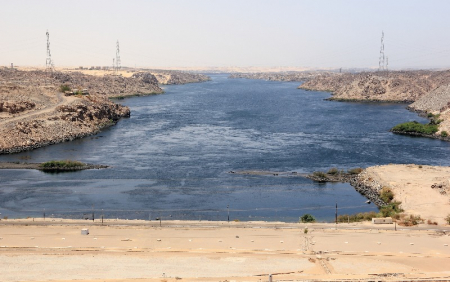
Lake Nasser, Egypt’s vast artificial reservoir, reshaped the Nile, boosted agriculture and fishing, and preserved historic sites like Abu Simbel.
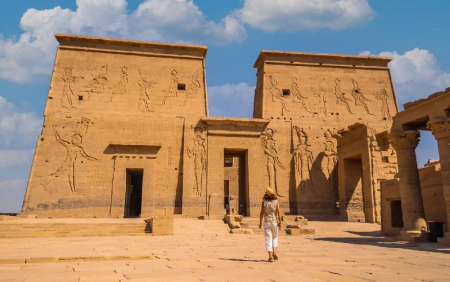
Philae Temple, dedicated to Isis, was relocated to Agilkia Island to preserve its ancient Ptolemaic structures and remains a UNESCO World Heritage site.
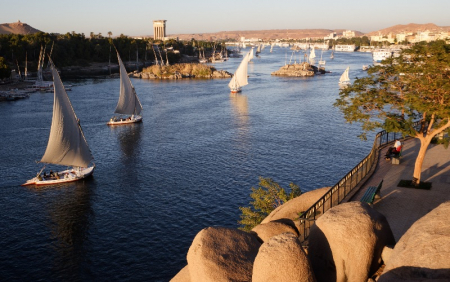
Aswan is one of the world’s oldest cities, marking ancient Egypt’s southern frontier. Rich in history, science, trade, and UNESCO-listed monuments, it remains a living link between past and present.
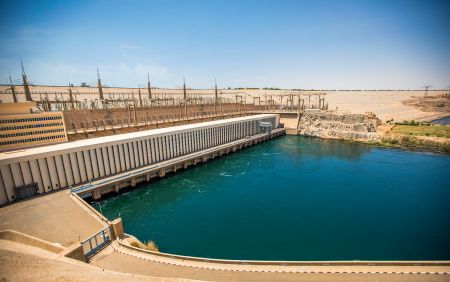
Aswan High Dam, completed 1970, transformed Egypt through Lake Nasser reservoir, hydroelectric power & year-round irrigation while displacing 100,000+ Nubians.
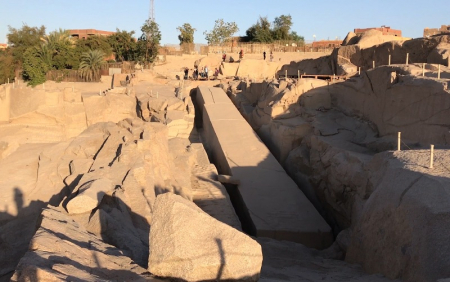
The Unfinished Obelisk in Aswan reveals ancient Egyptian quarrying techniques and ambitions, offering a rare glimpse into their engineering mastery.
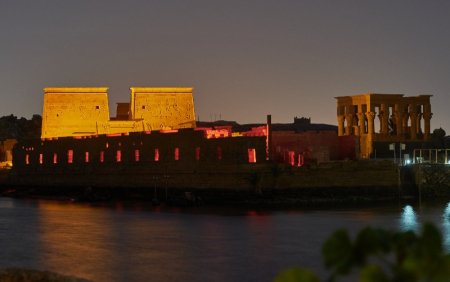
Discover the magic of Philae Temple after dark with a Sound & Light Show that brings the myths of Isis to life amid the beautifully preserved island sanctuary.
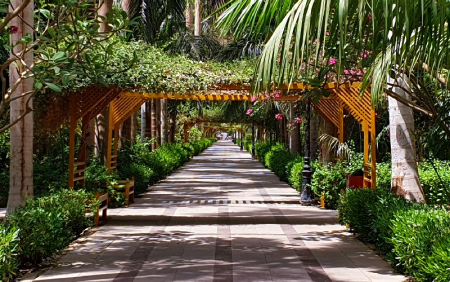
Explore El Nabatat Island, Aswan’s historic botanical garden featuring exotic plants, towering palms, and a sanctuary for birds along the Nile.

Nubian Museum Aswan features 3,000+ artifacts showcasing ancient Nubian heritage. Discover jewelry, statues & cultural displays in this 1997-opened institution.

Nubian Village near Aswan offers authentic culture with vibrant homes, traditional hospitality & henna art. Experience 8,000 years of living Nile heritage.
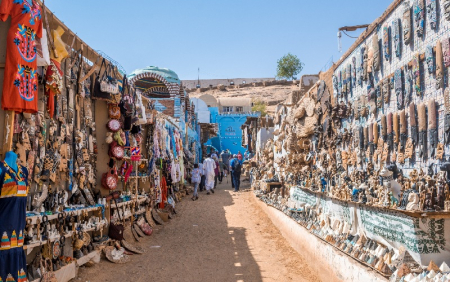
Aswan Old Souk offers a colorful, aromatic shopping experience along the Nile, featuring local crafts, spices, textiles, and souvenirs in Egypt’s southernmost city.
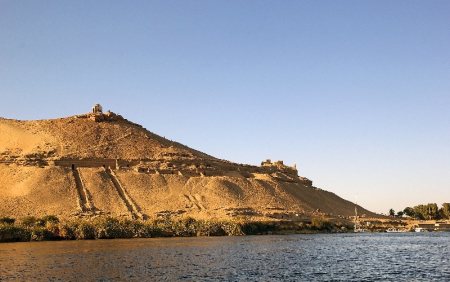
Elephantine Island in Aswan is a 5,000-year-old UNESCO site, once Egypt’s southern gateway, famed for its temples, Nilometers, and living Nubian heritage.
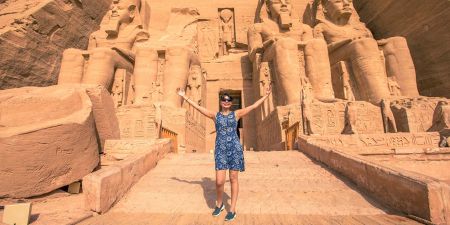
Discover Abu Simbel, Ramses II’s rock-cut temples famed for colossal statues, solar alignment, and an epic UNESCO rescue that saved them from Lake Nasser.