
 Home
Home
Rising from the granite bedrock of southern Egypt, the Aswan High Dam stands as one of the most ambitious engineering projects of the twentieth century. Built between 1960 and 1970, this colossal embankment dam towers 111 meters above the Nile and stretches nearly four kilometers across the river. More than a structure of stone and earth, the dam represents Egypt’s determination to reshape its future by mastering the river that had both sustained and threatened its civilization for thousands of years.
Completed on July 21, 1970, after a decade of intense labor and investment exceeding one billion dollars, the Aswan High Dam transformed Egypt’s relationship with the Nile. Its twelve massive turbines generate around 10 billion kilowatt-hours of electricity each year, supplying power to cities, factories, and remote villages alike. For millions of Egyptians, the dam marked the first time electric light became part of daily life.
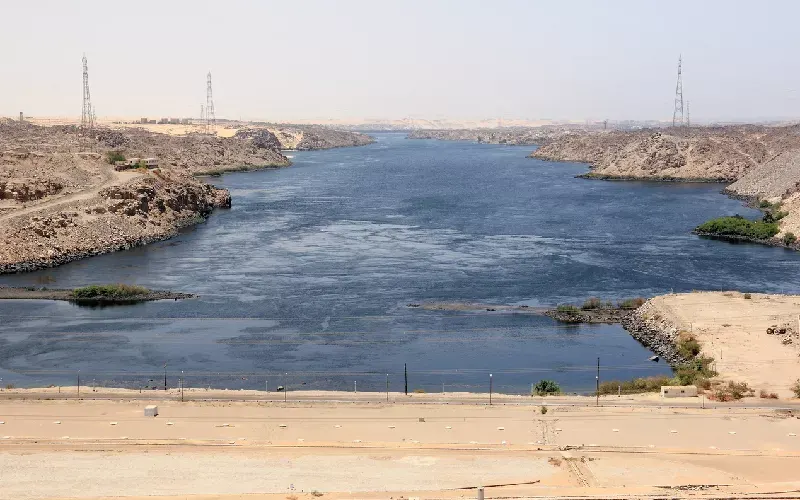
Behind the dam lies Lake Nasser, a vast artificial reservoir stretching nearly 500 kilometers through the desert. This immense body of water stores precious freshwater, protects the country from floods and droughts, supports irrigation and fishing, and serves as a strategic reserve for future generations. Together, the dam and its reservoir reshaped Egypt’s economy, agriculture, and environment—bringing both remarkable benefits and serious consequences.
This article explores the Aswan High Dam from multiple perspectives, examining its engineering design, historical origins, political context, social impact, and lasting legacy.
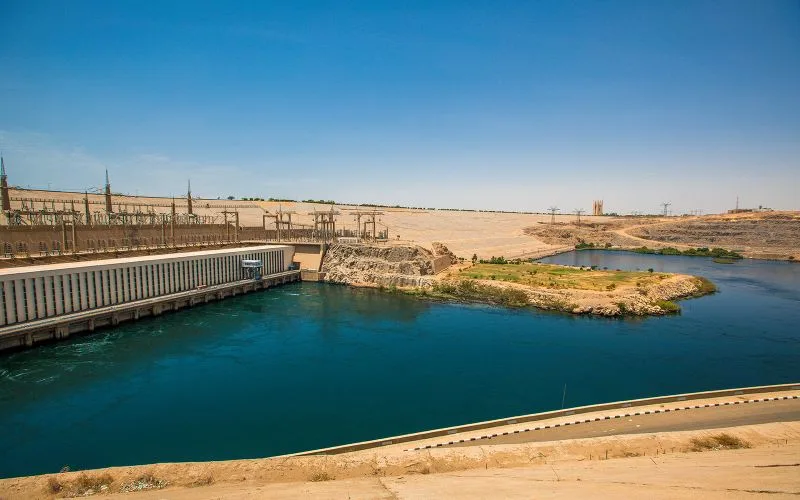
The Aswan High Dam is a massive embankment dam built across the Nile River in Aswan, Egypt. It was constructed to control flooding, provide irrigation water, and generate hydroelectric power for the country.
Architectural Design and Strategic Importance
Engineering Scale and Construction
The Aswan High Dam is a rock-fill embankment dam, built primarily from compacted earth and stone rather than concrete. It contains more than 43 million cubic meters of material—an amount often compared to seventeen Great Pyramids of Giza. At its base, the dam is nearly one kilometer thick, gradually narrowing toward its crest.
At the heart of the structure is a clay core that prevents water seepage, while six massive tunnels regulate water flow through steel gates weighing over 200 tons each. During peak conditions, these tunnels can discharge up to 11,000 cubic meters of water per second, demonstrating the dam’s immense hydraulic capacity.
Location and National Significance
The dam was built about seven kilometers south of Aswan, where granite formations naturally narrow the Nile at the First Cataract. This location allowed engineers to control the river at one of its most stable geological points.
For the first time in history, Egypt gained near-total control over the Nile’s seasonal floods and droughts. The dam’s hydroelectric station once supplied almost half of the country’s electricity, fueling industrial growth and modernization across the nation.
Lake Nasser, formed by the dam, holds up to 169 billion cubic meters of water. Known as Lake Nubia in Sudan, it is one of the largest artificial lakes in the world and plays a critical role in irrigating millions of hectares of farmland.
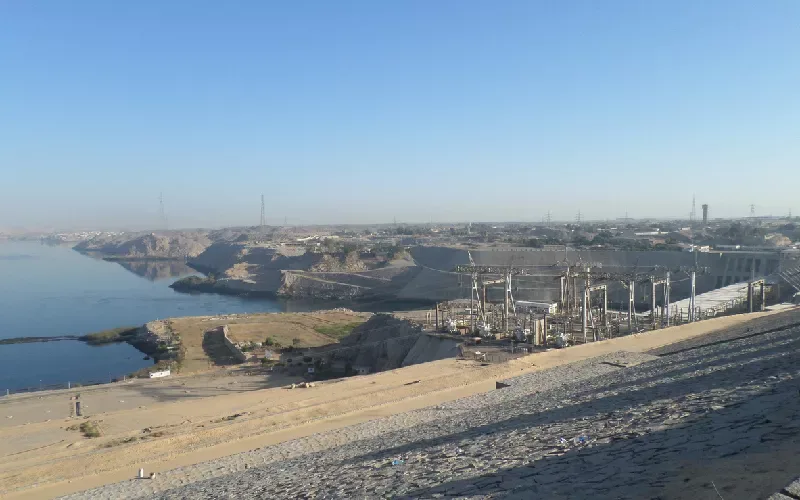
The Aswan High Dam is located on the River Nile in Egypt
From the Old Dam to a New Vision
Egypt’s first attempt to control the Nile came with the construction of the Aswan Low Dam between 1899 and 1902 under British rule. Although groundbreaking at the time, the original dam soon proved insufficient. Despite being raised twice during the early twentieth century, it could not meet Egypt’s growing agricultural and population needs.
In 1946, dangerously high floodwaters nearly overtopped the structure, exposing its limitations and reinforcing the need for a much larger and more powerful dam. Unlike the masonry-based Low Dam, the High Dam would rely on modern embankment design and offer vastly greater storage capacity.
Political Ambition and Global Power Struggles
The idea of the Aswan High Dam gained momentum after Egypt’s 1952 revolution, which ended the monarchy and brought Gamal Abdel Nasser to power. To the new government, controlling the Nile was not just an engineering challenge—it was a symbol of independence, progress, and national pride.
Initial funding from the United States, Britain, and the World Bank was abruptly withdrawn in 1956, largely due to Cold War tensions and Egypt’s growing ties with the Eastern Bloc. In response, Nasser nationalized the Suez Canal, triggering the Suez Crisis and reshaping regional politics.
The Soviet Union stepped in to finance and support the dam, providing loans, expertise, and technical equipment. As a result, the Aswan High Dam became both an engineering achievement and a powerful symbol of Cold War geopolitics.
Construction officially began on December 9, 1960, marked by Nasser detonating the first blast himself. Over the next ten years, around 25,000 Egyptian workers and engineers labored on the project, completing it in 1970. The dam was formally inaugurated in January 1971.
Customize Your Dream Vacation!
Get in touch with our local experts for an unforgettable journey.
Plan Your TripTransforming Egypt
Agricultural Expansion
One of the dam’s most significant impacts was agricultural stability. By regulating the Nile’s flow, the dam enabled year-round irrigation instead of seasonal flood farming. Farmers could now grow two or three crops annually, dramatically increasing food production.
More than 33,000 square kilometers of land are now irrigated using controlled Nile water, and hundreds of thousands of hectares were reclaimed for cultivation. This expansion supported the settlement of nearly half a million families and strengthened Egypt’s food security.
Power Generation and Development
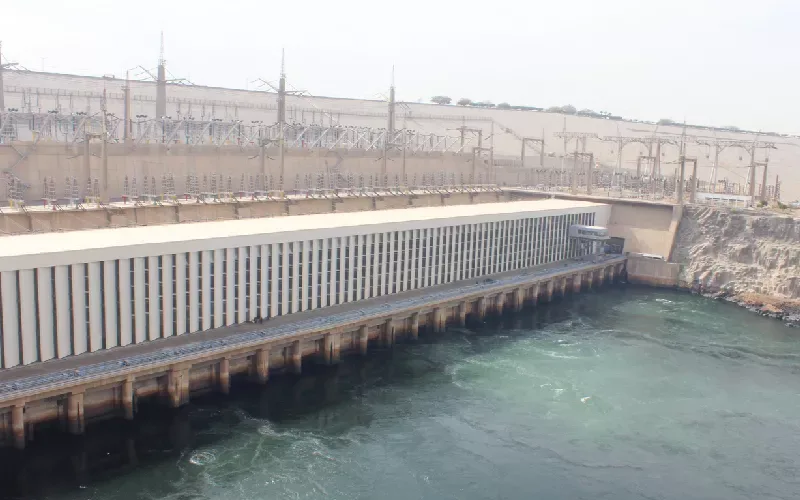
The dam’s hydroelectric station, with a capacity of 2,100 megawatts, once met nearly half of Egypt’s electricity needs. It powered factories, illuminated homes, and supported industrial growth during a crucial period of national development.
Flood and Drought Protection
Perhaps the dam’s greatest achievement was ending Egypt’s vulnerability to extreme floods and prolonged droughts. During severe African droughts in the 1970s and 1980s, Egypt remained agriculturally stable thanks to stored water in Lake Nasser.
The dam generates power through a hydroelectric plant that uses the water flow to turn turbines, supplying a significant portion of Egypt’s electricity needs.
The Hidden Costs
Nubian Displacement
The creation of Lake Nasser came at a heavy human cost. Between 100,000 and 120,000 Nubians were forcibly relocated from ancestral lands that had been inhabited for thousands of years. Egyptian Nubians were resettled near Kom Ombo, while Sudanese Nubians were moved far from the Nile.
These relocations disrupted traditional livelihoods, cultural practices, and social structures. Many resettlement areas suffered from poor planning, limited farmland, and health challenges, leaving lasting scars on Nubian communities.
Environmental Consequences
By trapping the Nile’s fertile silt behind the dam, downstream farmland lost its natural source of nutrients. Farmers became dependent on chemical fertilizers, increasing costs and environmental pollution. Soil salinity also rose due to altered groundwater levels.
Lake Nasser experiences significant water loss through evaporation, while the Mediterranean Sea suffers from reduced nutrient flow, contributing to the collapse of once-thriving fisheries.
Archaeological Loss and Rescue
As rising waters threatened ancient monuments, UNESCO led an unprecedented international campaign to save Egypt’s heritage. Temples such as Abu Simbel were dismantled and rebuilt on higher ground. Despite these efforts, many archaeological sites were permanently submerged beneath Lake Nasser.
Before the dam, farmers depended on unpredictable annual floods. After the dam, water became available all year. This allowed farmers to grow two or even three crops annually instead of just one. Millions of hectares were reclaimed and irrigated, transforming Egypt into a more stable and productive agricultural nation.
The Enduring Legacy
The Aswan High Dam remains one of the most influential infrastructure projects in modern history. It brought stability, power, and growth to Egypt, while also causing displacement, ecological disruption, and cultural loss.
Its story reveals the complex reality of large-scale development: progress often comes with profound trade-offs. For students, engineers, and policymakers, the dam stands as both a triumph of human ingenuity and a reminder of the responsibility that comes with reshaping nature.
More than a dam, it is a lesson - written in stone, water, and human lives - about ambition, power, and the long-term consequences of controlling the natural world.
Aswan High Dam Quick Facts
- The Aswan High Dam ended Egypt’s historic cycle of floods and droughts, enabling year-round irrigation and reliable electricity.
- The project transformed agriculture and industry but displaced over 100,000 Nubians from ancestral lands.
- Environmental impacts include loss of fertile silt, soil salinity, water evaporation, and declining fisheries.
- Lake Nasser became one of the world’s largest artificial reservoirs and Egypt’s main water security reserve.
- The dam highlights the enduring tension between economic development and social and environmental responsibility.
The Aswan High Dam was built primarily to control the annual Nile River floods, store water for irrigation and to prevent droughts, and to generate vast amounts of hydroelectric power for industrialization and national development.
The Aswan High Dam was built between 1960 and 1970 through a joint effort by the Egyptian and Soviet (Russian) governments
he Aswan High Dam works by blocking the natural flow of the Nile River to create Lake Nasser, a vast reservoir that stores water and controls floods.
Yes, visitors can tour the dam and its surrounding areas. There’s a viewing platform that offers a great panoramic view of the Nile River and Lake Nasser.
Yes, photography is generally allowed, but certain areas may have restrictions for security reasons, so visitors should always follow local guidance.


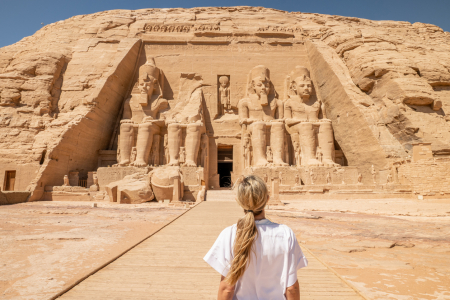


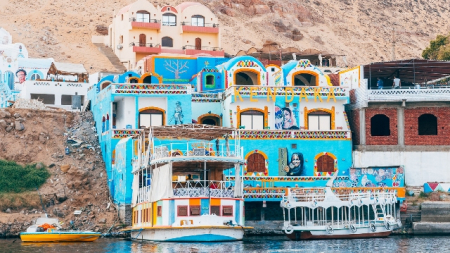




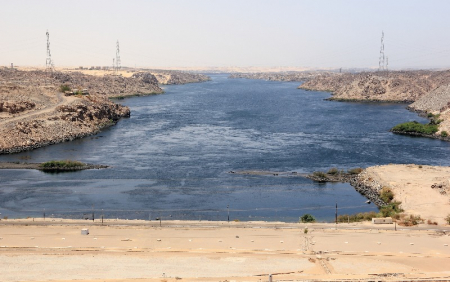
Lake Nasser, Egypt’s vast artificial reservoir, reshaped the Nile, boosted agriculture and fishing, and preserved historic sites like Abu Simbel.
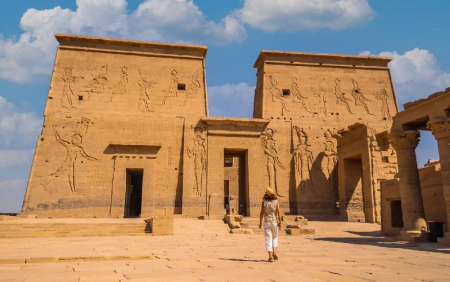
Philae Temple, dedicated to Isis, was relocated to Agilkia Island to preserve its ancient Ptolemaic structures and remains a UNESCO World Heritage site.
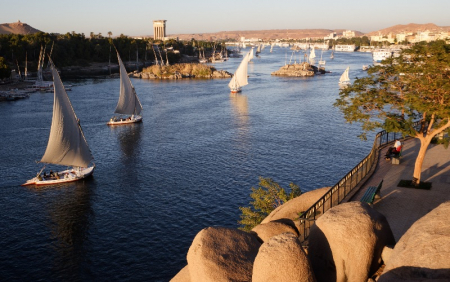
Aswan is one of the world’s oldest cities, marking ancient Egypt’s southern frontier. Rich in history, science, trade, and UNESCO-listed monuments, it remains a living link between past and present.
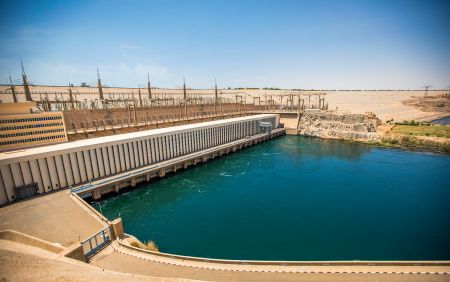
Aswan High Dam, completed 1970, transformed Egypt through Lake Nasser reservoir, hydroelectric power & year-round irrigation while displacing 100,000+ Nubians.
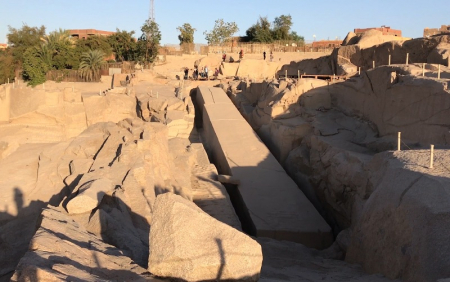
The Unfinished Obelisk in Aswan reveals ancient Egyptian quarrying techniques and ambitions, offering a rare glimpse into their engineering mastery.
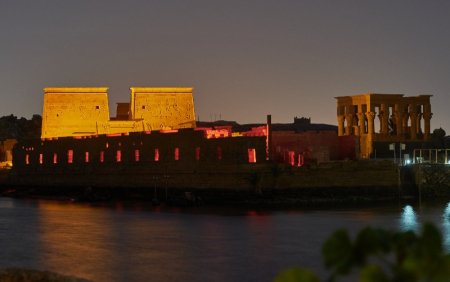
Discover the magic of Philae Temple after dark with a Sound & Light Show that brings the myths of Isis to life amid the beautifully preserved island sanctuary.
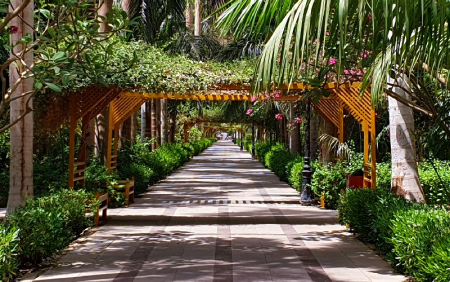
Explore El Nabatat Island, Aswan’s historic botanical garden featuring exotic plants, towering palms, and a sanctuary for birds along the Nile.

Nubian Museum Aswan features 3,000+ artifacts showcasing ancient Nubian heritage. Discover jewelry, statues & cultural displays in this 1997-opened institution.

Nubian Village near Aswan offers authentic culture with vibrant homes, traditional hospitality & henna art. Experience 8,000 years of living Nile heritage.
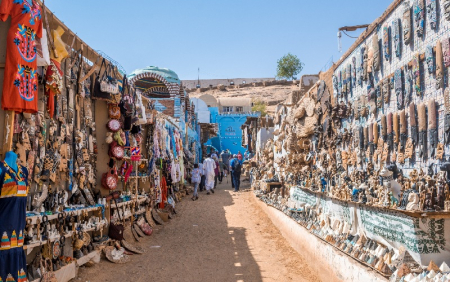
Aswan Old Souk offers a colorful, aromatic shopping experience along the Nile, featuring local crafts, spices, textiles, and souvenirs in Egypt’s southernmost city.
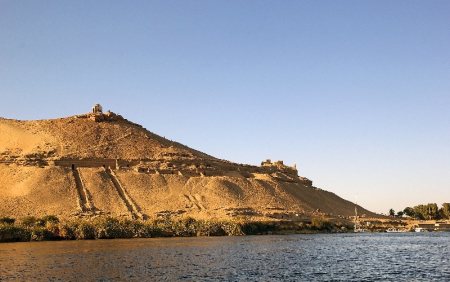
Elephantine Island in Aswan is a 5,000-year-old UNESCO site, once Egypt’s southern gateway, famed for its temples, Nilometers, and living Nubian heritage.
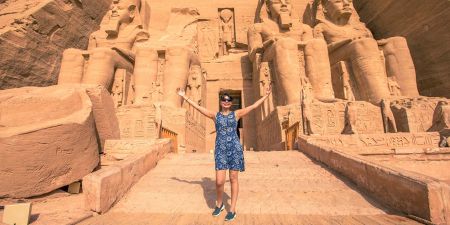
Discover Abu Simbel, Ramses II’s rock-cut temples famed for colossal statues, solar alignment, and an epic UNESCO rescue that saved them from Lake Nasser.