
 Home
Home
What distinguishes this mosque above all is the revered relic housed within its sanctified chamber: the blessed head of Imam Hussein, the beloved grandson of Prophet Muhammad. His martyrdom at Karbala has shaped Islamic consciousness for more than thirteen centuries, and his relic here transforms the mosque into a major pilgrimage destination cherished across the Islamic world.
From its origins in the Fatimid era to its dramatic 19th-century transformation under Khedive Isma'il Pasha, and finally its meticulous restoration in 2022, the mosque embodies a living chronicle of Cairo’s Islamic heritage. Today, it remains both an active place of worship and a monument to Egypt’s rich spiritual and architectural legacy.
The origins of Al-Hussein Mosque in Cairo
The Fatimid foundation in 1154
Al-Hussein Mosque traces its beginnings to 549 AH / 1154 CE, during the height of the Fatimid Caliphate. Minister Al-Salih Tala'i oversaw its construction, envisioning a sanctuary worthy of housing one of Islam’s holiest relics. The original Fatimid structure featured three marble gates opening toward Khan Al-Khalili and a fourth, the renowned Green Gate, beside the central dome. Although much of this early architecture has vanished, the lower remains of Bab Al-Akhdar continue to reveal the mastery of Fatimid artisans.
Relocation of Imam Hussein's head to Cairo
The mosque’s creation was driven by a dramatic historical moment. For decades, the head of Imam Hussein rested in Ashkelon, Palestine. As Crusader pressure mounted, Fatimid Caliph Al-Zafir ordered its secret relocation to Cairo to prevent the relic from falling into enemy hands.
The transfer began on Sunday, 8 Jumada al-Thani 548 AH (31 August 1153 CE). Prince Sayf al-Mamlaka Tamim personally supervised the mission. Two days later, the relic reached Cairo, marking a defining moment in the city’s spiritual identity.
Construction of the original shrine and mosque
Upon arrival, the relic was transported along the Nile to Al-Kafuri Garden before being moved to its permanent burial site in Qubbat al-Daylam—later known as al-Mashhad al-Hussaini. Chroniclers like al-Maqrizi recorded how this sacred space became one of Egypt’s most important shrines.
Although traditions differ about the final resting place of Hussein’s head—some citing Damascus or Karbala—the Egyptian account has endured for nearly nine centuries. This enduring belief grants Al-Hussein Mosque unparalleled religious significance in the Islamic world.
Yes, the mosque's Bab al-Mukhallafat leads to a crypt housing artifacts attributed to Prophet Muhammad, including fragments of his clothing, a walking stick, and hairs from his beard. It also contains a Quran manuscript believed to be written by Ali ibn Abi Talib.
Architectural evolution through dynasties
Ayyubid reconstruction and the 1237 minaret
The Ayyubid dynasty sought to elevate the mosque’s stature with a major reconstruction in 1237. Eleven years later, a devastating fire destroyed much of their work. Yet one masterpiece survived: the elegant minaret above Bab al-Akhdar. Commissioned by Salih Nagm al-Din, the minaret remains an exquisite example of Ayyubid artistry, adorned with refined stucco and arabesque patterns that speak to the era’s architectural sophistication.
Ottoman and Khedival renovations in 1874
The most extensive transformation occurred under Khedive Isma'il Pasha in 1874. Determined to modernize Cairo, he introduced new architectural elements while preserving the mosque’s Islamic identity.
Gothic Revival and Islamic eclecticism
This renovation fused European Gothic Revival details with Ottoman and traditional Islamic motifs, creating a unique architectural harmony. The mosque’s minarets, decorative stained glass, intricate calligraphy, and geometric designs reflect this eclectic synthesis. Inside, the blend of patterns and colors creates an atmosphere of spiritual grandeur.
Modern additions: steel dome and canopy umbrellas
In the 21st century, practical innovations enhanced the mosque’s functionality. Engineers installed three large retractable canopies at the entrance, rising 12 meters high and spanning 750 sqm to shade worshippers. Crafted from galvanized steel and Teflon membranes, they combine modern engineering with traditional decorative elements inspired by sacred architecture across the Muslim world.
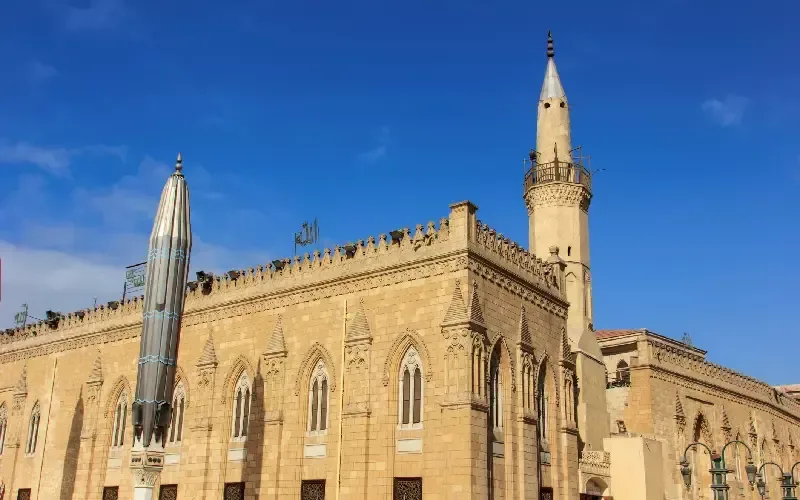
The mosque has undergone several transformations since its Fatimid origins. It was reconstructed during the Ayyubid period, extensively renovated in 1874 under Khedive Isma'il, and recently restored in 2022. The current structure blends Gothic Revival elements with traditional Islamic design.
Customize Your Dream Vacation!
Get in touch with our local experts for an unforgettable journey.
Plan Your TripReligious and cultural significance
Imam Hussein's legacy in Islamic history
Imam Hussein’s stand at Karbala in 680 AD remains one of the most defining moments in Islamic history. His resistance against the tyranny of Yazid transformed him into a symbol of courage, sacrifice, and justice. Known as “Syed us Shohda” (Master of the Martyrs), he inspires Muslims across all sects.
The mosque's role in Shia and Sunni traditions
Al-Hussein Mosque is a rare space where Sunni and Shia devotion converge. Shia Muslims, who revere Hussein with profound spiritual attachment, visit the mosque believing his head rests within. Sunni Muslims equally honor the Prophet’s grandson and frequently attend prayers, lectures, and scholarly gatherings held within the mosque.
Egypt’s Shia population—estimated between 800,000 and 2 million—regards the mosque as a central pilgrimage site, while Sunnis cherish it as one of Cairo’s holiest landmarks.
Spiritual practices and Ashura commemorations
The mosque becomes a focal point during Ashura, the 10th of Muharram, when Muslims commemorate Hussein’s martyrdom. Security restrictions are often implemented to ensure peaceful observances. In contrast, the annual Mawlid al-Hussein celebration brings festive processions, devotional poetry, and communal gatherings. Daily prayers, especially Friday worship, draw thousands of devotees.
Connection to Bab al-Mukhallafat and relics
Behind Bab al-Mukhallafat—a beautiful gold and silver door crafted in 1986—lies a chamber housing revered Islamic relics. These include garments, a staff, a kohl container, and hairs attributed to Prophet Muhammad. A historic Quran manuscript written by Ali ibn Abi Talib on deer skin further enhances the sanctity of this sacred space.
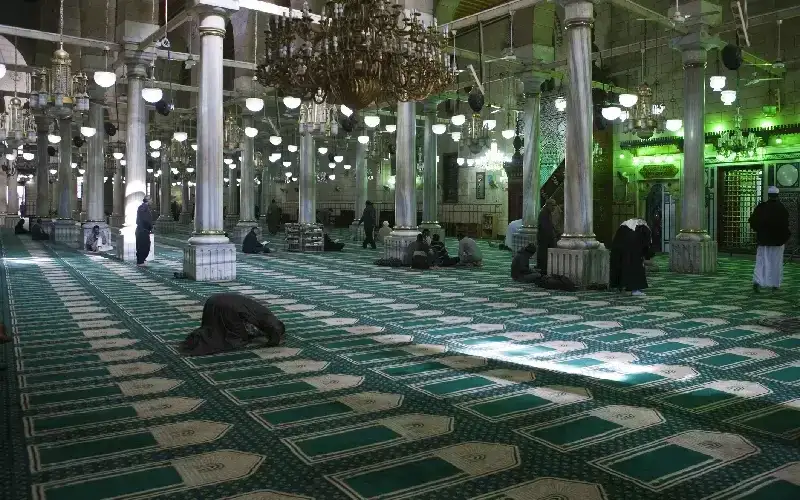
The mosque hosts daily prayers and Friday congregations. It is also a focal point for Ashura commemorations and the annual Mawlid al-Hussein celebration, which attracts thousands of devotees through processions and religious poetry recitations.
Historical resilience and modern restoration
Destruction by fire and rebuilding efforts
Al-Hussein Mosque has endured multiple disasters. After the Ayyubid fire of the 13th century, another blaze struck in 2022 when a gas cylinder explosion ignited in Old Cairo. Each time, Egyptian authorities and communities rallied to restore the sacred monument with renewed devotion.
1996 and 2022 restorations
The 1996 restoration by the Supreme Council of Antiquities addressed severe water damage and added a modern steel dome above the tomb chamber. The 2021–2022 restoration, costing 150 million EGP (approx. $8 million), was performed by the Arab Contractors Company. This major project improved structural integrity, installed new marble flooring, restored the minarets and facade, and revitalized the shrine.
Preservation of original Fatimid elements
Despite centuries of change, the lower section of Bab Al-Akhdar remains the only surviving Fatimid feature. Each restoration has carefully safeguarded this rare architectural treasure.
Inauguration by Egyptian leadership
The mosque was officially reopened on April 27, 2022, in a ceremony attended by President Abdel Fattah el-Sisi and Sultan Syedna Mufaddal Saifuddin of the Bohra community, whose contributions significantly supported the restoration. This renewal forms part of Egypt’s larger initiative to preserve Ahl al-Bayt shrines and promote heritage tourism.
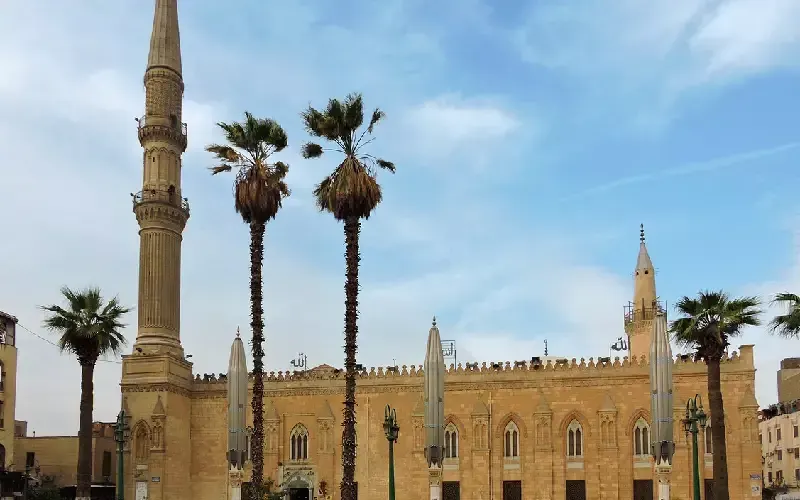
The mosque has undergone several restorations, including a major renovation in 1996 to address water damage and a comprehensive restoration in 2021-2022 costing about 150 million Egyptian pounds. These efforts have focused on preserving the mosque's Islamic heritage while modernizing its facilities.
For nearly nine centuries, Al-Hussein Mosque has anchored the spiritual heart of Islamic Cairo. From its Fatimid origins to its Ayyubid minaret, from Khedival Gothic influences to its modern restoration, every era has left a distinct imprint on its sacred walls. The mosque stands today as a testament to resilience—surviving fires, political upheavals, and the passage of time.
More than a monument, it serves as a living symbol of unity. Here, the memory of Imam Hussein transcends sectarian boundaries, drawing Sunnis and Shias alike into shared devotion. During Ashura’s solemn rituals or the joyful Mawlid celebrations, the mosque resonates with the enduring spirit of faith.
Al-Hussein Mosque remains a bridge between past and present, a guardian of sacred history, and a vibrant center of worship. Within its walls, Cairo’s Islamic soul continues to beat, linking generations through the timeless rhythm of prayer and remembrance.
Al-Hussein Mosque is situated in the heart of Islamic Cairo, directly opposite the historic Khan El-Khalili Bazaar. Visitors can easily reach it by taxi, ride-hailing services, or the Cairo Metro (Al-Ataba Station), followed by a short walk through the vibrant streets of Old Cairo.
The mosque is considered a sacred pilgrimage destination because it is believed to house the blessed head of Imam Hussein. This spiritual significance draws millions of visitors annually, who come to offer prayers, seek blessings, and connect with the legacy of Ahl al-Bayt (the family of Prophet Muhammad).
Notable features include the Ayyubid-era minaret at Bab al-Akhdar, the Gothic-inspired details added during Khedive Isma'il’s renovation, and the beautiful stained-glass windows, marble interiors, and intricate Islamic calligraphy adorning the prayer halls.
Non-Muslims are welcome to explore the exterior areas and surrounding plazas, but access to the prayer halls and shrine is generally restricted to Muslim visitors, in accordance with common practices at active mosques in Egypt.
Yes. The mosque becomes exceptionally crowded during the Mawlid al-Hussein celebration, Ashura, Ramadan evenings, and Friday prayers. During these times, the surrounding streets fill with worshippers, markets, and cultural festivities.

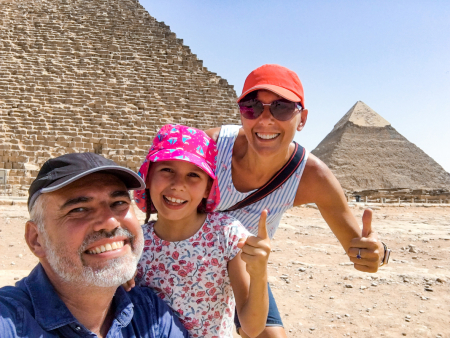

The Great Pyramids of Giza, Egypt’s iconic monuments, showcase ancient engineering brilliance and remain the last wonder of the ancient world, continuing to fascinate visitors and researchers alike.

The Egyptian Museum in Cairo houses over 170,000 ancient artifacts, including Tutankhamun's complete collection and golden death mask. Opened in 1902, it's the world's largest repository of Egyptian antiquities.

Khan el-Khalili is Cairo’s legendary medieval bazaar, where centuries-old Islamic architecture, vibrant trade, and timeless cafés create a living cultural landmark.

The Great Sphinx of Giza, with its lion body and pharaoh head, represents ancient Egyptian artistry, symbolic power, and enduring cultural fascination.

Tanoura is a traditional Egyptian Sufi dance known for its colorful spinning skirts, spiritual rhythm, and deep roots in ancient mystic traditions.

Saqqara, Egypt's ancient necropolis, features Djoser's Step Pyramid—the world's oldest. Spanning 3,000 years, it preserves royal tombs and sacred animal burials.

The Valley Temple at Giza, built 2570 BCE by Khafre, features 16 granite columns and hosted sacred afterlife rituals. Explore Fourth Dynasty architecture.

The Citadel of Cairo is a historic medieval fortress and royal complex, showcasing centuries of Egyptian power, Mamluk architecture, and Islamic heritage, now preserved as a UNESCO World Heritage Site.

Khufu's Solar Boat is a 142-foot cedar vessel discovered 1954 near the Great Pyramid. Built without nails 4,500 years ago, it's now at Grand Egyptian Museum.

St. George Church in Old Cairo, founded 684 AD, features unique circular design, sacred healing relics & underground chapel linked to the Holy Family's refuge.

Pyramids Sound and Light Show transforms Giza into open-air theater with 50 minutes of narration, music & lighting bringing ancient Egyptian history alive.

The Djoser Pyramid at Saqqara is Egypt's first pyramid, built 2600 BCE by architect Imhotep. Standing 62.5m tall, it reopened to visitors in 2020.

The Hanging Church in Old Cairo is a 1,300-year-old Coptic sanctuary built on Babylon Fortress. Free entry, open daily 9 AM-5 PM, dress modestly required.
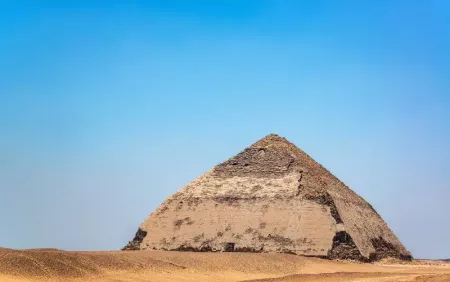
The Bent Pyramid at Dahshur features a rare bent profile created by ancient construction adjustments, offering insight into Egypt’s earliest attempts at smooth-sided pyramids.

Coptic Cairo features 4th-century churches and recent tomb discoveries revealing early Christian heritage. Explore the Hanging Church, Abu Serga & sacred sites.
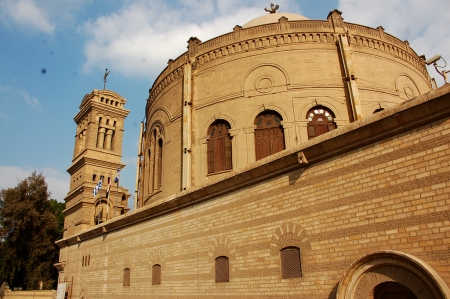
Saint Barbara’s Church in Coptic Cairo is one of Egypt’s oldest Christian monuments, dating back to the 5th–6th century. Known for housing the relics of Saint Barbara, the church reflects centuries of Coptic heritage, architectural evolution, and deep spiritual significance.

Explore the Fortress of Babylon, a major Roman fort in Old Cairo known for its strategic location, massive towers, and enduring historical significance.
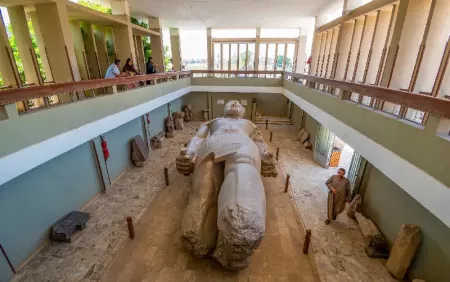
Memphis Necropolis is Egypt’s ancient royal burial site, home to pyramids, tombs, and monuments that reflect the early development of pharaonic civilization.
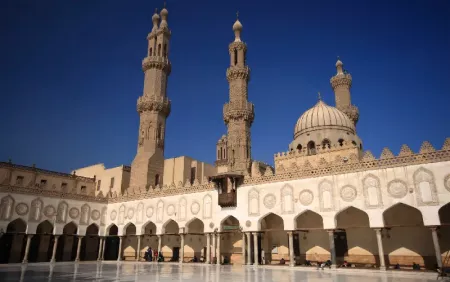
Al-Azhar Mosque is a landmark of Islamic scholarship and Fatimid architecture, home to the world’s second-oldest university and a symbol of Cairo’s spiritual heritage.
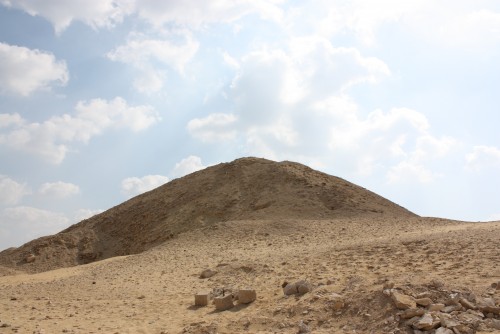
Teti’s Pyramid in Saqqara is an Old Kingdom monument built for the first king of the Sixth Dynasty. Known for its Pyramid Texts and unique mortuary chapel, it remains one of Egypt’s most historically important royal tombs.
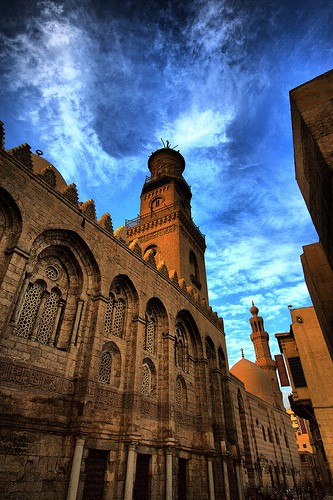
Al Muizz Street is one of Cairo’s oldest and most vibrant historic avenues, showcasing centuries of Islamic architecture. Lined with mosques, palaces, and bustling markets, it offers a captivating walk through Egypt’s medieval past.
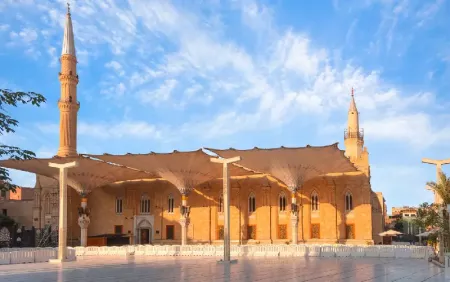
Al-Hussein Mosque is one of Cairo’s most sacred Islamic landmarks, built in 1154 and revered for housing the head of Imam Hussein. Located by Khan El-Khalili, it blends centuries of architectural heritage and remains a major pilgrimage site.
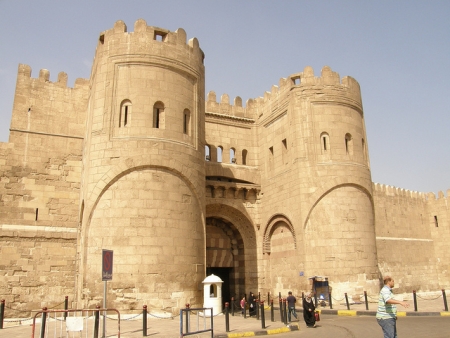
Bab al-Futuh is an 11th-century Fatimid gate in Old Cairo, famous for its massive round towers and strategic role in the city’s medieval fortifications.
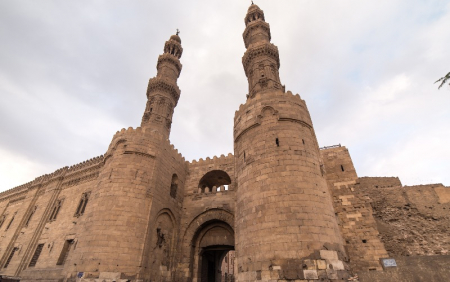
Bab Zuweila is one of Cairo’s last surviving medieval gates, built in 1092 CE by the Fatimid vizier Badr al-Jamali. Famous for its towering twin bastions, massive wooden doors, and later Mamluk minarets, it served as a defensive stronghold, execution site, and ceremonial gateway. Today, it stands as one of Cairo’s most iconic historic monuments.
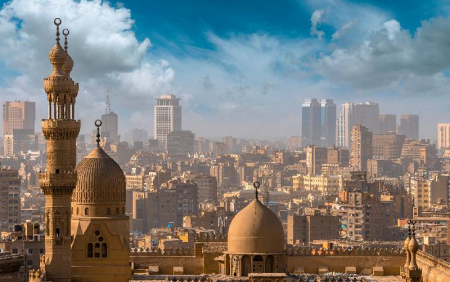
Al Rifai Mosque in Cairo blends Neo-Mamluk architecture with royal history. Completed in 1912, it serves as both a majestic mosque and mausoleum for Muhammad Ali’s family.
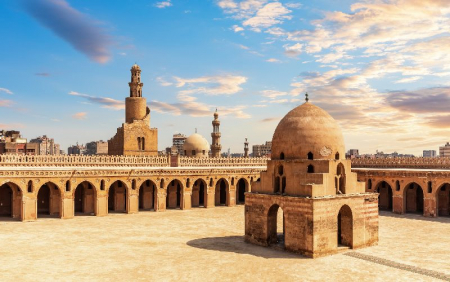
The Ibn Tulun Mosque, Cairo’s oldest well-preserved mosque, dates back to 879 CE. Famous for its vast square layout, intricate arches, and 128 ornate stucco windows, it remains a pinnacle of early Islamic architecture and a must-visit historical landmark.
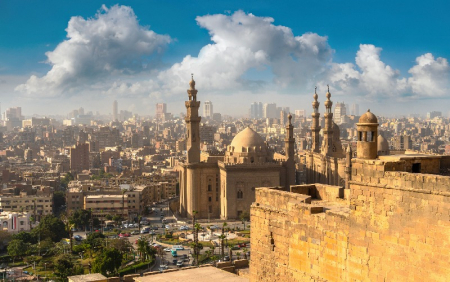
The Sultan Hassan Mosque, built in the 14th century, is a Bahri Mamluk architectural marvel in Cairo, renowned for its grand portal, extensive madrasas, and historic significance.

The Suez Canal, Egypt’s iconic waterway, connects Africa and Asia, handling thousands of ships yearly and shaping international trade.
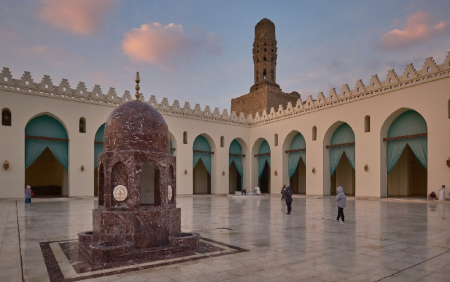
Al-Hakim Mosque, Cairo, is a stunning Fatimid-era mosque built between 990–1013 CE. Famous for its grand courtyard, distinctive minarets, and rich history, it remains a key cultural and religious landmark.
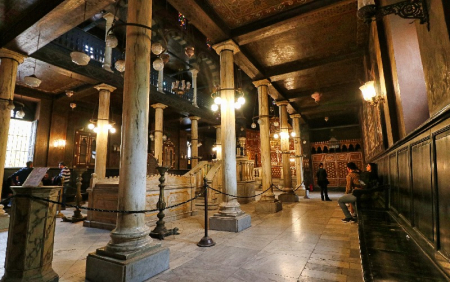
The Ben Ezra Synagogue, founded in the 11th century in Old Cairo, is Egypt’s oldest Jewish monument and the discovery site of the renowned Cairo Geniza.