
 Home
Home
Crystal Mountain Egypt is a rare and striking geological formation located in the White Desert between Bahariya Oasis and Farafra Oasis. Often called the “Jewel of the Desert,” it is famous for its clusters of shimmering quartz crystals that reflect sunlight and create a dazzling visual effect. The mountain contains more than 12 different crystal types formed through natural processes over millions of years. Discovered by chance only a few decades ago, Crystal Mountain shares similarities with desert rose formations made of barite and calcite, though quartz dominates its structure, making it one of Egypt’s most unique natural landmarks.
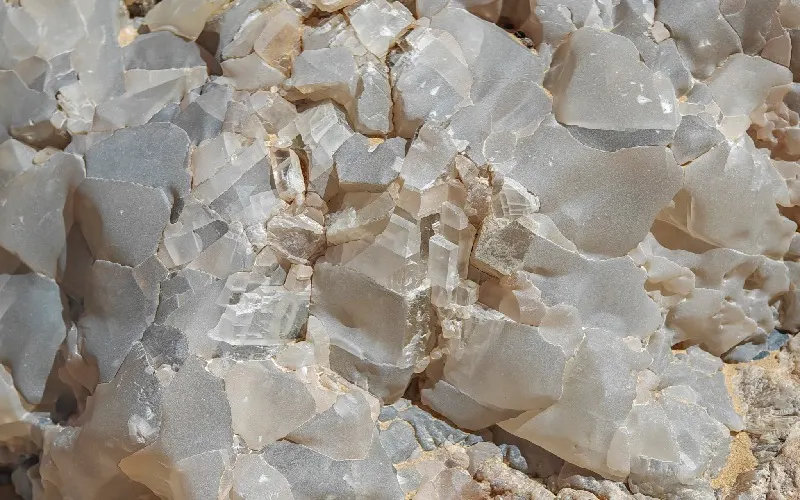
Crystal Mountain is a unique geological formation located in Egypt's White Desert, between Bahariya and Farafra Oases. It's a small ridge about 6 meters high, composed of various crystal types, primarily barite and calcite.
The Location and Structure of Crystal Mountain
Where Crystal Mountain is found
Nestled within Egypt's Western Desert, this extraordinary geological formation occupies a strategic position between Bahariya Oasis and Farafra Oasis. The crystal-studded ridge emerges from the northern reaches of the White Desert, maintaining a modest distance of roughly 10 kilometers from Agabat, the closest human settlement. For desert wanderers traversing the ancient caravan routes, this sparkling landmark serves as a natural beacon—a crystalline compass point guiding travelers across the seemingly endless expanse of sand and stone.
Why it's called a 'mountain'
The nomenclature presents an intriguing linguistic puzzle that reveals cultural perspectives on landscape. What visitors encounter is decidedly not the towering peak suggested by its name, but rather a humble rock ridge rising from the desert floor. The designation "mountain" emerges from Arabic terminology, where the word for geological formation directly translates to "mountain" in English—making the more precise interpretation "Crystal Formation". At merely 6 meters in height, this modest elevation might disappoint those expecting alpine grandeur, yet the remarkable mineral composition transforms this unassuming ridge into something far more precious than mere altitude could provide.
The surrounding White Desert landscape
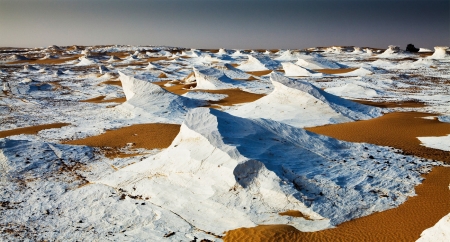
The White Desert envelops Crystal Mountain within one of Earth's most extraordinary natural galleries. Vast chalk deposits carpet this region—ancient testaments to prehistoric seas that once submerged these lands during epochs spanning from the Cretaceous through Eocene periods. Millennia of patient winds carrying abrasive sand particles have sculpted these chalk foundations into a dreamscape of otherworldly formations.
Approaching Crystal Mountain reveals a landscape in constant transition. The journey from the Black Desert presents a gradual metamorphosis—dark iron and basalt fragments slowly surrender dominance to towering chalk sculptures that frame the desert highway. Against this pristine white canvas, the crystal formation appears almost ethereal, its glittering surface catching light like a terrestrial constellation.
The surrounding terrain hosts an entire museum of wind-carved artistry: mushroom-shaped monoliths, towering spires, and countless abstract sculptures shaped by aeolian forces. During the golden hours of sunset, the White Desert undergoes a magnificent transformation as warm light bathes the chalky landscape in soft pink and amber tones, creating an atmosphere so surreal it seems borrowed from another planet. This remarkable environment has earned official protection status, with Crystal Mountain standing proudly as its crown jewel among numerous geological treasures.
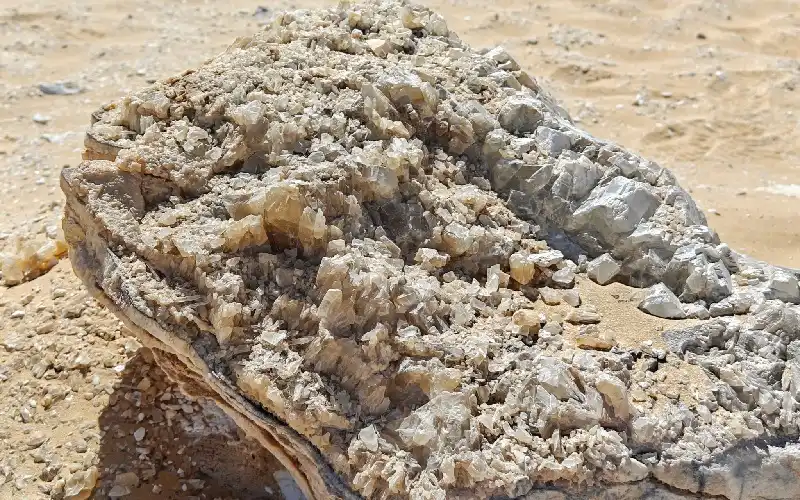
How Crystal Mountain Was Formed
Ancient sea and sedimentation
The extraordinary tale of Crystal Mountain's origins stretches back approximately 80 million years to the late Cretaceous period, when a prehistoric sea stretched across what would become Egypt's Western Desert. During this immense temporal span, marine sediments—limestone and chalk among them—settled continuously upon the seafloor, gradually accumulating into substantial deposits of pristine white rock. These foundational sedimentary layers would eventually provide the bedrock for Crystal Mountain's emergence.
Centuries flowed past as these underwater accumulations continued their patient buildup, ultimately creating the Khoman Formation—a geologically significant stratum tracing back to the late Cretaceous epoch. Within this submerged realm, mineral-rich compounds began gathering in particular locations, establishing conditions for the formation's next developmental phase.
Crystallization over millions of years
When the ancient waters finally receded, the mineral deposits they left behind embarked on an extraordinary metamorphosis. Scientific examination has revealed a surprising truth about Crystal Mountain's composition—contrary to widespread assumptions, these formations consist predominantly of barite (BaSO4) and calcite (CaCO3) rather than quartz. The crystallization occurred as intensely concentrated solutions infiltrated limestone cavities throughout the region.
Hot, mineral-laden fluids coursed through the sedimentary strata during this crystallization phase. These solutions, rich with dissolved barite and calcite drawn from surrounding sediments, gradually filled available spaces within the rock structure. Temperature changes caused these solutions to deposit their mineral cargo, constructing the brilliant crystal architectures visible today. Gradually, distinctive columns and rounded crystal-filled domes took shape within the formation.
Erosion and exposure of the ridge
Crystal Mountain's final revelation came through relentless erosional forces. Originally, these magnificent crystals remained completely concealed within their rocky matrix. Wind-borne sand particles initiated ventifacting—nature's own sandblasting technique—steadily wearing away the surrounding softer rock materials.
Thousands of years of persistent erosion sculpted and unveiled the sparkling ridge visitors encounter today. Unceasing winds, occasionally supplemented by water flow, carved the formation's distinctive profile while exposing the embedded crystalline treasures.
Geological investigations suggest the structure may once have existed as an intact cave system complete with stalagmites and stalactites. Time and erosion eventually stripped away the cave's protective ceiling, revealing the exposed ridge adorned with its remarkable crystal assemblages. This gradual process of geological revelation continues unabated, with natural forces perpetually reshaping this desert masterpiece.
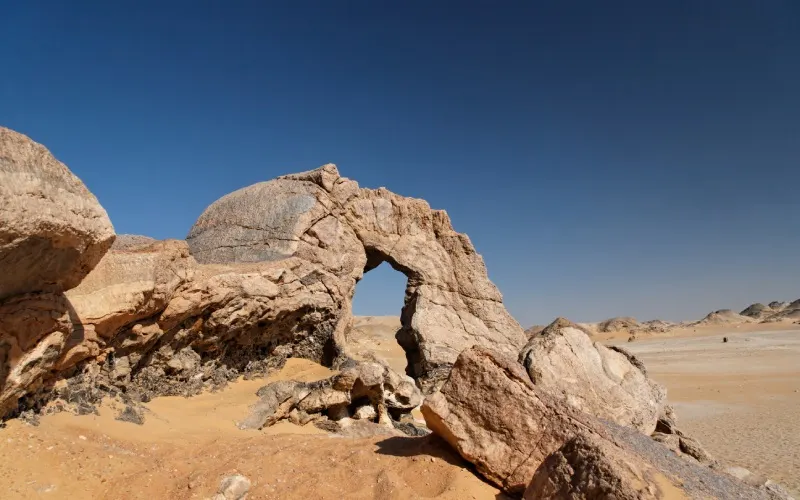
Crystal Mountain formed over millions of years. It began as sediment in an ancient sea, followed by mineral crystallization as hot, mineral-rich solutions penetrated limestone cavities. Wind erosion eventually exposed the crystal-studded ridge we see today.
Customize Your Dream Vacation!
Get in touch with our local experts for an unforgettable journey.
Plan Your TripWhat Makes the Crystals Unique
Types of crystals found
Scientific investigation reveals Crystal Mountain's exceptional mineral diversity—researchers have catalogued more than 12 different crystal types within this single formation, establishing it as among the planet's most varied crystalline sites. Each variety presents distinct characteristics in shape, coloration, and structural arrangement, creating a mineralogical collection that rarely occurs with such concentration in nature. Surrounding the formation's exterior, concentric bands of pure calcite crystals appear in stratified layers, each measuring approximately one centimeter in diameter.
Barite and calcite vs. quartz
Laboratory analysis has revealed a surprising truth about Crystal Mountain's composition. Contrary to widespread belief, the gleaming formations consist predominantly of barite (BaSO4) and calcite (CaCO3) crystals—not the quartz so commonly attributed to them. Hardness measurements provide definitive evidence: while quartz achieves a rating of 7 on the Mohs scale, these particular crystals register between 3.0-3.5, precisely matching barite and calcite characteristics. This mineral composition creates an intriguing connection to desert roses found elsewhere in arid regions, as both formations share remarkably similar developmental processes and chemical makeup.
How the crystals reflect sunlight
The optical properties of these crystalline structures generate Crystal Mountain's most captivating characteristic. When solar radiation encounters the formation, the transparent minerals function as natural prisms, scattering light across the desert floor in brilliant displays. Dawn and dusk produce the most spectacular effects, as the changing angle of illumination creates dramatic color variations throughout the crystal faces. Morning light produces intense sparkles, while evening rays cast golden tones across the entire structure, reinforcing the designation that earned this site recognition as the desert's crowning jewel.
The natural crystal arch
Among Crystal Mountain's features, none captures attention quite like its naturally formed crystalline archway. Standing roughly human height, this portal has become the formation's most photographed element. Composed entirely of calcite crystal, the arch represents a rare geological achievement where mineral precipitation created a self-supporting span. Such crystalline architecture requires extensive time periods to achieve stability, making preservation efforts essential for maintaining this extraordinary natural monument.
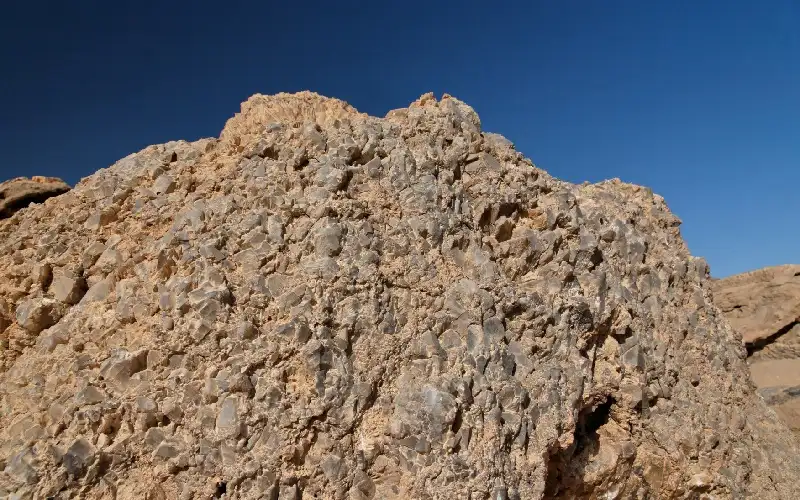
Contrary to popular belief, the crystals at Crystal Mountain are not primarily quartz. Scientific analysis shows they are mainly composed of barite and calcite, with hardness levels between 3.0-3.5 on the Mohs scale.
Crystal Mountain is unique due to its diverse crystal composition, featuring over 12 different types of crystals. It also boasts a natural crystal arch and reflects sunlight brilliantly, earning it the nickname "Jewel of the desert."
Scientific and Historical Significance
Misconceptions about crystal composition
Scientific investigation has revealed a fascinating discrepancy between popular understanding and geological reality. Crystal Mountain's composition differs significantly from widespread assumptions circulating across digital platforms. Rigorous analysis demonstrates that the formation consists predominantly of barite (BaSO4) and calcite (CaCO3) crystals, not the commonly presumed quartz. Laboratory testing provides definitive proof—these minerals register between 3.0-3.5 on the Mohs hardness scale, corresponding precisely with barite and calcite characteristics rather than quartz's significantly harder rating.
Discovery and early use by locals
Serendipity played the decisive role in bringing this geological wonder to human attention just decades ago. Before scientific recognition transformed Crystal Mountain into a protected site, desert communities approached these mineral deposits with practical pragmatism—incorporating the crystalline materials directly into road construction projects. Local residents extracted substantial quantities of these formations over several years, operating without awareness of the treasure's extraordinary scientific value. Ironically, the very roadwork connecting Farafra and Bahariya that exposed this marvel also caused partial destruction of the original structure.
Why it's protected today
Recognition of Crystal Mountain's exceptional geological importance prompted immediate conservation measures. Scientific understanding revealed the profound temporal scales required for such crystal formation development—processes spanning countless millennia. Urgent protection became necessary as both international visitors and regional inhabitants began systematically collecting scattered calcite fragments from the site. The mathematical reality proved sobering: even minimal extraction by each visitor would eventually obliterate this irreplaceable formation entirely. Currently, while loose crystalline specimens remain visible across the desert floor, collection activities face strong discouragement to ensure this natural archive endures for future generations.
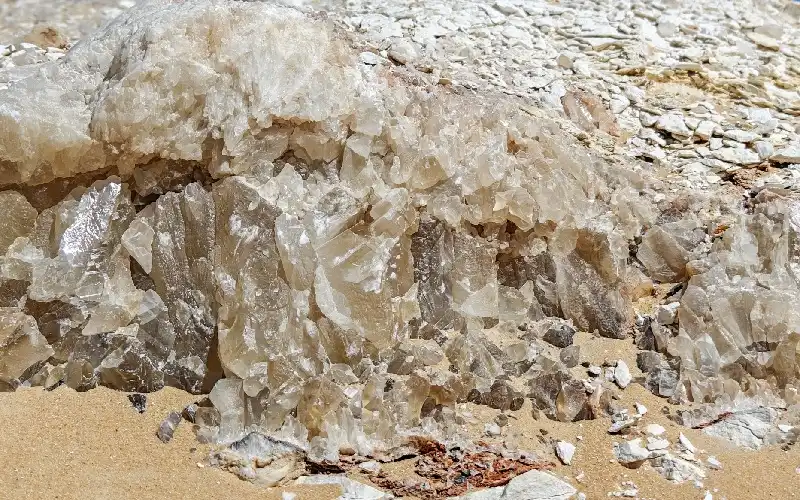
Crystal Mountain is protected because of its geological significance and fragility. The crystal formations take many years to develop, and excessive collection by visitors could eventually destroy this natural wonder. Authorities aim to preserve it for scientific study and future appreciation.
Crystal Mountain is a small yet extraordinary geological formation that showcases nature’s ability to create remarkable beauty over time. Although only about 6 meters high, it stands out for its exceptional mineral diversity, featuring crystals mainly composed of barite and calcite rather than quartz, with hardness levels similar to desert roses found in other arid regions. Accidentally revealed during road construction, the site was initially overlooked and partially quarried before its scientific importance was recognized and protected. Set against the dramatic chalk formations of the White Desert, Crystal Mountain glows brilliantly at sunrise and sunset, serving as both a striking natural landmark and a valuable record of ancient geological processes.
Crystal Mountain lies in Egypt’s Western Desert, within the White Desert area, about 120 km from Farafra Oasis and 160 km from Bahariya Oasis.
No. Visitors are strongly discouraged from touching or collecting crystals, as this damages the fragile formation and threatens its preservation.
The best time to visit is during sunrise or sunset, when the crystals reflect sunlight beautifully and temperatures are more comfortable.
It is recommended to visit Crystal Mountain with a licensed desert guide, as the area is remote and requires a 4x4 vehicle and desert navigation experience.
A typical stop lasts 20–30 minutes, often as part of a larger White Desert or Farafra–Bahariya desert tour.


As a UK passport holder, you'll discover that obtaining an Egyptian visa is a straightforward process, with multiple options designed to accommodate various travel purposes and durations.

El Fayoum, located one hour south of Cairo, is considered one of Egypt's most peaceful places and one of the most greenish oases in Egypt's desert

Bahariya is one of the more appealing of the desert circuit oasis, and it's also the easiest to access, being just 365 kilometers from Cairo.

Farafra Oasis showcases the White Desert's dramatic chalk formations, therapeutic hot springs, and volcanic Black Desert. This remote Egyptian oasis, 627 km from Cairo, offers authentic Bedouin culture and stunning desert landscapes.

Dakhla Oasis spans 2,000 km² in Egypt's Western Desert, 350 km from the Nile. This UNESCO-listed site showcases Pharaonic heritage and traditional communities with 75,000 residents.

Kharga Oasis, Egypt's largest desert oasis, spans 160 km west of the Nile. This UNESCO nominee features the Temple of Hibis and preserves ancient caravan route heritage as the most modernized western oasis with 87,482 residents.


Siwa Oasis is a lush desert oasis below sea level, known for its natural springs, palm groves, ancient oracle, and preserved Berber culture.

Egypt’s Black Desert is a striking natural wonder marked by black volcanic hills, basalt formations, and surreal landscapes shaped by ancient volcanic activity and millions of years of erosion.

The White Desert is a protected natural area in Egypt near Farafra Oasis, known for its white limestone formations created by erosion over millions of years.

Crystal Mountain Egypt is a breathtaking natural landmark located between Bahariya and Farafra oases in the White Desert. Known as the “Jewel of the Desert,” it features clusters of sparkling quartz crystals formed over millions of years, making it one of the rarest geological formations in the world.