Home
Home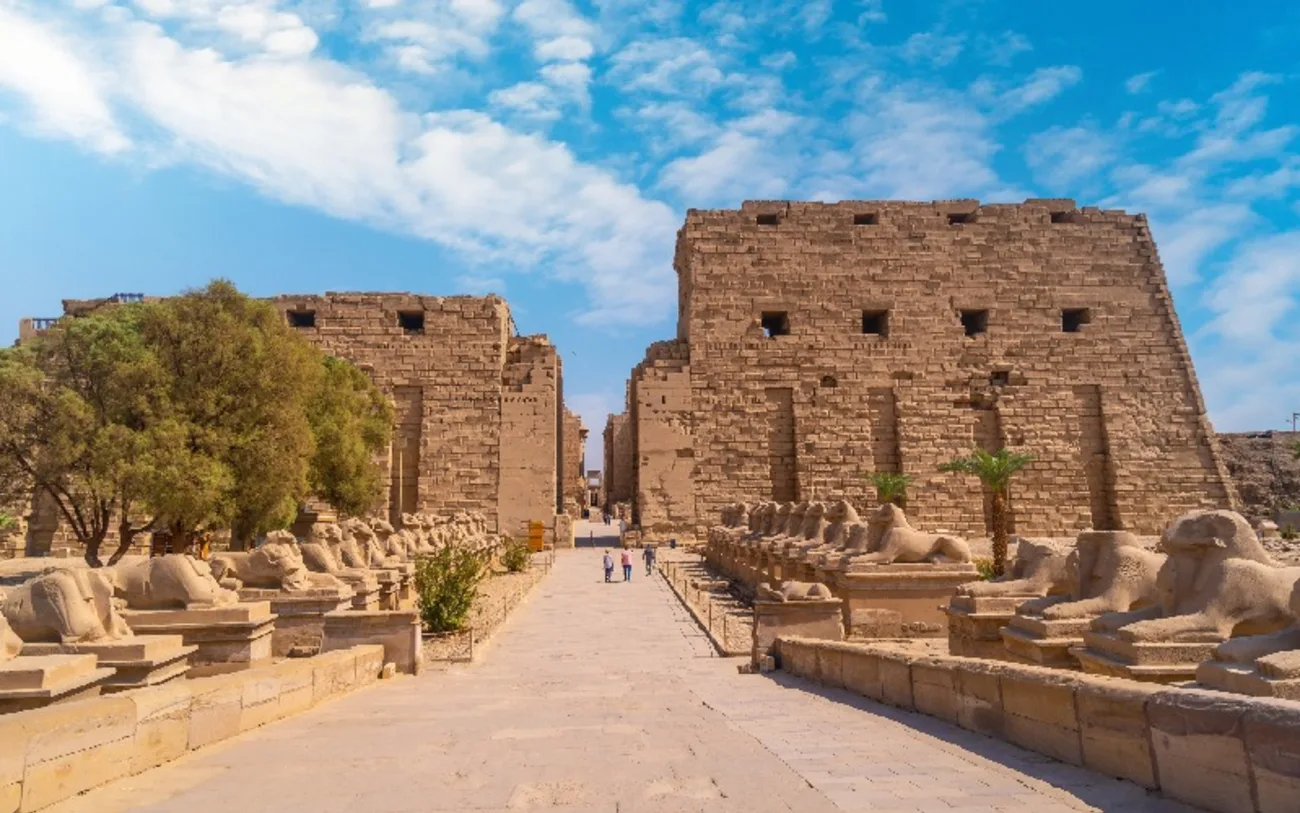
Karnak Temple is one of the most extraordinary religious complexes ever built, embodying the spiritual, political, and architectural power of ancient Egypt. Located in Luxor, this vast sanctuary offers visitors a journey through nearly 2,000 years of continuous construction, beginning around 2055 BC and continuing until the Ptolemaic period. Each pharaoh contributed to its expansion, leaving behind colossal pylons, towering obelisks, and intricately carved halls that chronicle the rise and transformation of Egyptian civilization.
More than a temple, Karnak was the beating heart of Thebes, serving as a center for religious rituals, royal ceremonies, and cosmic symbolism.
Today, it stands as a monumental open-air museum, drawing travelers, historians, and archaeologists who seek to unravel the mysteries of the ancient world.
The Historical Significance of Karnak Temple
Karnak Temple played a central role in ancient Egyptian religion and governance. Dedicated primarily to the Theban Triad—Amun, Mut, and Khonsu—it became the most important place of worship during the New Kingdom. Pharaohs poured immense resources into its construction, aiming to honor the gods and legitimize their own divine authority.
The temple also served as a ceremonial stage for state events, military victories, and coronations. Its walls document the triumphs of powerful rulers such as Seti I and Ramses II, offering a priceless historical record. Over time, Karnak grew into Egypt’s largest and most influential temple complex, shaping spiritual and political life across the ancient kingdom.
Architectural Wonders of Karnak Temple
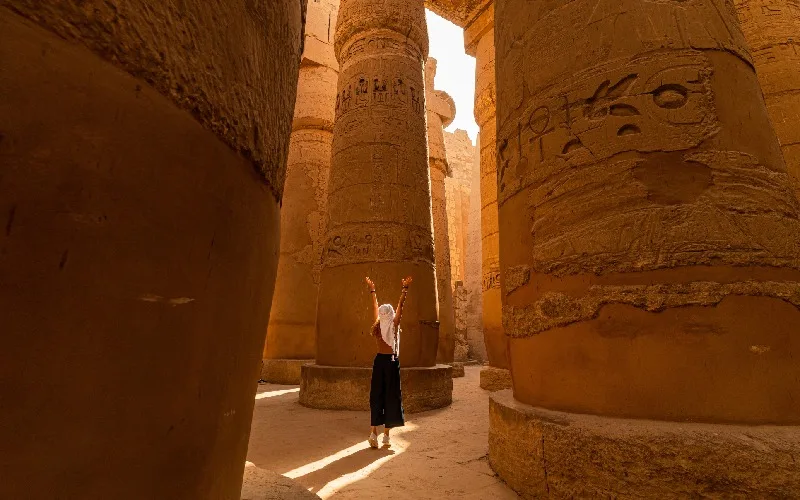
Karnak is celebrated for its unparalleled architectural achievements. The most famous of these is the Great Hypostyle Hall—an immense forest of 134 towering columns arranged in magnificent symmetry. Rising up to 21 meters, these columns are covered in detailed reliefs depicting ritual scenes, deities, and pharaohs, making the hall one of the most iconic structures in ancient architecture.
The temple complex also features monumental pylons, intricately carved chapels, colossal statues, and sacred obelisks. Many structures align with astronomical events, reflecting the Egyptians’ deep connection to the cosmos. Together, these elements create a breathtaking display of craftsmanship and sacred geometry.
The Layout of Karnak Temple: Key Areas to Explore
Karnak is divided into several precincts, each with unique features and functions:
- The Precinct of Amun-Re — the largest and most significant section, home to the Great Hypostyle Hall, the obelisks of Hatshepsut and Thutmose I, and the Sacred Lake.
- The Precinct of Mut — dedicated to the mother goddess Mut, featuring temples, statues, and ceremonial areas.
- The Precinct of Montu — honoring the falcon-headed war god.
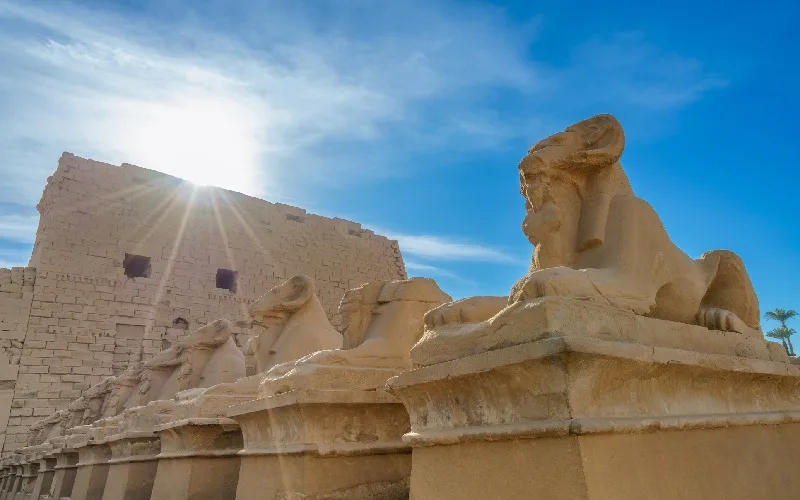
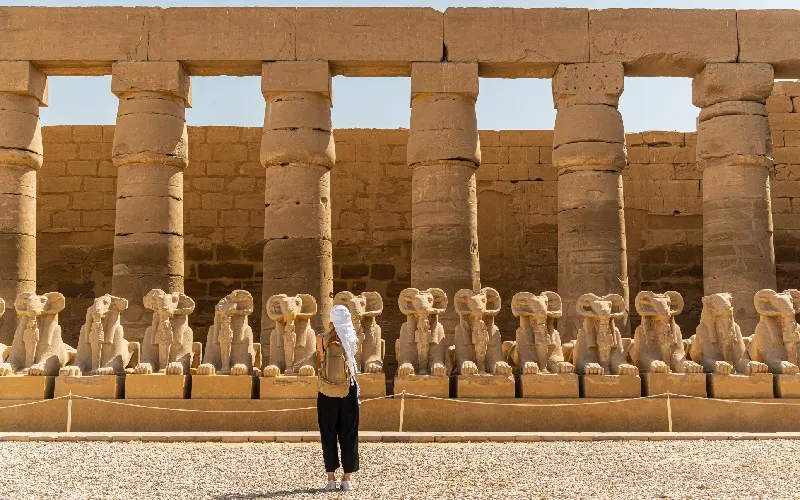
- The Avenue of Sphinxes — a grand processional road lined with ram-headed sphinxes connecting Karnak to Luxor Temple.
Each area showcases a different era of Egyptian history, offering a layered and immersive exploration of ancient religious life.
Karnak Temple is located on the east bank of the Nile in Luxor, Egypt, near the ancient city of Thebes.
Construction began around 2055 BC during the Middle Kingdom and continued until the Ptolemaic period, with numerous pharaohs contributing to its expansion.
The Mythology and Deities of Karnak Temple
Mythology was woven deeply into the fabric of Karnak. As the principal home of Amun, the temple symbolized divine kingship and cosmic order. Rituals performed here were believed to maintain harmony between the gods and humanity.
- Amun — the supreme creator god and patron of Thebes.
- Mut — the mother goddess, symbolizing regeneration and protection.
- Khonsu — the moon god associated with healing and time.
Together, they formed the Theban Triad, granting Karnak immense spiritual prestige across Egypt and beyond.
The temple was primarily dedicated to the Theban Triad: Amun, Mut, and Khonsu, serving as a major religious center in ancient Egypt.
Key features include the Great Hypostyle Hall with 134 massive columns, grand pylons, obelisks, sacred lakes, and intricately carved reliefs depicting pharaohs and gods.
Customize Your Dream Vacation!
Get in touch with our local experts for an unforgettable journey.
Plan Your TripThe Role of Karnak Temple in Ancient Egyptian Religion
Karnak was the spiritual heart of ancient Egypt, hosting elaborate rituals and daily offerings performed by high-ranking priests. The most important event was the Opet Festival, during which statues of Amun, Mut, and Khonsu were carried in a grand procession to Luxor Temple. This ceremony symbolized the rejuvenation of the pharaoh’s divine power and strengthened the bond between the gods and the people.
The temple’s sacred spaces—including the Holy of Holies, chapels, and offering halls—reflect the complexity of Egyptian religious practices.
Many sections were accessible only to priests, emphasizing the temple’s role as a bridge between the divine and mortal worlds.
Preservation Efforts and Current Condition of Karnak Temple
Over thousands of years, Karnak has faced threats from earthquakes, flooding, erosion, and human activity. Ongoing preservation efforts led by Egypt’s Ministry of Antiquities and international partners aim to stabilize, restore, and protect the site.
Key preservation activities include:
- Reassembling collapsed columns and fallen monuments
- Cleaning and conserving reliefs and inscriptions
- Improving drainage and water management
- Digital documentation using 3D scanning
Thanks to these efforts, Karnak remains remarkably intact and continues to reveal new archaeological discoveries.
Karnak Temple in Popular Culture: Movies and Literature
Karnak’s grandeur has made it a popular filming location and literary inspiration. It appears in movies such as “The Mummy,” “Death on the Nile,” and numerous documentaries exploring ancient Egypt. Writers, artists, and historians continue to portray the temple in books, paintings, and academic works, ensuring its legacy remains vibrant in modern culture.
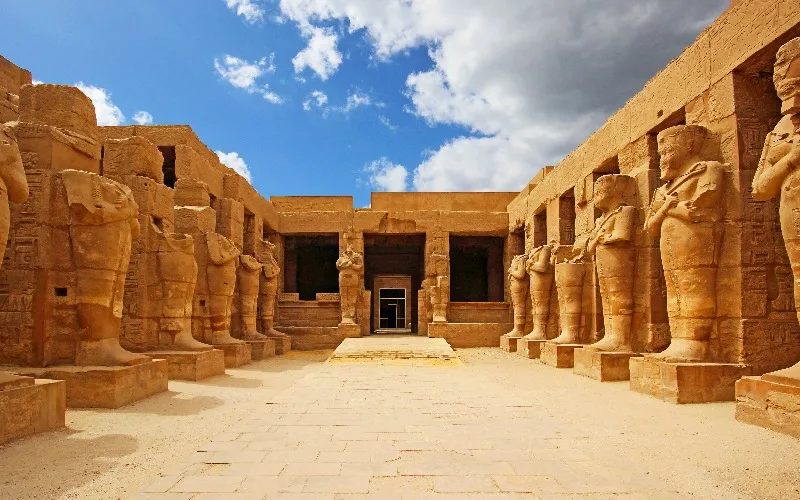
Karnak was a religious, political, and cultural hub. It hosted rituals, royal ceremonies, and festivals like the Opet Festival, reinforcing the divine authority of pharaohs.
Karnak Temple stands today as one of the greatest architectural and spiritual achievements of the ancient world. Its immense scale, symbolic design, and rich inscriptions offer invaluable insights into Egyptian religion, politics, and artistry. As a living monument to human creativity and devotion, Karnak continues to inspire awe in all who walk through its storied halls.
Whether you are a history enthusiast, a traveler, or a researcher, visiting Karnak Temple is an unforgettable journey into the heart of ancient Egypt’s enduring legacy.
Yes, Karnak Temple is a major tourist attraction, open daily, offering guided tours, audio guides, and opportunities to explore its vast complex.
Conservation initiatives include structural stabilization, restoration of carvings, visitor management, and collaboration with UNESCO and international organizations.
The temple has appeared in films like Death on the Nile and The Mummy, and inspired literature, showcasing its historical and cultural impact.
To fully appreciate the complex, visitors should plan at least 3–4 hours, as it covers a vast area with many halls, courtyards, and sanctuaries.
It offers unparalleled insight into ancient Egyptian religion, architecture, and society, combining monumental structures with rich historical and cultural significance.

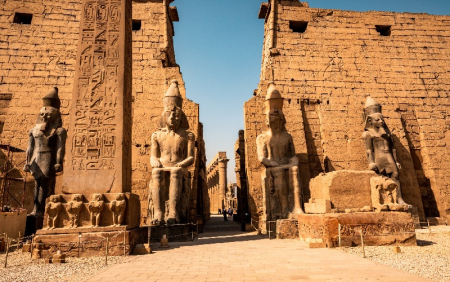
Luxor Temple, built by Amenhotep III and expanded by Ramses II, is a breathtaking New Kingdom monument dedicated to the renewal of kingship. Located on Luxor’s east bank, it stands as one of Egypt's most iconic sanctuaries, celebrated for its grand pylons, colossal statues, and deep religious significance.
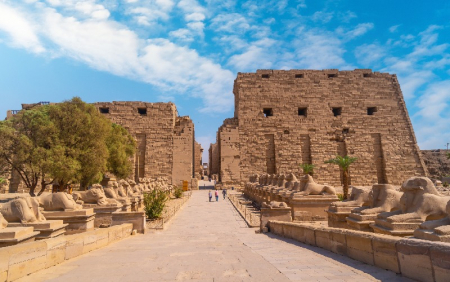
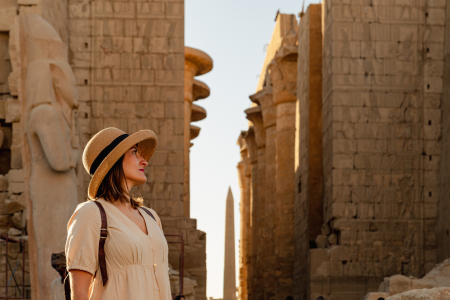
Karnak Temple in Luxor is an iconic ancient Egyptian complex, showcasing grand architecture, rich history, and the spiritual and political legacy of Thebes across nearly 2,000 years of construction.
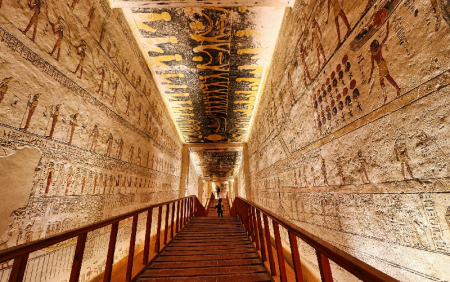
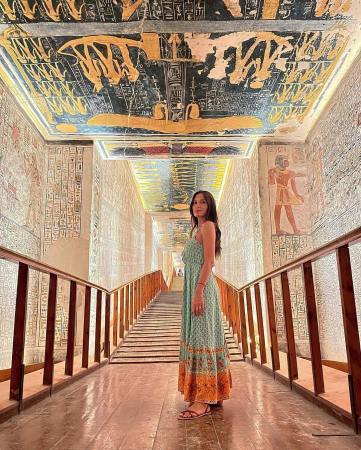
The Valley of the Kings is Egypt’s legendary royal necropolis, featuring 65 tombs of New Kingdom pharaohs, remarkable engineering, and world-famous discoveries like Tutankhamun’s burial.
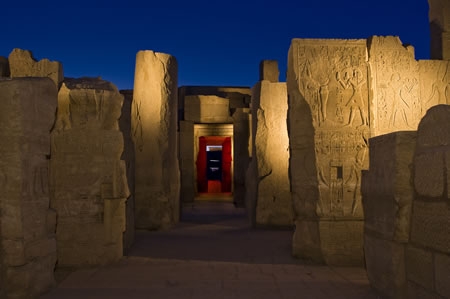
The Karnak Sound and Light Show transforms the vast temple complex into a magical nighttime spectacle, combining illuminated monuments, music, and storytelling to bring ancient Egyptian history vividly to life.
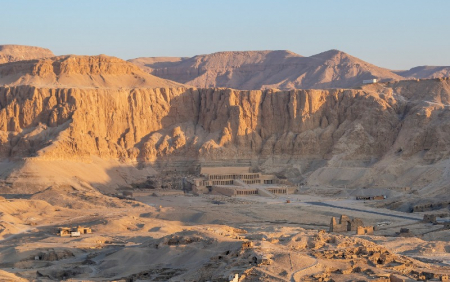
Discover the Valley of the Queens in Luxor, Egypt, with royal tombs, stunning art, and UNESCO heritage significance.
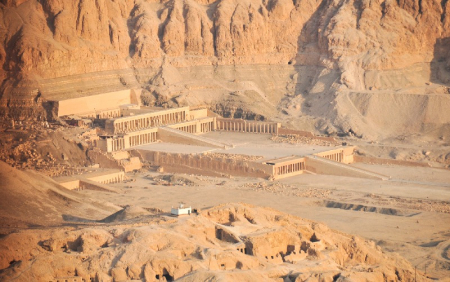
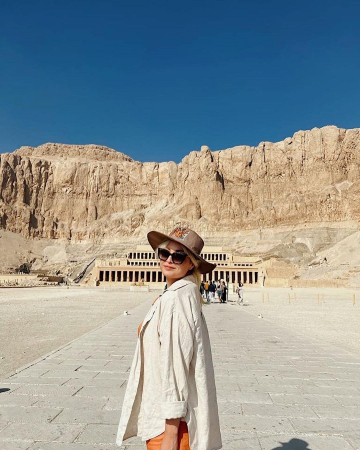
The Temple of Hatshepsut is a breathtaking 18th-Dynasty mortuary temple at Deir el-Bahari, famed for its grand terraces, cliffside design, and historical significance.
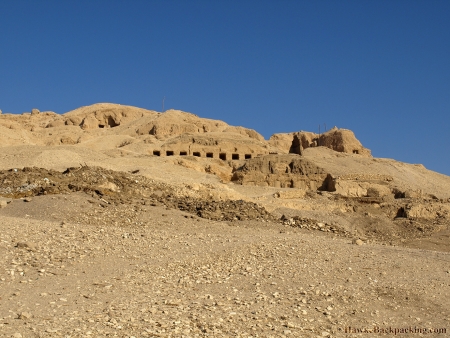
Explore the Valley of the Nobles in Luxor and learn how its 400+ tombs reveal vivid scenes of daily life and remarkable artistry from ancient Egypt’s New Kingdom.
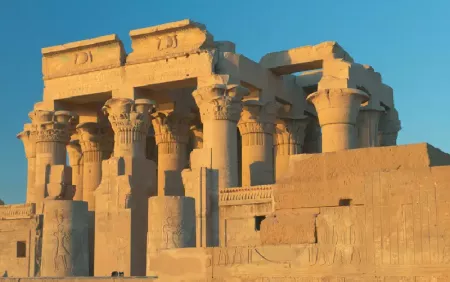
Kom Ombo Temple—Egypt’s remarkable twin sanctuary honoring Sobek and Haroeris, famed for its perfect symmetry and sacred crocodile traditions.
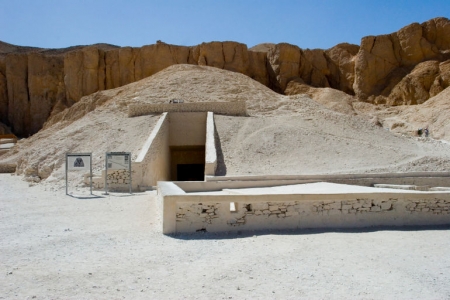
Tutankhamun’s tomb revealed over 5,000 stunning treasures, from gold chariots to the iconic mask, reshaping our understanding of ancient Egypt after its discovery in 1922.

Dendera Temple, 60km from Luxor, is Egypt's remarkably preserved healing sanctuary for Hathor. Explore vivid colors, hidden crypts & ancient astronomical knowledge.
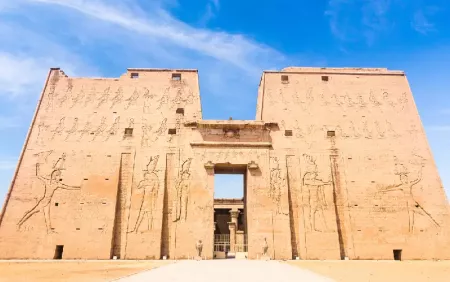
The Temple of Edfu, buried for centuries, is one of Egypt’s best-preserved temples—offering a vivid look into Ptolemaic religion, mythology, and architecture.
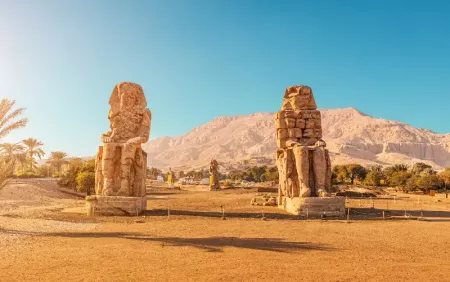
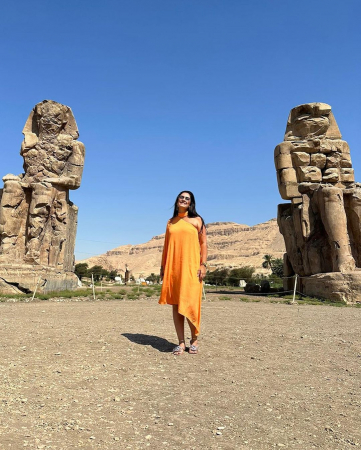
The Colossi of Memnon are 18-meter statues of Amenhotep III, once famed for their mysterious dawn “singing,” which captivated ancient visitors and inspired over a hundred inscriptions.
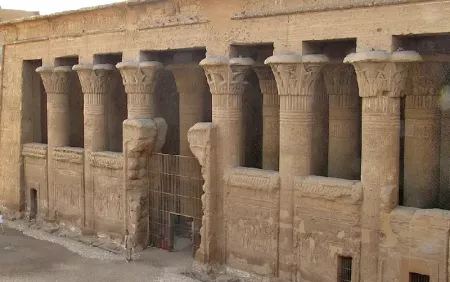
The Temple of Khnum at Esna, built from the Ptolemaic to Roman periods, features a stunning hypostyle hall with 24 ornate columns and reflects centuries of devotion to the creator god Khnum.
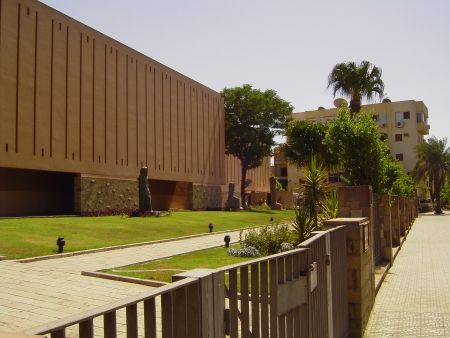
Luxor’s Mummification Museum offers an immersive look at ancient embalming methods, displaying tools, human and animal mummies, and the notable mummy of Masaharta.
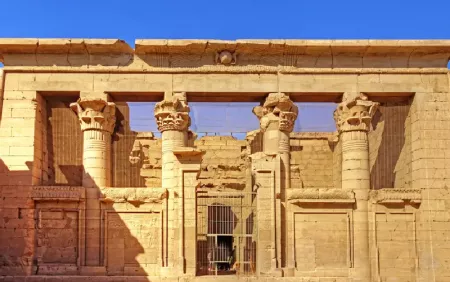
Kalabsha Temple, built under Emperor Augustus, was rescued from rising Nile waters in the 1960s and relocated block by block to New Kalabsha Island. Today, it remains a key UNESCO-recognized Nubian monument.
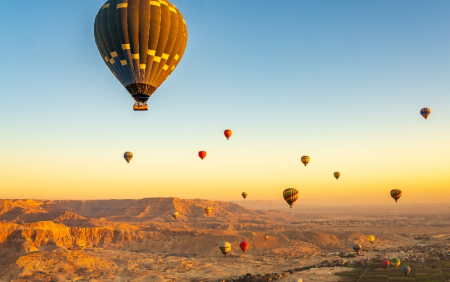
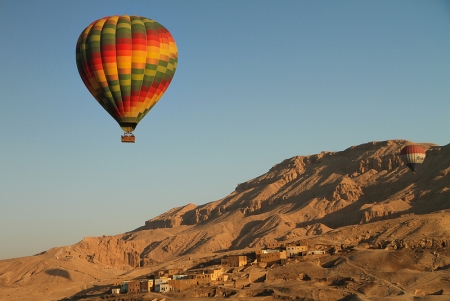
Soar above Luxor at sunrise in a hot air balloon and witness ancient temples, the Nile, and royal necropolises from the sky. This unforgettable experience offers breathtaking views and a unique perspective on Egypt’s timeless heritage.
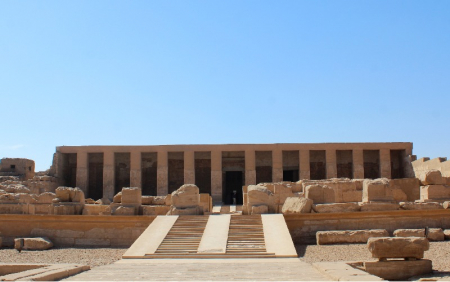
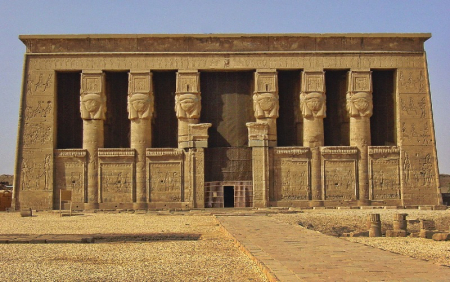
Explore the Temple of Hathor at Dendera, a remarkably preserved ancient Egyptian sanctuary dedicated to the goddess of love, music, and healing, renowned for its zodiac, vibrant reliefs, and astronomical ceilings.
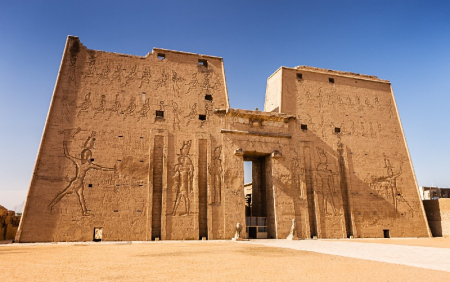
Visit the Temple of Horus at Edfu, a remarkably preserved Ptolemaic temple showcasing ancient Egyptian rituals, art, and architecture.
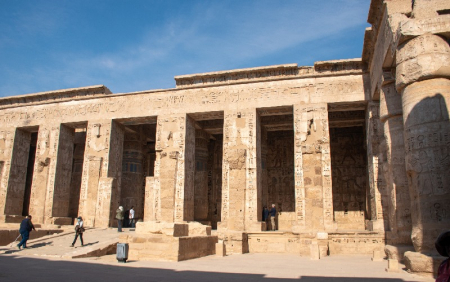
Explore Medinet Habu, Ramesses III’s temple, where history, religion, and artistry come alive on Luxor’s West Bank.
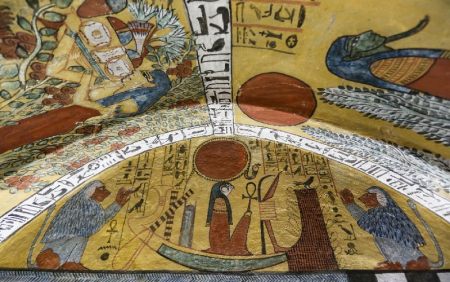
Deir el-Medina was home to the elite artisans who built and decorated Egypt’s royal tombs. Discover their homes, work, religion, and extraordinary daily life.
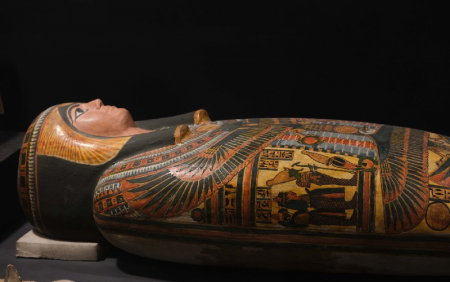
The Mummification Museum in Luxor showcases ancient Egyptian embalming, mummies, and artifacts, including Masaharta’s preserved remains and mummified animals.
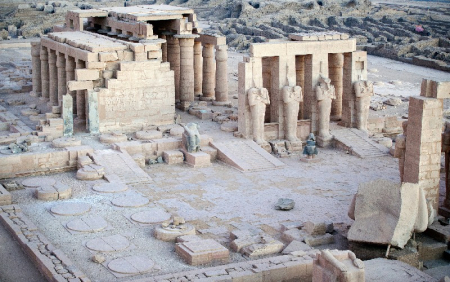
Discover the Mortuary Temple of Amenhotep III, once the largest in Thebes, famed for the Colossi of Memnon and ongoing restorations in Luxor.